 Save
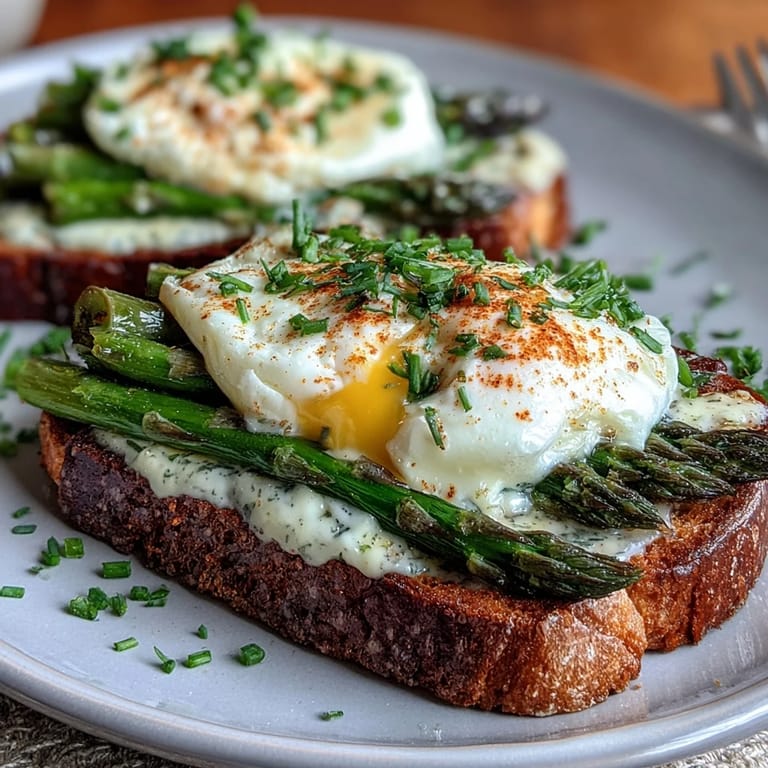
Save There's something about the smell of butter hitting a hot skillet on a lazy Sunday morning that made me finally understand why the French take breakfast so seriously. I was visiting a tiny apartment in the 6th arrondissement when my host casually assembled these tartines while we talked about nothing in particular, and I watched asparagus transform from raw stalks into something silky and essential in what felt like seconds. The eggs weren't scrambled into submission but folded gently with crème fraîche, creating this cloud of richness that made me rethink everything I thought I knew about eggs on toast. It's become my favorite excuse to slow down, even on a Tuesday.
I made these for my sister's surprise brunch last spring, and she actually stopped mid-conversation to ask if I'd started a catering business. The tartines were so visually striking with those green spears fanned across creamy eggs that we took photos before eating, which never happens at my house. Everyone asked for the recipe, and I realized it wasn't just the flavors—it was how elegant something could be when you treated simple ingredients with respect.
Ingredients
- 12 thin asparagus spears, trimmed: Thinner spears cook faster and have a more delicate texture, though you can use thicker ones if that's what's at the market—just give them an extra minute in the water.
- 1 small shallot, finely chopped: This is the secret whisper of flavor that makes people ask what you did differently, even though it's just one small bulb.
- 1 tablespoon fresh chives, finely chopped (plus extra for garnish): Fresh herbs matter here more than anywhere else in the recipe because they're not cooked down, just folded in at the end.
- 4 large eggs: Room temperature eggs fold more smoothly into the crème fraîche without breaking apart into tiny pieces.
- 2 tablespoons crème fraîche or Greek yogurt: This is what transforms scrambled eggs into something soft and almost cloud-like, a move that changed my egg game entirely.
- 2 tablespoons unsalted butter: Unsalted lets you control the salt level and the butter flavor comes through clearly instead of getting lost.
- 4 slices rustic country bread or sourdough, about 1/2-inch thick: Thicker bread stands up to the creamy eggs without becoming a soggy disappointment.
- 1 teaspoon lemon zest: This brightens everything up and makes the whole tartine sing instead of feel heavy.
- 1 tablespoon lemon juice: A final squeeze ties all the flavors together and adds a little sharpness to balance the richness.
- Salt and freshly ground black pepper, to taste: Finish with both so you actually taste them instead of them disappearing into the dish.
Tired of Takeout? 🥡
Get 10 meals you can make faster than delivery arrives. Seriously.
One email. No spam. Unsubscribe anytime.
Instructions
- Blanch the asparagus until just tender:
- Get your salted water boiling first—this matters because cold water won't cook the asparagus quickly enough—then add the spears and watch them carefully. They should go from bright green to a slightly deeper shade in 2 to 3 minutes, and the moment they're tender-crisp, pull them out with a slotted spoon and plunge them into ice water so they stop cooking completely.
- Toast the bread until golden and crisp:
- You want the outside crunchy enough to hold all those creamy eggs without immediately becoming soggy. A couple minutes in the toaster or a quick trip through a hot grill pan works perfectly here.
- Build the foundation with shallots and butter:
- Melt butter over medium heat and listen for that subtle sizzle when the shallots hit the pan. Let them soften for just a minute or two until they smell sweet and cooked but still have a tiny bit of texture.
- Create creamy eggs that feel luxurious:
- Whisk your eggs lightly, pour them into the warm pan, and stir gently and constantly—this is the move that keeps them from becoming rubbery. As soon as they start to look mostly set but still a little wet on top, that's when you stop and fold in the crème fraîche, chives, lemon zest, and seasonings off the heat.
- Assemble with intention:
- Spoon those creamy eggs generously onto each toasted slice, then arrange the asparagus spears on top in whatever way feels natural. A drizzle of lemon juice, a scatter of extra chives, and a crack of fresh black pepper finishes the whole thing.
 Save
Save My neighbor came over on a random Thursday and I made these tartines on impulse, and she ate hers so slowly and carefully that I knew I'd made something that mattered. We sat at the counter talking while the morning light came through the window, and somehow scrambled eggs on toast became this small moment of genuine care—not because I'd spent hours cooking, but because I'd paid attention to every single step.
Why This Works as Spring Food
There's something about asparagus that tastes like the season turning, like the ground finally warming up enough for things to grow. When you blanch it quickly, it stays bright and almost grassy, which pairs perfectly with rich eggs and creamy dairy in a way that feels balanced and not too heavy even as the weather gets warmer. It's the kind of dish that feels fancy enough for company but simple enough that you can make it on a Tuesday when you want to feel a little bit special.
The Art of Creamy Scrambled Eggs
Folding crème fraîche into warm eggs is one of those small kitchen moments that feels impossible the first time and then becomes second nature. The warmth of the eggs makes the crème fraîche melt and swirl into the softest, creamiest texture that tastes nothing like regular scrambled eggs—it's almost like a very loose scrambled custard. The trick is timing: pull the eggs off the heat while they still look a tiny bit wet, because residual heat will keep cooking them as you fold in the cold crème fraîche.
Ways to Make It Your Own
These tartines give you room to move around and make them match whatever's in your kitchen or whatever you're craving that morning. Swap chives for dill or tarragon if that's what you have, add a handful of fresh herbs like parsley or chervil, or sprinkle Parmesan or crumbled goat cheese on top for a sharper edge. You could even add crispy prosciutto or smoked salmon if you want to push it toward something more substantial, though honestly the simplicity is part of what makes it work.
- A dry Sauvignon Blanc or crisp rosé turns this into an actual brunch instead of just breakfast.
- Make sure your bread is thick enough to hold the eggs without falling apart, but not so thick that it becomes bread-heavy instead of egg-forward.
- Have everything prepped before you start cooking the eggs because once they hit the pan, you can't look away for even a moment.
 Save
Save These tartines have become my answer to the question of what to make when I want something that feels effortless but tastes like you actually tried. They're simple enough that you could practically make them with your eyes closed, but elegant enough that they've impressed everyone from my pickiest friends to people who claim they don't eat eggs.
Recipe FAQ
- → How do I keep asparagus crisp during cooking?
Blanch asparagus in boiling salted water for 2–3 minutes, then immediately transfer to ice water to halt cooking and preserve crispness.
- → What’s the best way to achieve creamy eggs for this dish?
Cook eggs gently over medium heat while stirring constantly until just set and creamy, then fold in crème fraîche or Greek yogurt for added smoothness.
- → Can I substitute the rustic bread with another type?
Yes, sourdough or other hearty breads work well to provide a crisp base that can hold the creamy egg mixture and asparagus.
- → How does lemon enhance the flavors here?
Lemon zest and juice add a bright, fresh acidity that balances the richness of eggs and butter, enhancing overall vibrancy.
- → Are there advisable garnishes to complement the tartines?
Fresh chives are classic for garnish, but fresh dill, tarragon, or parsley can add unique herbal notes.