 Save
Save One Saturday morning, my neighbor showed up at my door with a basket of asparagus from her garden, still dewy and impossibly fresh. I had no idea what to do with that much spring produce, but she smiled and said, "Make a frittata—it's what I make when I want to feel like I'm eating sunshine for breakfast." That single suggestion changed how I approach weekend cooking, because suddenly I understood that the best meals are the ones that let the season speak for itself.
I made this for my sister during one of those mornings when she was visiting and we were both too tired to plan anything fancy. She walked into the kitchen to the smell of feta and fresh herbs, and the entire mood of the day shifted. That's when I realized a frittata isn't just food—it's a way of saying "I have time for you" without having to say anything at all.
Ingredients
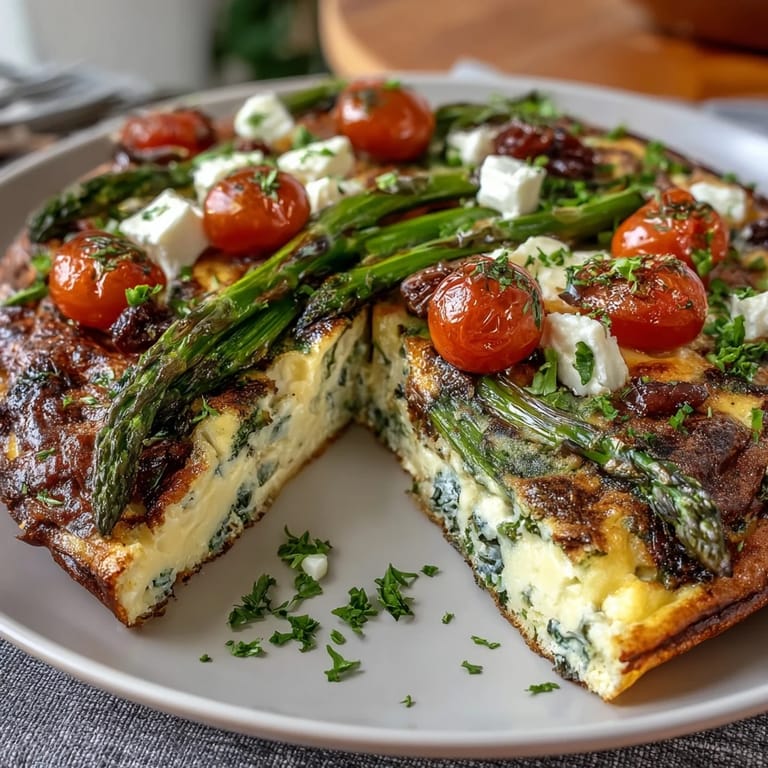
- Asparagus: This is your star player in spring, bringing a subtle earthiness and that satisfying tenderness when cooked just right—trim the woody ends or they'll fight your teeth.
- Baby spinach: It wilts down dramatically, which looks scary but is exactly what you want, and it adds iron without any bitter aftertaste if you don't overcook it.
- Cherry tomatoes: Cut them in half so they release their juice into the eggs and become little pockets of brightness throughout.
- Zucchini: Dice it small so it softens evenly and doesn't leave any crunchy surprises hiding in the center.
- Red onion: The sharpness mellows as it cooks, adding sweetness and depth that makes people ask what that mysterious flavor is.
- Eggs: Six large ones give you enough body to hold the vegetables without feeling too eggy, which is its own kind of magic.
- Milk: Just a quarter cup loosens everything up and makes the texture fluffy rather than dense, dairy-free works just as well.
- Feta cheese: Crumble it by hand rather than buying pre-crumbled so the pieces are bigger and you get actual flavor hits, not just salty dust.
- Fresh parsley and chives: These are not optional—they're what transform a good frittata into one people remember.
- Olive oil: Use something you actually like tasting, because you'll taste it.
Tired of Takeout? 🥡
Get 10 meals you can make faster than delivery arrives. Seriously.
One email. No spam. Unsubscribe anytime.
Instructions
- Get your oven ready:
- Set it to 375°F and let it preheat while you prep your vegetables—this takes about 10 minutes and gives you time to think.
- Start with the aromatics:
- Heat olive oil in a 10-inch oven-safe skillet over medium heat, then add the red onion and let it soften for about 2 minutes, stirring occasionally until it turns translucent and smells sweet.
- Build your vegetable base:
- Add asparagus, zucchini, and a pinch of salt, then cook for 3 to 4 minutes while stirring occasionally, until the edges just start to soften but everything still has a bit of firmness.
- Finish the vegetables:
- Stir in the spinach and cherry tomatoes and cook for only 1 to 2 minutes—the spinach should go from dark and crinkled to bright green and tender, and the tomatoes should just start releasing their juice.
- Prepare the egg mixture:
- In a separate bowl, whisk together six eggs, milk, salt, black pepper, and red pepper flakes if you like heat, whisking until everything is well combined and the mixture looks pale and slightly frothy.
- Bring it all together:
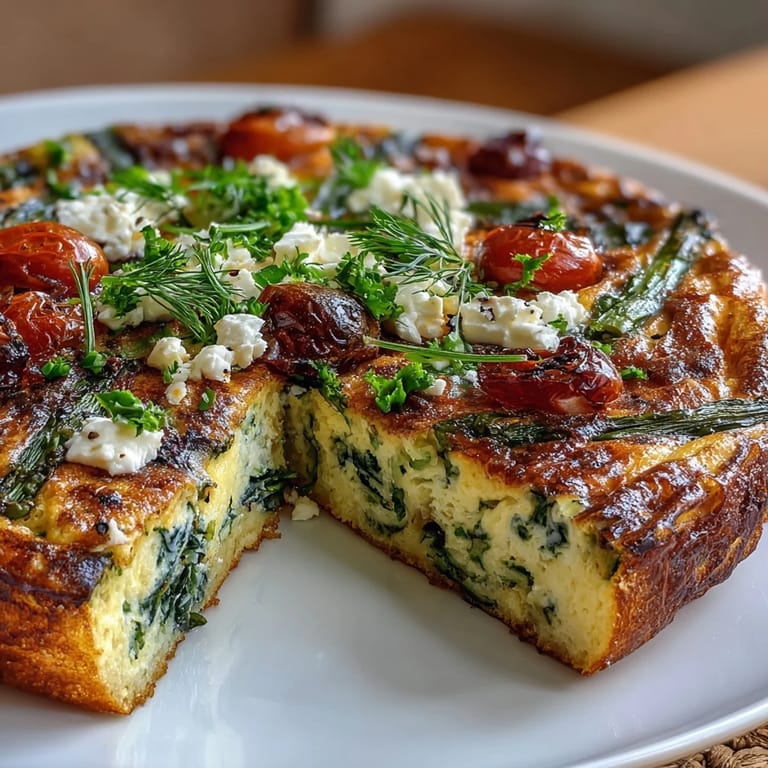
- Pour the egg mixture evenly over the vegetables, making sure it flows into all the gaps, then sprinkle the crumbled feta, parsley, and chives across the top like you're finishing a painting.
- Set the edges:
- Cook on the stovetop for 2 to 3 minutes until the edges start to set and look slightly firm when you jiggle the pan—you want the center still jiggly because the oven will finish the job.
- Finish in the oven:
- Transfer the whole skillet to the oven and bake for 10 to 12 minutes until the center is just set and the top is lightly golden, which means it's cooked through but still tender inside.
- Rest and serve:
- Let it cool for just a few minutes so the structure sets slightly, then slice into wedges and serve warm or even at room temperature, because this frittata is genuinely good either way.
 Save
Save There's something about serving a frittata that makes you feel like a real cook, even though you basically just threw things in a pan and let the oven do the thinking. My dad took one bite at a family dinner and said it tasted like "a garden decided to become breakfast," and I've been riding that compliment ever since.
Timing Your Vegetables
The secret that nobody tells you is that vegetables have different cooking speeds, which is why the order matters so much. Asparagus and zucchini need time to soften, red onion needs to go in first because it wilts slowly and sweetens as it sits, and spinach enters at the last second because it basically dissolves if you look at it too long. Once you understand this, you can swap in whatever is in season and cook with confidence instead of guessing.
Getting the Texture Just Right
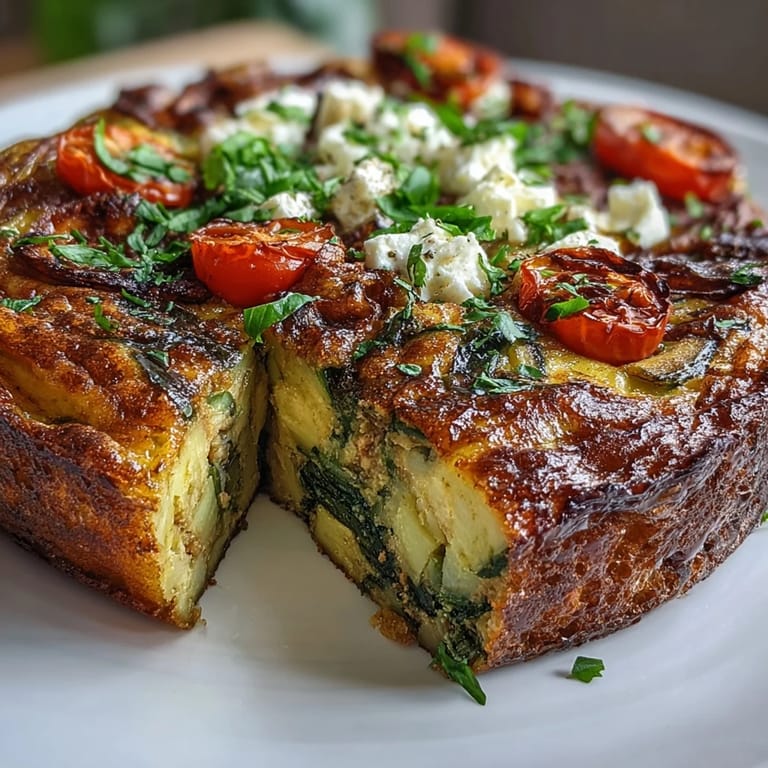
The moment you pour the egg mixture over the vegetables, resist the urge to stir it around like you're making scrambled eggs—let it be, let it set, and trust that the oven will finish what the stovetop started. Those 2 to 3 minutes on the stove help the bottom crisp slightly and the edges set, but the center stays creamy because it's still cooking when it goes into the oven. This is the difference between a frittata that's fluffy and tender and one that's rubbery and sad.
Variations and Substitutions
This recipe is honestly just a template for whatever vegetables have been calling to you—peas, leeks, mushrooms, bell peppers, fresh corn in summer. The technique stays the same; only the flavors change, and that's where the real fun happens because you can make this every week and it never gets tired. Once you've made it a few times, you'll stop thinking of it as "that recipe" and start thinking of it as "my frittata that I make my way."
- For dairy-free, swap in plant-based milk and use a dairy-free cheese or skip the cheese entirely and add extra herbs for flavor.
- Leftovers keep for three days in the fridge and taste just as good cold, straight from a container standing at the counter at lunch.
- If you don't have fresh herbs, dried works in a pinch but use about one-third the amount because the flavor is more concentrated.
 Save
Save A frittata taught me that simple cooking doesn't mean boring cooking—it just means letting good ingredients do their job without fussing. Every time I make one, I think of my neighbor and her basket of asparagus, and how one sentence changed the way I think about breakfast.
Recipe FAQ
- → What vegetables work best in this frittata?
Asparagus, spinach, cherry tomatoes, zucchini, and red onion create a fresh and colorful mix, but you can swap in peas or leeks based on seasonality or preference.
- → Can I make this dish dairy-free?
Yes, replace milk with a plant-based alternative and omit or substitute the feta cheese with a dairy-free version to keep it flavorful.
- → What cooking equipment is needed?
A 10-inch oven-safe skillet is essential for preparing and baking this dish, along with basic tools like a mixing bowl, whisk, knife, and cutting board.
- → How do I know when the frittata is done?
The edges should be set and the center firm but tender. The top will have a light golden hue, indicating it’s ready to be removed from the oven.
- → Can this be served at room temperature?
Yes, the frittata tastes great warm or at room temperature, making it versatile for meals or gatherings.