 Save
Save The first time I made this King Cake Cinnamon Babka, I was standing in my kitchen on a gray January afternoon, halfway between the holiday rush and Mardi Gras season, when I realized I wanted something that felt like both celebrations at once. There's something about layered, yeasted doughs that demands patience and rewards you with those swirled, marbled slices that make people pause mid-bite. This recipe arrived from a combination of nostalgia—my grandmother's babka technique—and a friend's insistence that King Cake deserved a richer, more elaborate treatment. What started as a quiet experiment became the loaf I now make every year, the one people ask about before they even taste it.
I'll never forget the morning I brought this to a small Mardi Gras gathering at a friend's house, still warm from my cooling rack, the glaze barely set. The kitchen filled with that particular smell—brown sugar, cinnamon, yeast, and cream cheese mingling together—and suddenly people stopped talking to watch me slice it. That twisted interior, those ribbons of filling catching the light, felt like opening a gift. It became the kind of dish that made people ask for the recipe before dessert was even finished, which for me is the highest compliment a bread can receive.
Ingredients
- All-purpose flour (3 1/4 cups): This is your foundation, and measuring by weight rather than volume makes a real difference in consistency—too much flour and your dough becomes dense and fights the layers you're creating.
- Instant yeast (2 1/4 tsp): Room temperature matters here because cold dough rises slowly, and I learned the hard way that patience with rising beats rushing with extra yeast.
- Whole milk and eggs (2/3 cup milk, 2 large eggs): Both should be at room temperature so they blend smoothly into the dough without shocking the yeast—I keep my eggs on the counter for at least an hour before starting.
- Unsalted butter (1/3 cup for dough, 1/4 cup for filling): Softened butter incorporates into dough like silk, creating that tender crumb; cold butter will fight you and waste your energy.
- Packed light brown sugar and ground cinnamon (1/2 cup and 2 tsp): Brown sugar's molasses content adds depth that granulated sugar can't touch, and generous cinnamon is not negotiable—this is where flavor lives.
- Cream cheese and powdered sugar (4 oz cream cheese, 1 cup powdered sugar): The cream cheese adds richness and tang that balances the sweetness, while powdered sugar for the glaze dissolves into a glossy finish that looks intentional.
- Purple, green, and gold sanding sugars: These aren't just decoration—they're your commitment to celebration, and they add a subtle crunch that catches your teeth just right.
Tired of Takeout? 🥡
Get 10 meals you can make faster than delivery arrives. Seriously.
One email. No spam. Unsubscribe anytime.
Instructions
- Mix Your Dough Base:
- Combine flour, sugar, yeast, and salt in a large bowl or stand mixer—keeping these dry ingredients separate first helps the yeast distribute evenly and activate properly. The mixture should look sandy and smell faintly yeasty before any liquid touches it.
- Bring Wet Ingredients Together:
- Whisk lukewarm milk, eggs, and vanilla in a separate bowl until they're unified, then add to your dry mixture and stir gently until shaggy. This is not the time to overwork; you're just bringing things into acquaintance, not forcing friendship.
- Knead In The Butter:
- Beat in softened butter bit by bit, letting the mixer do the work for 8-10 minutes until your dough becomes smooth, elastic, and slightly warm to the touch. You'll feel the dough transform from rough to silky, and that moment is when you know it's ready.
- First Rise:
- Place dough in a greased bowl, cover with a damp towel, and let it rise in a warm spot—I use my turned-off oven with the light on—until it's doubled, about 1-1.5 hours. The dough should look puffy and hold an indent when you poke it gently.
- Prepare Your Fillings:
- Mix brown sugar and cinnamon together, then stir in softened butter until you have a spreadable paste; separately, beat cream cheese with sugar and vanilla until smooth and fluffy. These can be made while dough is rising so you're not scrambling later.
- Roll And Layer:
- Punch down your risen dough gently, then roll it on a floured surface into a 16x12-inch rectangle—aim for even thickness or your slices will bake unevenly. Spread cream cheese filling first, leaving a half-inch border, then layer cinnamon filling on top in an even coat.
- Create The Twist:
- Starting from a long side, roll the dough into a tight log, then slice it lengthwise in half so you have two long strands. Twist these strands around each other, keeping the cut sides up so those beautiful layers show, then coil or shape into your loaf pan.
- Second Rise:
- Place your twisted loaf in a greased 9x5-inch pan, cover, and let it rise until puffy and nearly doubled, about 45 minutes—you want it to look almost too big, like it's ready to burst with flavor. The dough should spring back slowly when poked.
- Bake With Care:
- Bake at 350°F for 35-40 minutes until golden brown and a toothpick inserted into the center comes out clean or with just a few moist crumbs. If the top browns too quickly, tent it loosely with foil to protect it while the interior finishes cooking.
- Cool And Glaze:
- Let the loaf cool in the pan for 15 minutes so the structure sets, then transfer to a wire rack to cool completely before glazing. Whisk powdered sugar with milk until you have a thick but pourable consistency, drizzle it over the cooled loaf, then shower it with your celebratory sugars.
 Save
Save There was a moment, maybe three hours into the process, when I pulled this loaf from the oven and realized the kitchen smelled exactly like celebration—warm, sweet, complex, impossible to ignore. My partner came downstairs following that smell like a cartoon character drawn by aromas, and we both stood there watching the steam rise off the golden crust, knowing before we even tasted it that this was something special. That's when this recipe stopped being just instructions and became a tradition.
Why This Works As A Celebration Bread
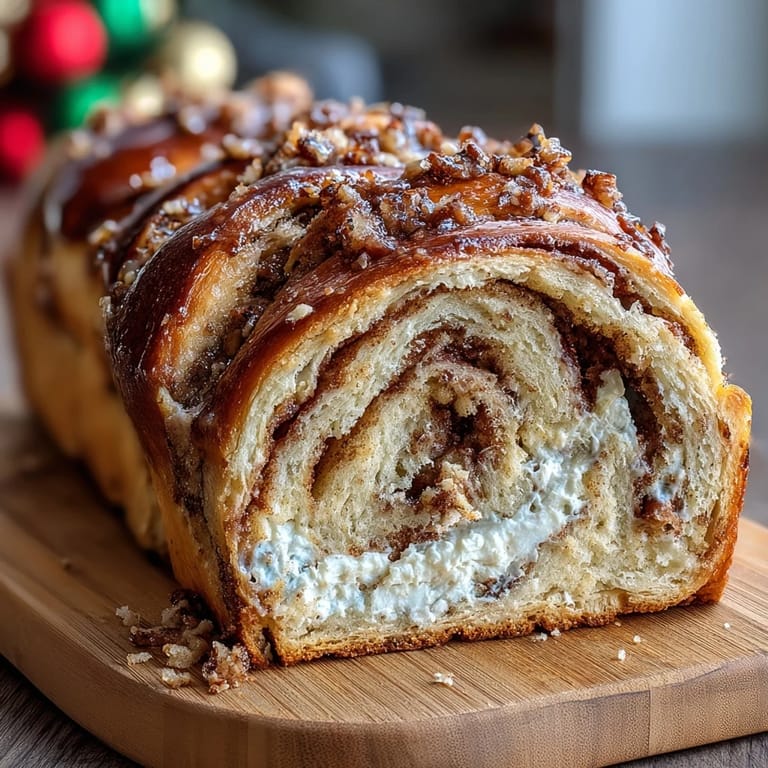
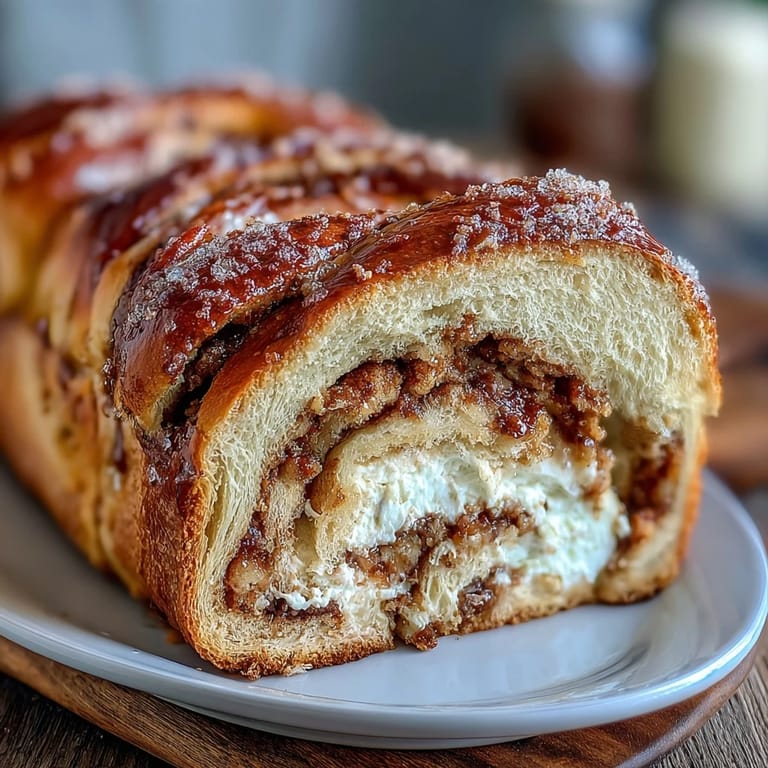
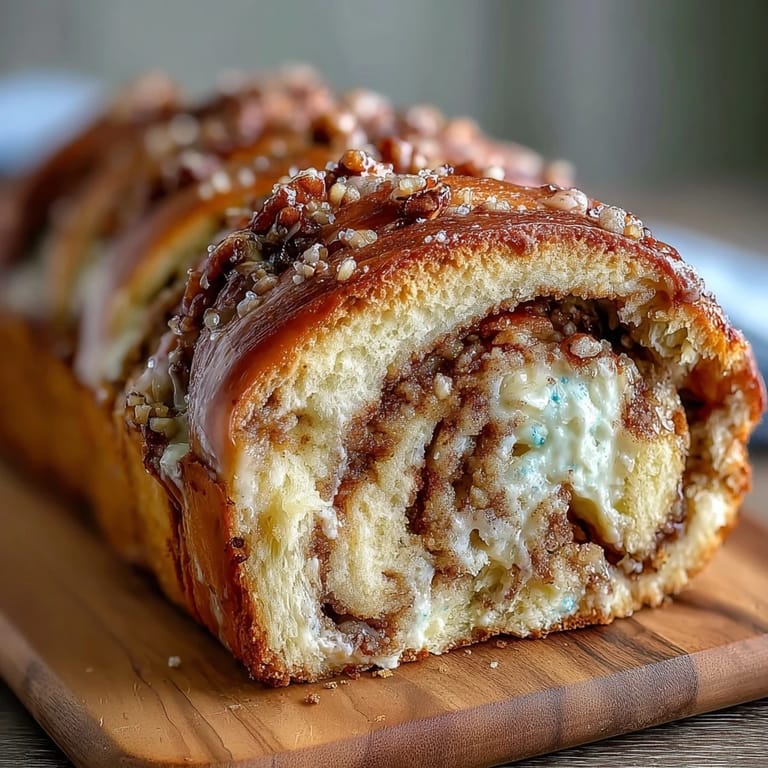
King Cake and babka are both breads built on the principle that layers matter—not just for flavor but for visual drama. When you slice into this loaf and see those ribbons of cinnamon and cream cheese swirled throughout, it delivers on the promise of celebration before anyone takes a bite. The colors add another layer of joy, and the plastic baby or almond (if you're traditional) turns eating into a small game. This is bread that earns its place at the table by looking like something worth making.
The Science Of Layered Dough
Yeasted doughs benefit from layering because those separate ingredients—the fillings, the dough, the air trapped between—create texture complexity that wouldn't exist in a single-mixed dough. When you roll and fill and twist, you're not just creating flavor combinations; you're engineering crumb structure. The cream cheese adds moisture that keeps things tender; the cinnamon-sugar mixture catches and caramelizes in the oven's heat, creating slight crispy edges within the soft crumb. Understanding why each step matters helps you troubleshoot if something goes sideways.
Storage And Serving Suggestions
This loaf actually improves slightly on the second day as flavors settle and the crumb becomes slightly more set, so don't feel rushed to serve it immediately—though the warm, fresh version is admittedly hard to resist. Wrap cooled leftovers in plastic wrap and store in an airtight container for up to three days; anything longer and it starts to dry out despite your best intentions.
- Pair this with strong coffee or hot chocolate in the morning, or with sweet dessert wine in the evening—both highlight the cinnamon and vanilla notes.
- If you're serving at a gathering, slice it just before people arrive so the glaze looks fresh and the crumb shows its layered beauty.
- Warm slices briefly in the microwave (10-15 seconds) if you made them ahead; that brief warming brings back the tender texture.
 Save
Save Making this loaf feels like capturing celebration in edible form, a way of saying something matters enough to spend three hours on it. Whether it's Mardi Gras or just a Tuesday when you need something beautiful, this is the bread that delivers.
Recipe FAQ
- → What type of flour works best for this loaf?
All-purpose flour provides the right balance of gluten for a tender, elastic dough perfect for rising and braiding.
- → How can I tell when the dough has risen enough?
The dough should double in size and feel light and puffy, which usually takes about 1 to 1.5 hours in a warm spot.
- → Can I substitute mascarpone for cream cheese?
Yes, mascarpone can be used for a milder, creamier filling that complements the cinnamon layers beautifully.
- → What is the purpose of twisting the dough strands together?
Twisting creates the distinctive layered swirls that combine flavors and give a visually appealing braided look.
- → How should leftovers be stored?
Keep the loaf in an airtight container at room temperature for up to three days to maintain freshness.