 Save
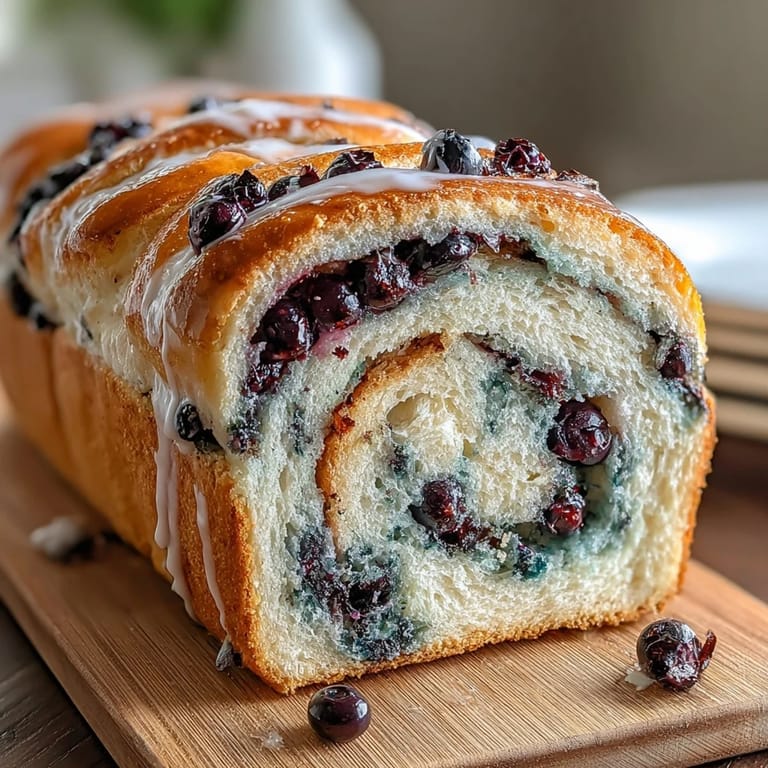
Save My kitchen smelled like fermented sourdough and bright citrus the afternoon I first swirled blueberries into this dough, standing at my counter with flour dusting my apron and a slightly uncertain expression on my face. The idea came to me while waiting for the starter to bubble—what if I took everything I loved about tangy sourdough and married it with the sweetness of summer berries? The result was this tender, pillowy loaf that somehow tastes both wholesome and indulgent, the kind of bread that makes mornings feel intentional.
I brought this loaf to a neighborhood gathering last spring, and someone asked if I'd bought it from a bakery—which, honestly, made my entire week. Watching people tear into warm slices while chatting on the porch reminded me that the best meals are the ones that pull people together without making them feel like you've been stressed in the kitchen for hours.
Ingredients
- Bread flour (3 cups): This is where structure lives; it holds everything together and gives you that tender crumb you're after.
- Active sourdough starter (1/2 cup): Make sure yours is bubbly and fed a few hours before you start, or the whole timeline shifts.
- Whole milk, lukewarm (1 cup): Warmth matters here because cold milk wakes up the yeast slowly, making everything take longer.
- Unsalted butter (1/4 cup): Softened, not melted—this keeps the texture tender without weighing down the crumb.
- Granulated sugar (1/4 cup for dough): Just enough to feed the yeast and add subtle sweetness; too much and you'll mask the sourdough tang.
- Egg (1 large): This is your secret for a golden crust and slightly richer crumb.
- Fine sea salt (1 tsp): It controls fermentation and brings out the lemon flavor in surprising ways.
- Lemon zest (from 1 lemon): Fresh zest, not the bottled stuff—you'll taste the difference immediately.
- Fresh or frozen blueberries (1 cup): Frozen works just as well and sometimes even better because they hold their shape longer.
- Lemon juice (2 tbsp for swirl): This keeps the blueberry mixture bright and prevents it from becoming overly sweet.
- Cornstarch (1 tbsp): It thickens the blueberry filling so it doesn't leak all over your pan during baking.
- Powdered sugar (1/2 cup, optional): Only if you want that final touch of elegance on top.
Tired of Takeout? 🥡
Get 10 meals you can make faster than delivery arrives. Seriously.
One email. No spam. Unsubscribe anytime.
Instructions
- Cook the blueberry swirl:
- Combine blueberries, sugar, and lemon juice in a saucepan over medium heat, stirring gently until the berries burst and release their juice (this takes about 5–7 minutes). Once it looks jammy, stir in the cornstarch and let it bubble for another minute or two until you see the mixture thicken noticeably, then slide the pan off the heat and let it cool completely—this step matters because warm filling makes dough soggy.
- Build your dough:
- In a large bowl or stand mixer, combine lukewarm milk, sourdough starter, softened butter, sugar, egg, salt, and lemon zest, then mix until everything is loosely combined. Gradually add the flour while mixing or kneading for 8–10 minutes until the dough feels smooth and elastic, no longer sticky or stiff.
- Let it rise the first time:
- Transfer the dough to a lightly greased bowl, cover it loosely with plastic wrap or a kitchen towel, and leave it at room temperature until it's doubled in size—this usually takes 4–6 hours depending on how active your starter is and how warm your kitchen feels. You'll know it's ready when you poke it gently and the indent springs back slowly.
- Shape your loaf:
- Turn the doubled dough onto a floured surface and roll it into a rectangle roughly 9 by 16 inches, then spread the completely cooled blueberry swirl evenly over the surface, leaving about a 1-inch border on all sides so the filling doesn't squeeze out when you roll. Starting from the short end, roll it up tightly into a log, pinching the seam at the bottom to seal it, then place it seam-side down in a greased 9-by-5-inch loaf pan.
- Second rise:
- Cover the pan with plastic wrap or a damp towel and let it sit at room temperature for 1–2 hours until the dough looks puffy and nearly doubled in height. You want it to fill most of the pan but not overflow when it bakes.
- Bake until golden:
- Preheat your oven to 350°F (175°C) and bake the loaf for 35–40 minutes until the top is deep golden brown and the sides sound hollow when you tap them gently. If the top starts browning too quickly, tent it loosely with foil halfway through.
- Finish with glaze (optional):
- Once the loaf has cooled for a few minutes, whisk together powdered sugar and 1–2 tablespoons of lemon juice until you reach a drizzly consistency, then drizzle it over the top in whatever pattern feels right to you.
 Save
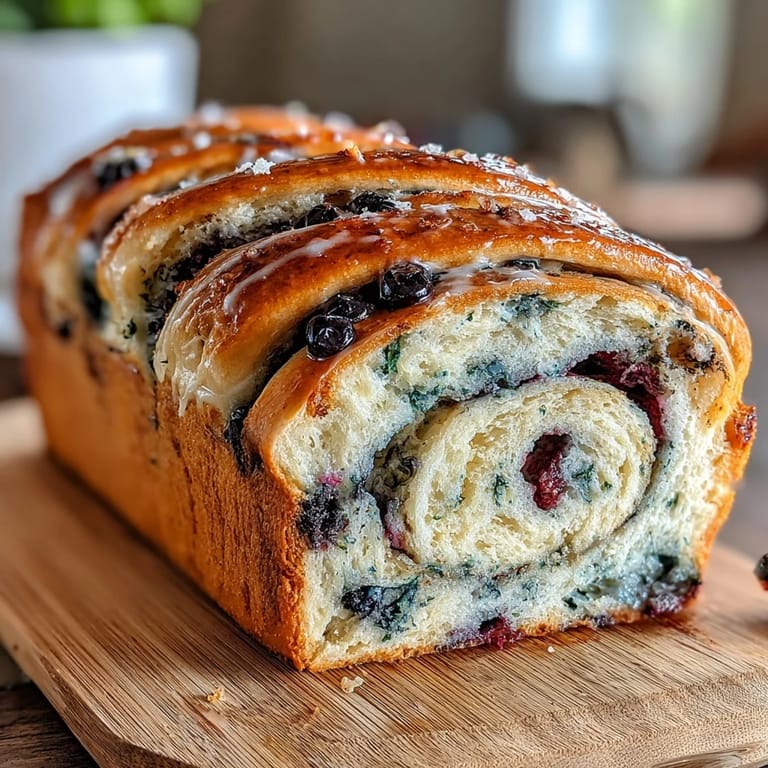
Save There's something almost magical about slicing into this loaf the next morning and seeing those blueberries peeking through the crumb, still plump and jammy. It's one of those breads that tastes like you spent all day making it, even though most of the time is just the dough doing its thing while you live your life.
Making Sourdough Less Intimidating
If you're nervous about sourdough, this recipe is actually forgiving because the long fermentation develops flavor without requiring perfectly timed precision. The blueberry swirl also masks any slight sourness you might find overwhelming in a plain loaf, so it's an ideal entry point into sourdough baking. Think of it as training wheels for building your confidence.
Timing and Temperature Reality
The rising times I've given you are guidelines, not gospel—a warm kitchen might get you done in 4 hours while a cool one needs 8. This isn't a flaw, it's actually the beauty of sourdough; you work with your environment instead of against it. I've learned to check the dough itself rather than watching the clock, poking it gently to see if it springs back slowly or holds an indent.
Variations That Actually Work
Once you've made this once, you'll start seeing possibilities everywhere—raspberries are beautiful here, or you could swap the lemon for orange zest and add a few fresh cranberries to the swirl. The framework stays the same; you're just changing the filling flavor.
- Raspberries create a more delicate, almost wine-like flavor that pairs surprisingly well with sourdough's tanginess.
- If you go the citrus route with orange or lime, use the same amount of juice and zest as you would lemon.
- Fresh herbs like thyme or rosemary scattered into the swirl can elevate this from breakfast bread to something you'd serve at dinner.
 Save
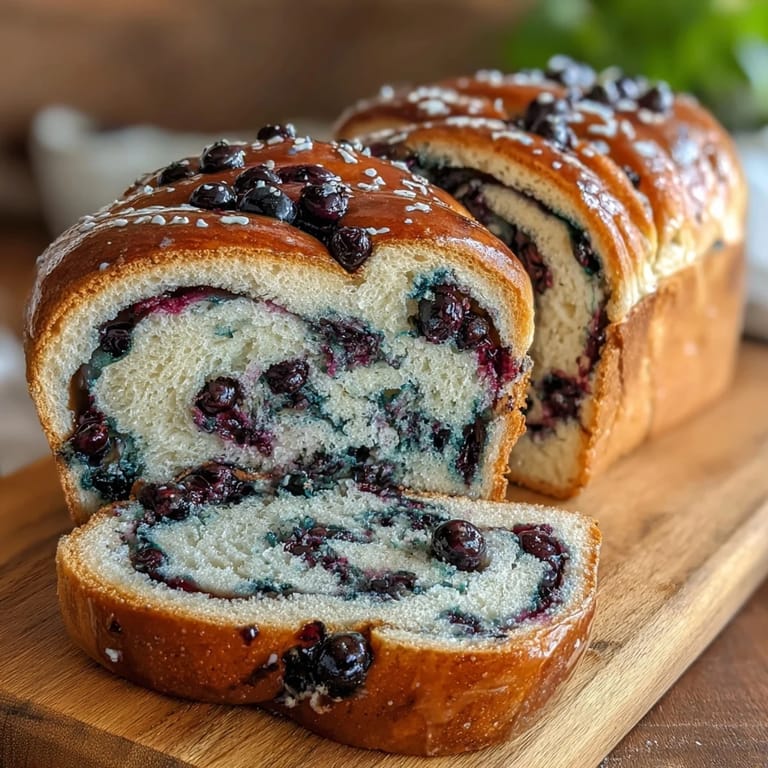
Save This loaf has become my go-to when I want to feel like I've accomplished something real in the kitchen without the fuss. It's the kind of bread that makes your house smell like a proper bakery and tastes even better than it smells.
Recipe FAQ
- → How long should the dough rise?
The dough requires a first rise of 4–6 hours until doubled, and a second rise of 1–2 hours until puffy and nearly doubled.
- → Can frozen blueberries be used for the swirl?
Yes, frozen blueberries work well; just ensure they are fully thawed before cooking for the swirl.
- → What is the texture of this loaf?
The loaf has a tender crumb with a moist interior and a slightly crispy crust, enhanced by the lemon and blueberry swirl.
- → Is the lemon glaze necessary?
The glaze is optional but adds a bright, sweet finish that complements the tangy loaf beautifully.
- → How can I add more lemon flavor?
Extra lemon zest can be mixed into the dough or blueberry swirl for a stronger citrus note.
- → What are good pairings for this loaf?
It pairs wonderfully with cream cheese, fresh fruit, or a hot cup of tea for a balanced treat.