 Save
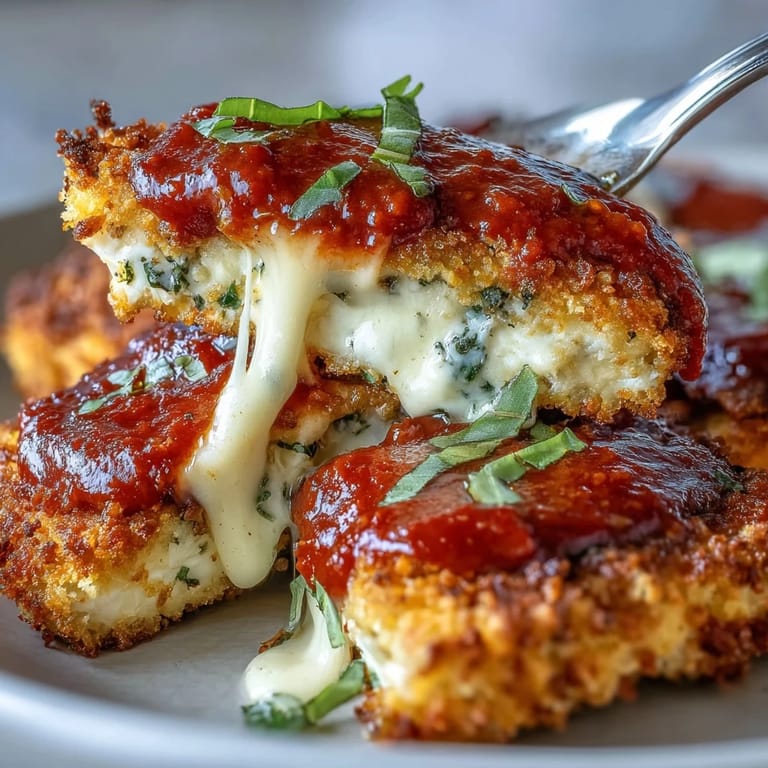
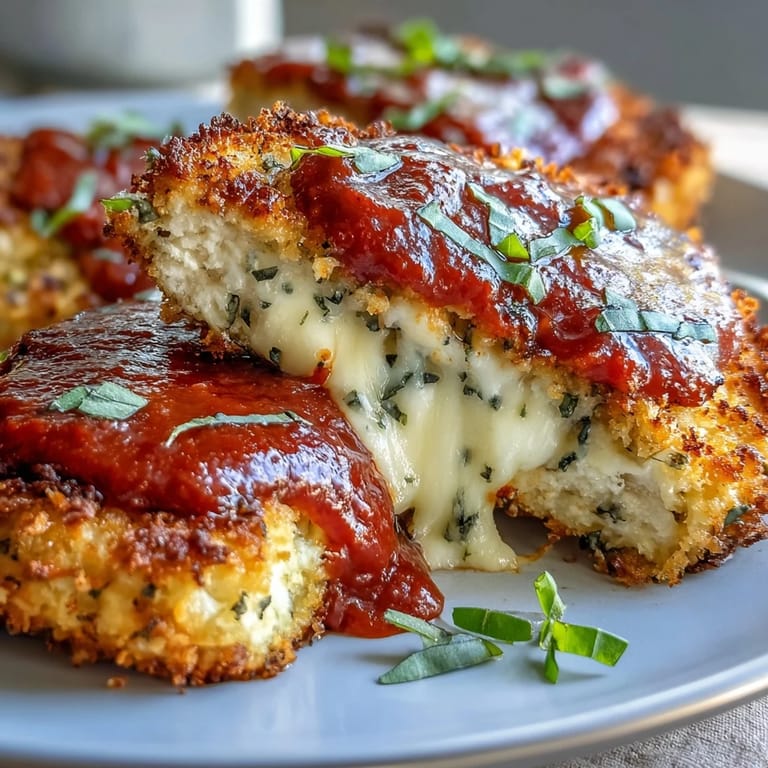
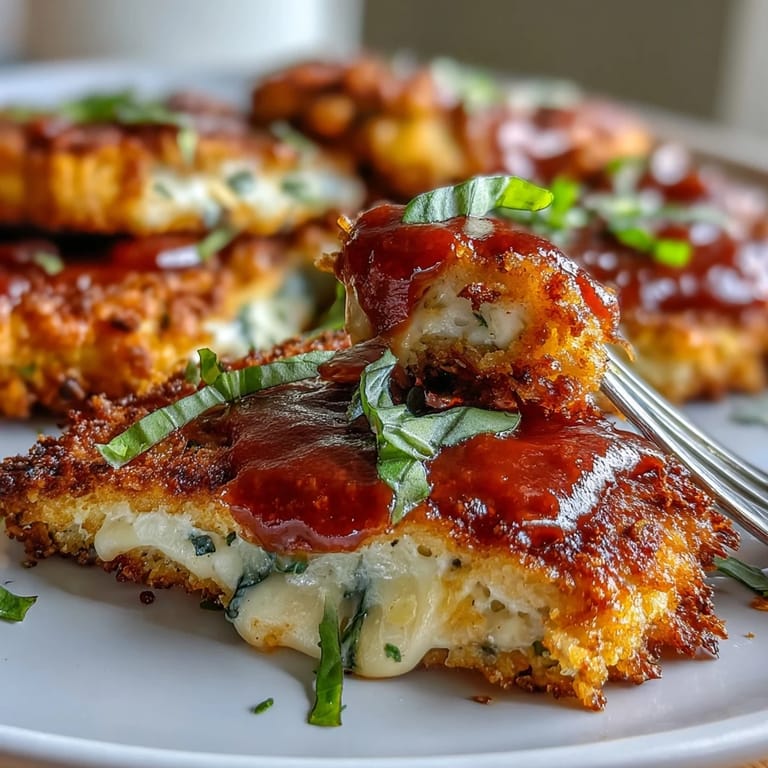
Save My roommate challenged me to make something that would convince her tofu could be crispy and satisfying, not just a supporting player in stir-fries. One Saturday afternoon, I breaded slabs of pressed tofu the way my grandmother did chicken, then buried them under marinara and melted cheese. The smell alone drew her into the kitchen before anything was even done baking. She took one bite and went quiet in that way that means you've won the argument without words.
I've made this for dinner parties where I didn't announce it was vegetarian until halfway through, just to watch people's faces when they realized their assumptions were completely wrong. There's something satisfying about that moment when someone puts down their fork and says, "Wait, that was tofu?" It's become my quiet little victory dish.
Ingredients
- Extra-firm tofu, 2 blocks (16 oz each): This is your canvas, and pressing it thoroughly is non-negotiable—skip this step and you'll end up with a soggy disappointment rather than crispy cutlets.
- All-purpose flour, ½ cup: The first layer of your breading trio, creating a foundation for everything else to cling to.
- Eggs, 2 large, beaten: Your adhesive that makes the panko actually stick instead of sliding off mid-fry.
- Panko breadcrumbs, 1 cup: These coarse crumbs get you that golden, craggy texture that actually shatters when you bite into it.
- Asiago cheese, ½ cup grated: The secret ingredient that elevates this beyond basic breading—it browns beautifully and adds a sharp, nutty note that regular breadcrumbs can't match.
- Dried oregano, 1 tsp: This whispers Italian flavor into every bite without overpowering anything.
- Garlic powder, ½ tsp: A background note of umami that ties the whole dish together.
- Salt and black pepper, ½ tsp and ¼ tsp: Season boldly here; the tofu itself is mild, so these seasonings need to be confident.
- Olive oil, 2 tbsp: For frying your cutlets to that perfect golden state—use enough to coat the pan, not so much that you're deep frying.
- Marinara sauce, 2 cups: Whether store-bought or homemade, this is what brings everything together with that tangy tomato comfort.
- Mozzarella cheese, 1½ cups shredded: The stretch and melt that makes this feel indulgent and complete.
- Parmesan cheese, ¼ cup grated, optional: A finishing touch that adds sharpness and helps the cheese layer brown more evenly.
- Fresh basil leaves: The final flourish that makes this look restaurant-quality and taste like summer.
Tired of Takeout? 🥡
Get 10 meals you can make faster than delivery arrives. Seriously.
One email. No spam. Unsubscribe anytime.
Instructions
- Press your tofu like you mean it:
- Wrap each block in a clean kitchen towel and weight it down with something heavy—a cast iron skillet, a stack of plates, whatever you have. Twenty minutes minimum, though longer is better. You're essentially wringing out the excess water that would otherwise make your cutlets weep and steam instead of crisp.
- Set up your breading station:
- Three shallow bowls in a row: flour alone, beaten eggs in the middle, and your panko mixture (where you've already combined the breadcrumbs, Asiago, oregano, garlic powder, salt, and pepper) at the end. This assembly line approach keeps things fast and prevents cross-contamination of your ingredients.
- Bread each slice with confidence:
- Dredge in flour first to create a dry base, then dip fully into egg (let the excess drip off), then press firmly into the panko mixture on both sides. You want a thick, unified crust, not a thin dusty layer.
- Get your skillet screaming hot:
- Heat olive oil over medium heat until it shimmers—that's your signal it's ready. The oil should sizzle immediately when tofu hits the pan, which means you're getting a proper sear rather than a gentle soak.
- Fry with patience:
- Lay tofu cutlets in the pan without crowding—work in batches if needed. Two to three minutes per side until the breading turns deep golden brown and sounds crispy when you tap it with a spatula. Patience here is where the magic happens.
- Build your bake:
- Arrange fried cutlets on your parchment-lined baking sheet, spoon marinara over each one, then top with a generous handful of mozzarella and a light dusting of Parmesan if you're using it. Don't be shy with the cheese; it needs to be thick enough to get bubbly and slightly browned.
- Bake until it's molten:
- Fifteen to eighteen minutes in a 400°F oven, watching for that moment when the cheese stops being melted and starts bubbling at the edges. You'll know it's done by smell as much as sight—that deep, savory aroma of melted cheese and hot marinara.
- Finish with fresh basil:
- Right before serving, tear a handful of fresh basil and scatter it over top. It adds a pop of color and a brightness that cuts through the richness of the cheese and sauce.
 Save
Save I brought this to a potluck once where another vegetarian was also bringing a dish, and we ended up laughing because mine disappeared first—not out of politeness, but because people were genuinely excited about it. That's when I realized this recipe had crossed some invisible line from "vegetarian option" to "something everyone actually wants to eat."
Why the Breading Technique Actually Matters
The three-step breading process isn't just traditional for the sake of tradition. Flour creates grip, egg acts as glue, and panko provides structure and air pockets that trap heat and steam to crisp up the outside while keeping the inside tender. When I tried shortcuts—skipping the flour or using wet breadcrumbs—everything fell apart, literally. The flour step is what made me stop cutting corners.
Making It Your Own
This recipe is more forgiving than you'd think once you understand the core technique. I've swapped the Asiago for Pecorino Romano when that's what I had on hand, added red pepper flakes to the sauce for a spicy kick, and even pressed chickpeas once (they didn't work, but the attempt was noble). The structure stays the same; the flavors bend to what you're craving that day.
Serving and Storage
Serve this over spaghetti, alongside a simple green salad, or honestly, just on a plate by itself if you want to taste the tofu without distraction. Leftovers reheat beautifully in a 350°F oven for about ten minutes, though they taste best fresh and still a little warm.
- Leftover cutlets keep in an airtight container in the fridge for three days, though I've never had any last that long.
- You can bread the tofu ahead of time and refrigerate it for a few hours before frying, which makes weeknight cooking even faster.
- If you're feeding vegans, swap the eggs for a plant-based alternative and use cashew or nutritional yeast-based vegan cheeses, and they'll get the same crispy, cheesy experience.
 Save
Save This dish has quietly become the recipe people ask for when they want to stop thinking of vegetarian cooking as a limitation and start seeing it as an opportunity. That shift, right there, is worth every minute you spend pressing tofu.
Recipe FAQ
- → How do I press tofu properly for this dish?
Wrap tofu blocks in clean towels and place between two cutting boards. Weight the top board with heavy cans or a skillet for 20 minutes to remove excess moisture. This step is crucial for achieving crispy results and preventing sogginess during baking.
- → Can I make these entirely vegan?
Yes. Substitute the beaten eggs with plant-based egg replacement or a mixture of flaxseed meal and water. Use vegan mozzarella shreds and replace Asiago with nutritional yeast or vegan Parmesan alternative for the breading mixture.
- → What's the best way to reheat leftovers?
Reheat in a 375°F oven for 10-12 minutes until heated through and cheese bubbles again. Avoid microwaving as it makes the breading soggy. For best results, store toppings separately and reassemble before reheating.
- → Can I skip the pan-frying step?
You can bake the breaded cutlets at 400°F for 20-25 minutes, flipping halfway through. However, pan-frying creates superior crunch and texture. If baking only, spray cutlets generously with oil spray before baking to mimic frying results.
- → How do I know when the tofu is perfectly pressed?
Well-pressed tofu feels dense and firm to the touch, not spongy. The towels will be noticeably damp, and the block may have reduced slightly in size. Proper pressing removes enough water that the tofu browns rather than steams during cooking.
- → What sides complement this dish?
Serve over spaghetti tossed with olive oil and garlic, or alongside crusty garlic bread. A simple arugula salad with lemon vinaigrette cuts through the richness. Roasted vegetables like broccoli or zucchini also make excellent accompaniments.