 Save
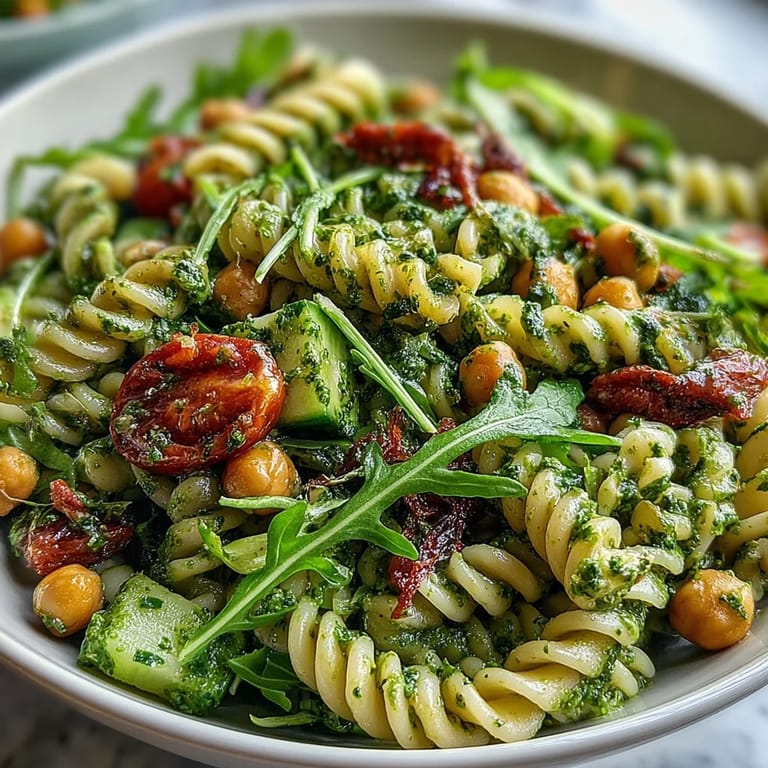
Save A friend showed up to my apartment one summer afternoon with a container of homemade pesto, and I realized I'd been overthinking plant-based cooking for months. We tossed it with some pasta I had lying around, threw in a can of chickpeas, and suddenly lunch became this bright, satisfying thing that didn't feel like we were being careful about anything. That afternoon taught me that creamy vegan pesto doesn't need dairy to taste like velvet, and now this pasta salad is what I make when I want something that feels both nourishing and joyful.
I brought this to a potluck where someone asked if it was "actually vegan" with genuine surprise, and I realized that's when you know a recipe has crossed over into something special. Everyone went back for seconds, and the bowl came home nearly empty.
Ingredients
- Short pasta (300g): Fusilli and penne work beautifully because the ridges catch the pesto, but any shape you love will do the job.
- Fresh basil leaves (50g): Don't skip the quality here—bright, tender basil makes all the difference in pesto, and wilted leaves will disappoint you.
- Raw cashews (60g), soaked: The soaking step matters because it softens them enough to blend into that creamy dream texture without any grittiness.
- Nutritional yeast (2 tbsp): This is what gives the pesto a savory depth and a gentle cheesy note that tricks your brain into thinking cream is involved.
- Garlic (2 cloves): Fresh and raw, it stays sharp and alive in the pesto rather than mellow like cooked garlic would be.
- Lemon juice (2 tbsp): This brightens everything and keeps the pesto from feeling one-note, plus it prevents the basil from turning dark.
- Extra virgin olive oil (60ml): Use something you actually like tasting because it's the base note here, not a background player.
- Plant-based milk (60ml): The little bit of liquid makes the pesto pourable and helps it coat the pasta evenly without being thin.
- Salt and pepper: Start conservative and taste as you go because cashews and nutritional yeast already carry their own saltiness.
- Chickpeas (1 can, drained): These turn the salad into a full meal, and their earthiness plays beautifully against the bright pesto.
- Fresh arugula (75g): The peppery bite is essential—it keeps the salad from becoming too creamy and heavy.
- Cherry tomatoes (100g): Halved and tossed in, they add bursts of sweetness and acidity.
- Red onion (1/2 small): Sliced thin so it's sharp but not overwhelming, just enough to remind you it's there.
- Cucumber (1 small): Diced, it adds a cool crunch that contrasts with the soft pasta.
Tired of Takeout? 🥡
Get 10 meals you can make faster than delivery arrives. Seriously.
One email. No spam. Unsubscribe anytime.
Instructions
- Cook the pasta until it's just past tender:
- Bring a large pot of salted water to a rolling boil and add your pasta, stirring occasionally so nothing sticks together. When it's al dente (tender with a slight bite), drain it and run it under cold water right away—this stops the cooking and keeps it from turning mushy.
- Make the pesto while everything cooks:
- Throw your soaked cashews, basil, nutritional yeast, garlic, lemon juice, olive oil, plant milk, salt, and pepper into a blender or food processor and blend until it's completely smooth and creamy, stopping to scrape down the sides so nothing hides. Taste it and adjust—if it needs more brightness, add a squeeze more lemon; if it's too sharp, a pinch more salt smooths things out.
- Combine everything in one big bowl:
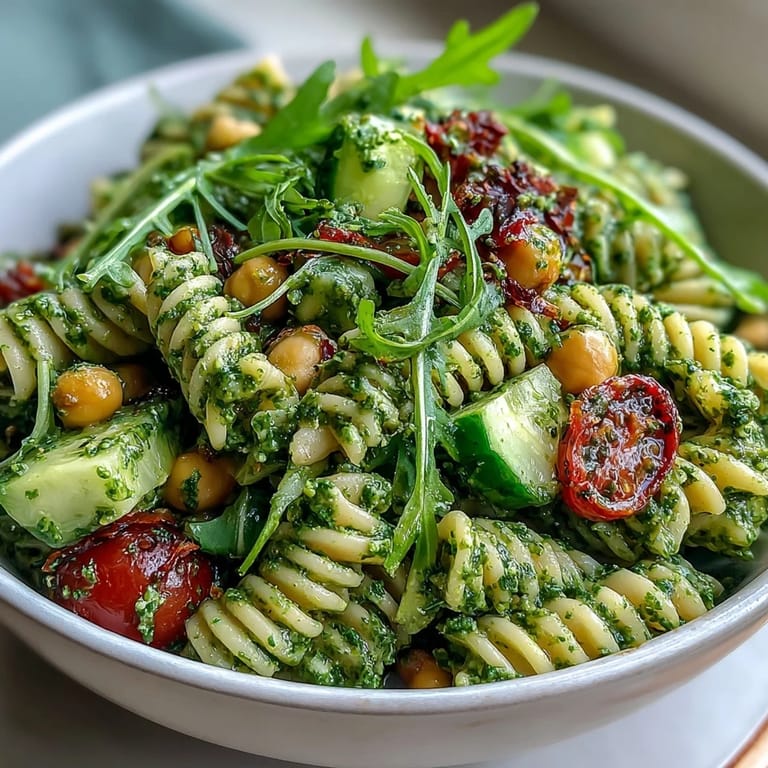
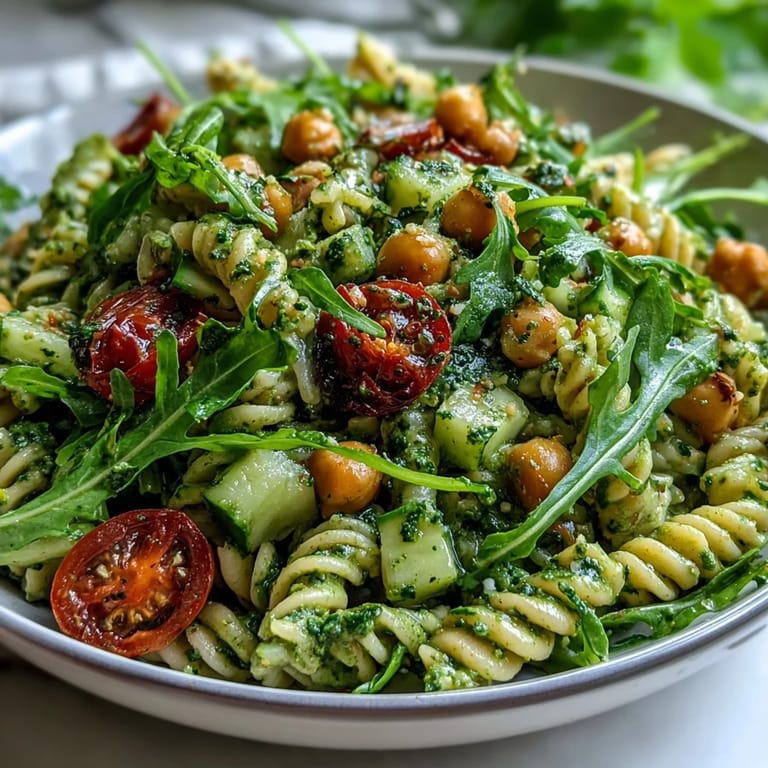
- Add the cooled pasta, drained chickpeas, arugula, cherry tomatoes, sliced red onion, and diced cucumber to a large mixing bowl and give it all a gentle toss to mingle.
- Pour the pesto over and toss thoroughly:
- Pour that creamy pesto over the salad and toss everything together until each piece of pasta and vegetable is coated with that green velvet. The pasta will soak up the pesto as it sits, which is exactly what you want.
- Taste and adjust before serving:
- This is your moment to fix anything—more salt if it needs grounding, more pepper if it needs bite, more lemon if it's feeling flat. Serve it right away for brightness, or chill it for 30 minutes if you want the flavors to get even more friendly with each other.
 Save
Save My partner came home from work stressed and sat down to a bowl of this, and watched their shoulders drop with each bite. Food doesn't need to be complicated to feel like care.
The Creamy Pesto Secret
The magic of this pesto isn't in any one ingredient—it's in balance. The cashews give creaminess, the nutritional yeast adds that savory-umami thing your brain recognizes as rich, and the plant milk acts as a binding agent that keeps everything smooth without making it thin. I learned this by accident when I ran out of olive oil and added more milk instead, and it actually worked better. Now I think of plant-based pesto as an equation where the plant milk is the translator between all the other flavors, making them work as a unified whole rather than competing elements.
Why This Works as a Meal
Chickpeas carry about 15 grams of protein per serving, which means this isn't a side dish pretending to be lunch. Add the fiber from the pasta and vegetables, plus the healthy fats from the cashews and olive oil, and you've built something that actually sustains you through an afternoon instead of leaving you hungry an hour later. I used to make pasta salads that were mostly air and regret, and then I started treating them like real meals with intentional protein and it changed my entire approach to lunch.
Make It Your Own
This recipe is a framework, not a prison sentence. I've made it with roasted red peppers when I wanted something warmer, with olives when I wanted more Mediterranean vibes, and with spinach instead of arugula when that's what I had in the drawer. One time I added some diced avocado right before serving and it was like eating a completely different salad—still itself, but richer and more luxurious. The foundation of creamy pesto and chickpea is strong enough to handle your experiments.
- For a nut-free version, swap the cashews for sunflower seeds or silken tofu and blend until equally smooth.
- Leftovers keep for two days refrigerated, though they're truly best the day they're made when the arugula still has its peppery snap.
- If you're meal prepping, keep the arugula separate and add it right before eating so it doesn't get soggy and sad.
 Save
Save This salad taught me that vegan cooking doesn't mean deprivation—it means learning to build richness differently. Make it once and you'll understand why it keeps appearing on my table through every season.
Recipe FAQ
- → What type of pasta works best for this dish?
Short pasta shapes like fusilli or penne hold the pesto well and provide a nice texture. Gluten-free options can be used as preferred.
- → How do you make the pesto creamy without dairy?
Soaked cashews blended with basil, nutritional yeast, plant milk, and olive oil create a creamy, smooth pesto without any dairy.
- → Can I substitute the nuts in the pesto for allergies?
Sunflower seeds or silken tofu make great nut-free alternatives while maintaining creaminess in the pesto.
- → Is it better to serve this dish immediately or chilled?
Though delicious fresh, chilling for 30 minutes enhances the flavors and texture, making it a refreshing option.
- → What are some good additions to vary the flavor?
Additions like roasted red peppers or olives bring extra depth and a savory punch to the salad.