 Save
Save There's something about the sizzle of garlic hitting hot oil that still makes me pause mid-chop and just listen. One Friday night, I was making dinner for friends who'd been craving something warm and spicy, and I grabbed a box of penne without much of a plan beyond that sizzle. What started as half-remembered stories about Roman trattorias turned into this golden, bubbling baked pasta that nobody wanted to leave the table after finishing. It's one of those dishes that tastes like you've been cooking for hours, even though your hands are barely dirty.
My neighbor once told me she thought baked pasta was "too fancy" for weeknights, and then I brought her a small dish still steaming from the oven. She called me three days later asking if I'd write down what I did, which made me laugh because it's barely more complicated than regular pasta night, just with an oven involved at the end. That moment reminded me that the best food isn't about showing off—it's about making people feel taken care of.
Ingredients
- Penne pasta, 350 g: The tubes catch sauce beautifully, which is kind of the whole point here; don't use something thin or it'll disappear into the cheese.
- Olive oil, 2 tbsp: This is where the garlic starts its journey, so use something you actually like the taste of, not the cheapest bottle.
- Garlic, 4 cloves finely chopped: The size of your chop matters more than you'd think—too big and you'll bite into hard chunks, too small and it disappears.
- Crushed red pepper flakes, 1–2 tsp: Start with one and taste as you go; this is your heat dial, and everyone's tolerance is different.
- Canned crushed tomatoes, 800 g: The foundation of everything, so grab a brand you trust; I learned this the hard way after a forgettable batch.
- Sugar, 1 tsp: A small trick that balances the acid in the tomatoes without making anything taste sweet.
- Dried oregano, 1 tsp: It blooms in the heat and gives the sauce that Mediterranean backbone.
- Salt and freshly ground black pepper: Essential because even great ingredients need seasoning to shine.
- Fresh basil, 1 small bunch: Save some for the end; the fresh version tastes nothing like what you'd use mid-cooking.
- Parmesan cheese, 80 g grated: The sharp, salty one that makes everything better, which is why it deserves to be real.
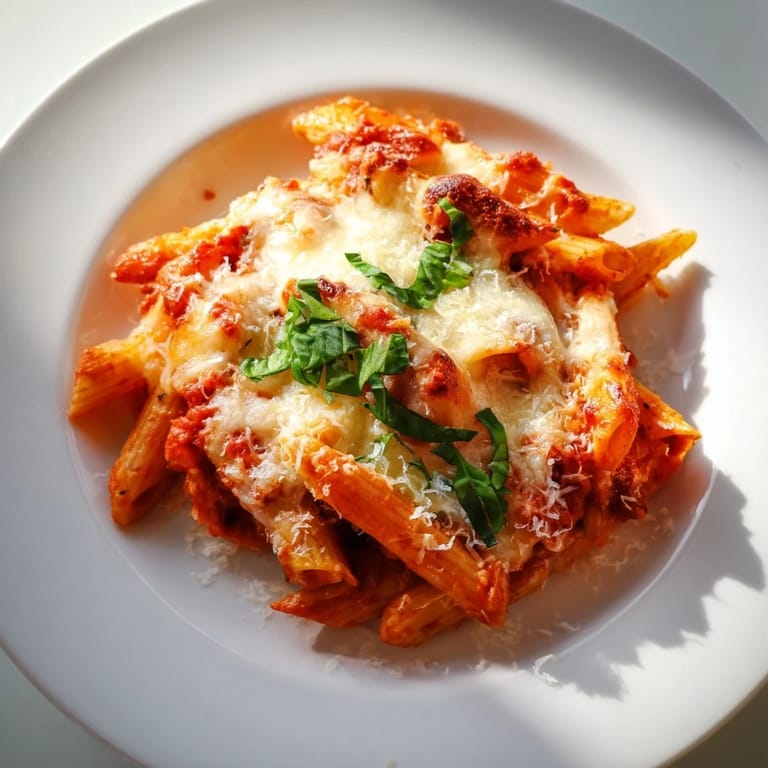
- Mozzarella cheese, 150 g shredded: This is what gets golden and bubbly; it's the visual reward for your patience.
Tired of Takeout? 🥡
Get 10 meals you can make faster than delivery arrives. Seriously.
One email. No spam. Unsubscribe anytime.
Instructions
- Heat your oven and prepare:
- Set your oven to 200°C (400°F) and grease a large baking dish so nothing sticks later when you're too hungry to care about cleanup. This takes two minutes and saves you from regret.
- Start the pasta:
- Boil salted water in a large pot and cook the penne until it's just shy of al dente—about two minutes less than the box tells you. You want it to have some resistance when you bite it because it's going back in the oven and will keep cooking.
- Build the sauce base:
- While the pasta cooks, warm olive oil in a large skillet over medium heat and add your garlic and red pepper flakes. Let them warm together for a minute or two until you smell them—that's your signal that they're ready, not when they turn brown.
- Simmer the tomatoes:
- Pour in the crushed tomatoes and add the sugar, oregano, salt, and pepper, then let it bubble gently for 10 to 12 minutes, stirring now and then, until it thickens slightly and the raw edge mellows. This is when you taste it and decide if you need more heat.
- Finish with basil:
- Pull the skillet off the heat and stir in your chopped basil, which will soften just from the residual warmth and spread its fragrance everywhere.
- Combine pasta and sauce:
- Drain your pasta and tumble it into the sauce, tossing gently until every piece gets coated. This is satisfying to do and also the last chance to check your seasoning.
- Layer for the bake:
- Spread half the pasta mixture into your baking dish, scatter half the Parmesan and mozzarella over top, then add the remaining pasta and finish with the rest of the cheese. It should look generous and a little chaotic, which is exactly right.
- Bake until golden:
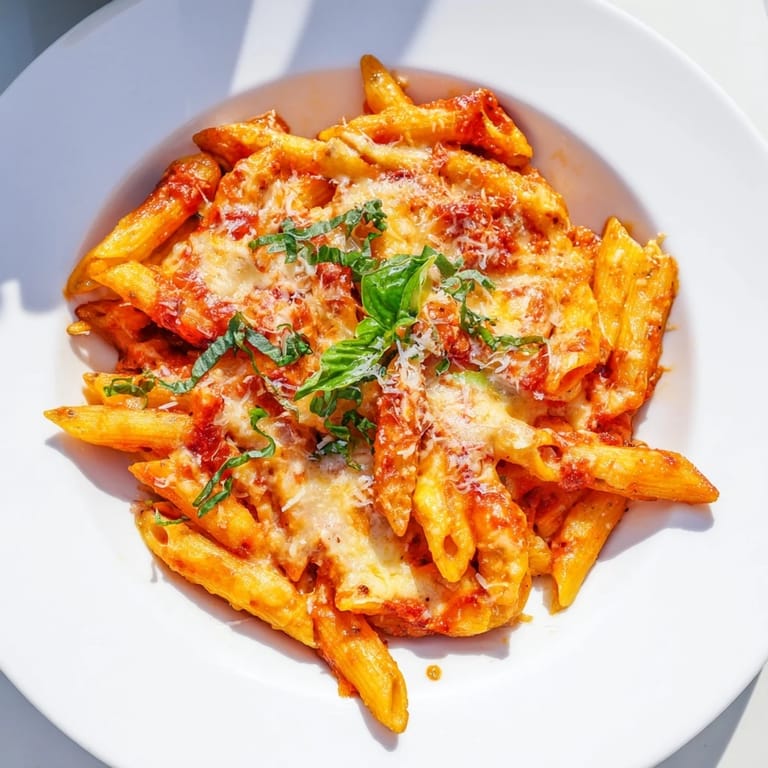
- Put it in the oven for 18 to 20 minutes, until the cheese is melted and starting to brown at the edges and you can see the sauce bubbling underneath. Your kitchen will smell incredible, which means it's almost ready.
- Rest and serve:
- Let it sit for five minutes so the layers set slightly and won't slide around on the plate, then scatter fresh basil on top and serve while it's still steaming.
 Save
Save I remember watching my dad take his first bite of this, and he got quiet in that way that means something just worked. He's not a big talker about food, but he asked for seconds and thirds, which is how I know I've done something right. That's when I realized this dish isn't fancy or complicated—it's just honest, and sometimes that's everything.
The Heat Level Decision
Arrabbiata means angry in Italian, and the heat is supposed to be present but not punishing. I've learned that the crush of red pepper flakes matters as much as the amount—if they're old and dusty, they're mostly just color, so taste as you go. One friend always asks for extra, another barely tolerates what I make, so I put a small bowl of red pepper flakes on the side and let people adjust their own bowls. It's a small thing that took me a while to figure out, but it's saved many dinners from turning into an argument about heat levels.
Why Baked Instead of Stovetop
Baking the pasta does something that just stirring on the stove never quite achieves—the cheese melts into and over everything, the sauce thickens and concentrates, and you get those little spots of golden-brown that taste better than any other part. The oven also means you're not standing there watching and stirring; you just slide it in and walk away. There's something relaxing about that, especially when you're cooking for people and want a few minutes to not think about dinner.
Cheese Choices and Variations
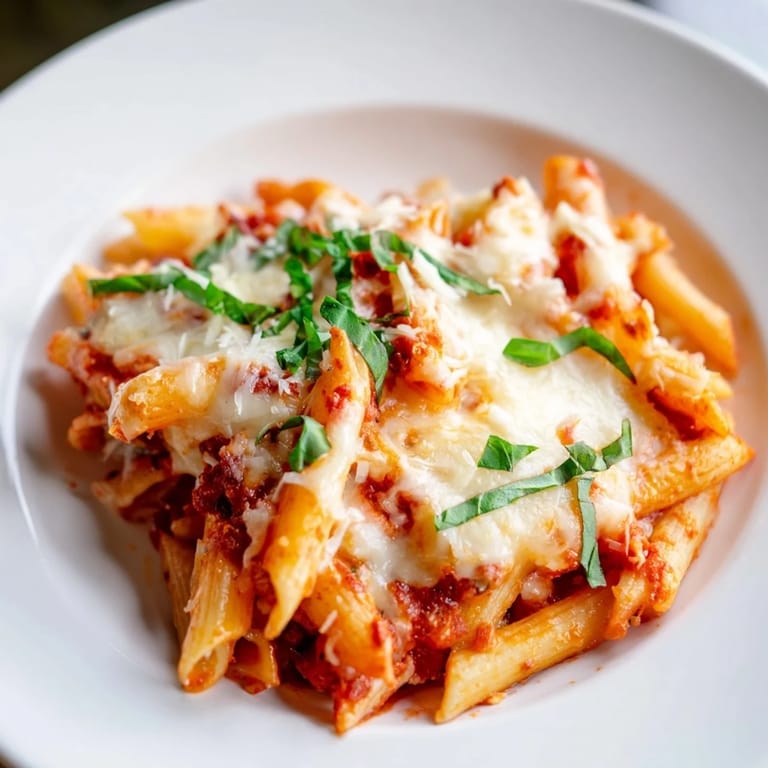
Parmesan and mozzarella are the classic pairing, but I've also tried provolone for a sharper flavor and fontina for something creamier, and both work beautifully if you're in the mood to play. The ratio matters too—don't go too heavy on one or it'll dominate everything else. If you want to sneak in vegetables, sautéed bell peppers or mushrooms won't overpower the arrabbiata if you don't add too much, and they'll make it feel a little less heavy without losing the comfort factor.
- Always grate or shred cheese fresh if you can; pre-shredded stuff has cellulose that keeps it from melting smoothly.
- If you use whole tomatoes instead of crushed, give them a rough break-up with your wooden spoon as they cook so they soften into the sauce.
- Fresh basil at the end is non-negotiable; dried basil cooked with the sauce is fine, but finish with fresh for the actual flavor that makes people ask for the recipe.
 Save
Save This baked penne arrabbiata has become my go-to when I want to feed people something that tastes like it took real effort but didn't steal my entire evening. It's the kind of dish that gets asked about, gets made again, and somehow tastes a little better each time.
Recipe FAQ
- → How can I adjust the spiciness level?
Modify the amount of crushed red pepper flakes to suit your preference. Reducing will mellow the heat, while adding extra increases the spice.
- → What cheese options work well besides Parmesan and mozzarella?
Provolone or fontina can be substituted for a different cheesy flavor while maintaining creamy texture.
- → Can I add vegetables to this dish?
Sautéed bell peppers, mushrooms, or spinach can be incorporated for added texture and nutrition.
- → How to ensure the pasta stays al dente after baking?
Cook the penne slightly less than package instructions before baking, so it finishes cooking in the oven without becoming mushy.
- → What dishes pair well with baked penne arrabbiata?
Serve alongside a crisp green salad and a glass of Chianti for a balanced and satisfying meal.