 Save
Save My coworker Maya brought a poke bowl to lunch one Tuesday, and the moment I smelled that sesame oil and sriracha combination, I knew I had to learn how to make it. She caught me staring at her bowl mid-bite and laughed, sliding over a spare container of the spicy tuna she'd made that morning. That was three years ago, and now this bowl is my go-to when I want something that feels both impressive and effortless.
I made this for my sister's dinner party last summer when she insisted she didn't want me to stress over cooking. I prepped the tuna marinade that morning, cooked the rice while we caught up over coffee, and by evening, everyone was building their own custom bowls with the toppings spread across the counter. Watching people adjust the sriracha to their own heat preference and swapping avocado slices like they were at some kind of poke assembly line made me realize this dish has a special quality—it brings people together without demanding perfection.
Ingredients
- Sushi rice (2 cups): The foundation that makes this feel authentic; rinsing it properly removes excess starch so each grain stays separate and fluffy rather than turning into mush.
- Water (2 1/2 cups): The ratio matters more than you'd think—too much and your rice becomes porridge, too little and you get crunchy centers that won't absorb the vinegar seasoning.
- Rice vinegar (3 tbsp): This acidic element brightens the entire bowl; use genuine rice vinegar, not regular vinegar, because the flavor is noticeably gentler and more nuanced.
- Sugar (1 1/2 tbsp) and salt (1 tsp): These two balance each other and season the rice evenly—dissolve them in the vinegar before mixing into warm rice so they distribute perfectly.
- Sushi-grade tuna (400 g): Non-negotiable quality here; ask your fishmonger specifically for sushi-grade and use it the same day you buy it for peak freshness and safety.
- Japanese Kewpie mayonnaise (2 tbsp): It's creamier and has a slightly sweeter flavor than American mayo, making the spicy tuna more luxurious—regular mayo works if that's what you have, but you'll notice the difference.
- Sriracha (2 tsp): Start with this amount and adjust upward if you like more heat; different brands have varying spice levels, so taste as you go.
- Soy sauce (1 tsp), sesame oil (1 tsp), and lime juice (1 tsp): This trio creates depth—the soy adds umami, the sesame brings nutty warmth, and the lime cuts through with brightness.
- Green onion (1 sliced) and toasted sesame seeds (1 tsp): These final additions to the tuna mixture add texture and a subtle onion note that keeps the marinade from feeling one-dimensional.
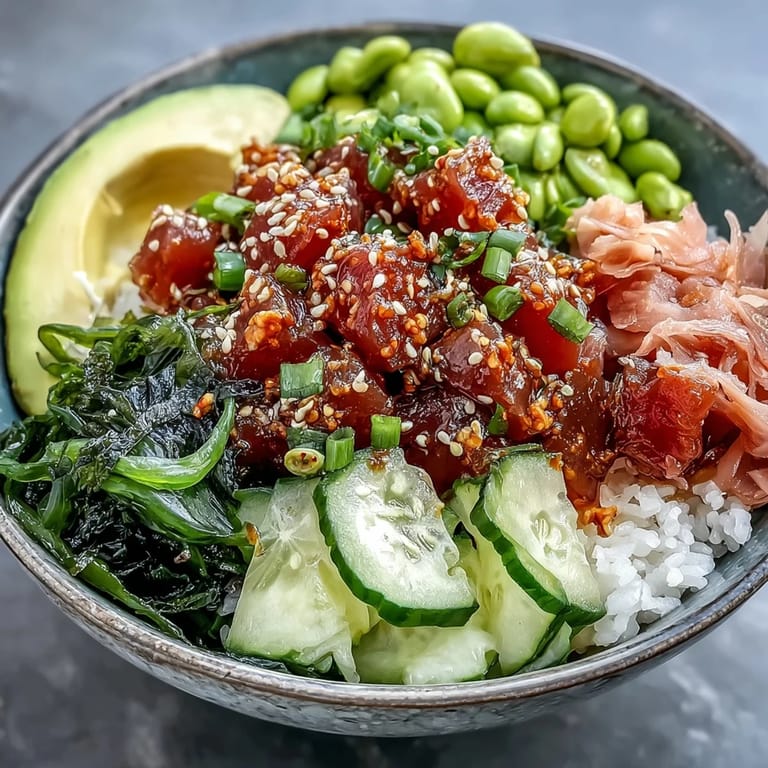
- Cucumber, avocado, edamame, pickled ginger, and seaweed: Fresh, contrasting toppings that add crunch, creaminess, and visual appeal—each one serves a purpose beyond just decoration.
Tired of Takeout? 🥡
Get 10 meals you can make faster than delivery arrives. Seriously.
One email. No spam. Unsubscribe anytime.
Instructions
- Rinse and cook the sushi rice:
- Run the rice under cold water, stirring gently with your fingers, until the water runs completely clear—this removes the starch coating that would otherwise make everything gluey. Combine with water in a saucepan, bring to a boil uncovered, then cover and drop the heat to low; you'll hear it shift from a rolling boil to barely a whisper, and that's when you know it's right.
- Season the warm rice:
- Mix the vinegar, sugar, and salt together first, then pour over the rice while it's still warm so the grains absorb the seasoning like they're drinking it in. Fluff gently with a fork or rice paddle as you stir, being careful not to mash the grains, and let it cool to room temperature before assembling bowls.
- Prepare the spicy tuna marinade:
- Whisk together mayo, sriracha, soy, sesame oil, and lime juice in a bowl, tasting as you go to adjust heat and flavor. Add the diced tuna and green onion, folding gently so the pieces stay intact, then sprinkle sesame seeds on top and refrigerate until you're ready to serve.
- Prep all your toppings:
- Slice the cucumber thin enough to see light through it, halve and slice the avocado (doing this last prevents browning), shell the edamame if you haven't already, and gather your pickled ginger and seaweed in small bowls. Everything looking organized in advance makes assembly feel like a breeze rather than a scramble.
- Assemble the bowls:
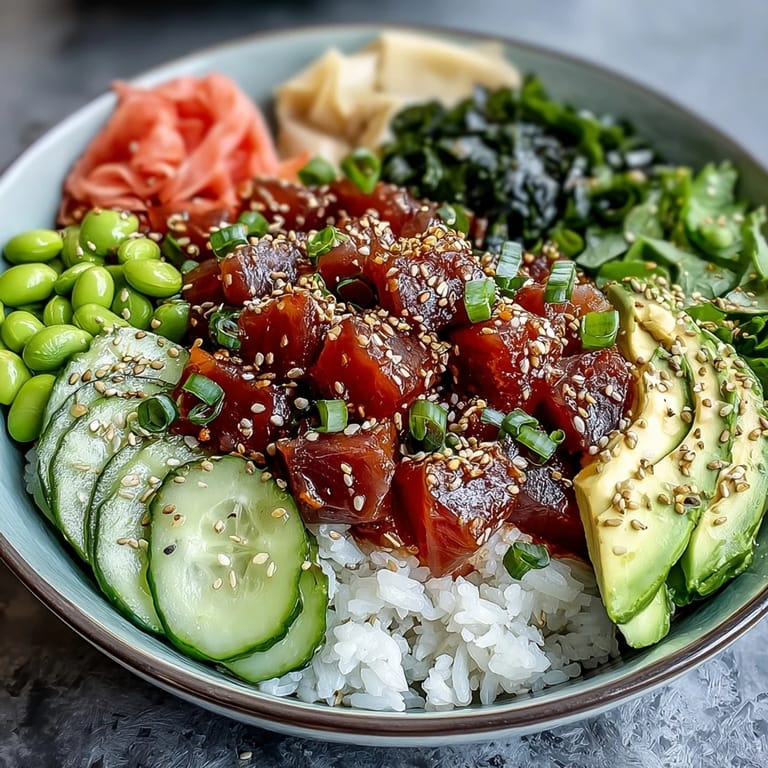
- Divide the cooled rice among four bowls, creating a small well in the center with the back of a spoon. Spoon the spicy tuna into that well, then arrange the cucumber, avocado, edamame, ginger, and seaweed around it in a pattern that looks intentional and beautiful.
- Finish and serve:
- Sprinkle with extra sesame seeds and furikake if you have it, then serve immediately while everything is at its freshest.
 Save
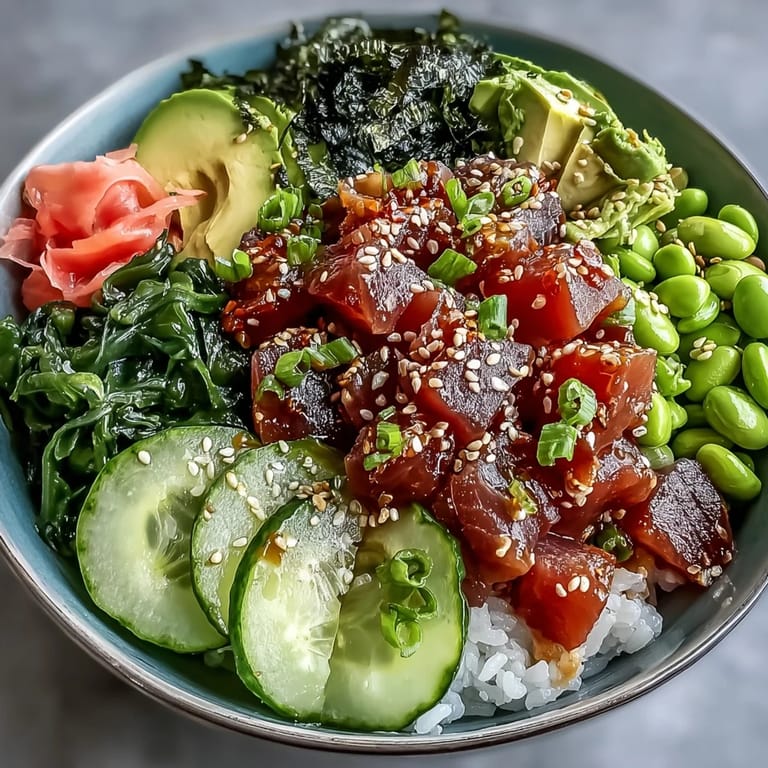
Save There's something almost meditative about arranging all those colors in a bowl—the deep red of the tuna, bright green of cucumber and avocado, the dark jewel tones of seaweed. My nephew once declared it looked too pretty to eat, and for about thirty seconds, I felt like a real artist.
Why This Dish Works So Well
Every component serves a specific purpose beyond just tasting good. The warm salty rice plays against cool fresh toppings, the creamy avocado balances the spicy tuna, and that pickled ginger acts almost like a palate cleanser between bites. When you eat a spoonful of everything together, there's a harmony happening—flavors aren't competing, they're completing each other. This is why poke bowls became such a phenomenon; they're not complicated, but they're thoughtfully constructed.
Making It Your Own
The beauty of a bowl format is that you can adapt it without the dish falling apart. I've made versions with salmon when I couldn't find quality tuna, swapped in brown rice for the sushi rice when I was feeling health-conscious, and even made a vegetarian version with marinated mushrooms and tofu for friends who don't eat fish. The structure stays the same—a seasoned grain base, a protein with a punchy marinade, and contrasting fresh toppings—so you can play around endlessly.
Pairing and Serving Ideas
Serve this with something cold and crisp to drink—a Sauvignon Blanc if you're going wine, or a light Japanese beer like Asahi if you prefer beer. The acidity or the slight bitterness cuts through the richness of the mayo and sesame oil perfectly. I sometimes make a big batch of rice and marinade on Sunday so I can throw together quick weeknight bowls, and it stores beautifully in the refrigerator for up to three days.
- Keep the rice, tuna, and toppings separate until the last moment so nothing gets soggy or oxidized.
- If avocado is expensive or not ripe, the bowl is still delicious without it—don't stress about hitting every topping.
- Make extra spicy tuna marinade and use it on crackers or in sushi rolls throughout the week.
 Save
Save This bowl has become my shorthand for feeding people well without overthinking it. There's honesty in a poke bowl—no heavy sauces to hide behind, just fresh ingredients arranged with intention and a little heat to keep things interesting.
Recipe FAQ
- → How do I properly cook sushi rice for the bowl?
Rinse the sushi rice until water runs clear, then simmer covered for 15 minutes. Let it rest off the heat for 10 minutes before seasoning with rice vinegar, sugar, and salt.
- → What gives the spicy tuna its flavor and heat?
The tuna is mixed with a marinade of mayonnaise, Sriracha, soy sauce, sesame oil, and lime juice, providing both spice and richness.
- → Can I substitute the tuna with other seafood?
Yes, fresh salmon can be used as an alternative for a different taste experience while maintaining the bowl's texture.
- → What toppings enhance the flavor and texture of the bowl?
Fresh cucumber, creamy avocado, edamame, pickled ginger, seaweed salad or roasted nori, along with toasted sesame seeds and optional furikake, provide varied crunch and freshness.
- → Is there a way to make this dish healthier?
Using brown rice or quinoa instead of sushi rice adds more fiber and nutrients without sacrificing flavor.