 Save
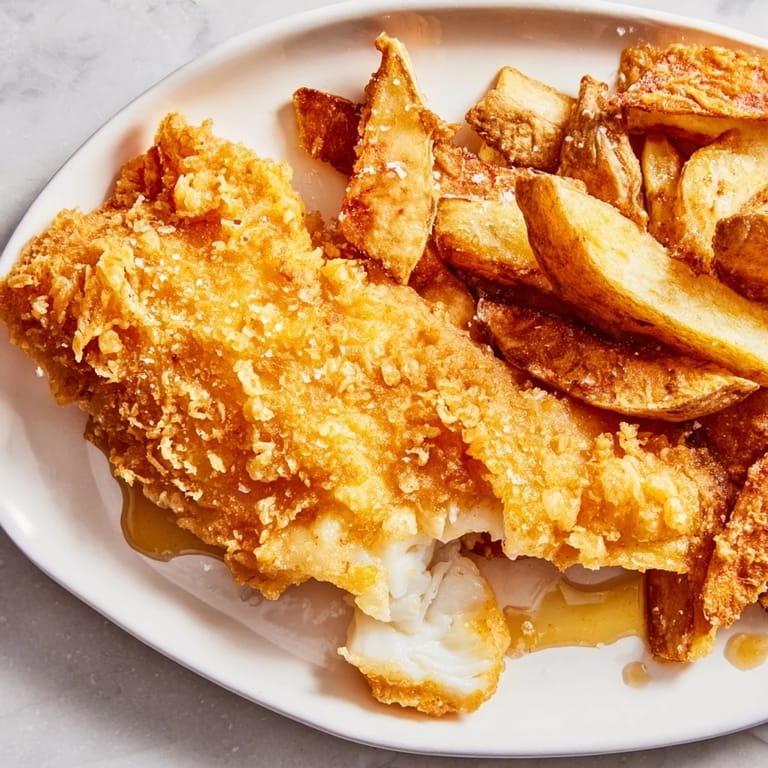
Save My first fish and chips came wrapped in newspaper at a weathered seaside pub on the English coast, steam rising off the package as I unwrapped it with eager fingers. The batter crackled against my teeth, golden and impossibly light, while the fish inside stayed tender and flaky—a revelation that this humble dish required more technique than I'd ever imagined. Years later, I realized the magic wasn't in rare ingredients but in respecting the fundamentals: cold batter, hot oil, and the discipline of double-frying your potatoes. Now when I make it at home, I chase that same memory, that exact moment when the crispy exterior gives way to something perfectly cooked beneath.
I made this for my partner after a rough week, both of us craving comfort food that felt like a treat, and watching their face when they bit into that first crispy piece reminded me why home cooking matters. There's something almost defiant about making fish and chips yourself, like you're reclaiming something that feels too good to be homemade, and that small victory somehow tastes better than any takeaway ever could.
Ingredients
- White fish fillets (cod or haddock): Use fresh, skinless, boneless fillets around 150g each—thick enough to withstand frying without drying out, mild enough to let the batter shine.
- All-purpose flour: The base of your batter; don't skip the extra for dusting the fish, as it helps the batter grip.
- Cornstarch: This is your secret weapon for extra crispiness, creating a lighter, more delicate crust than flour alone ever could.
- Baking powder: Gives the batter its signature airy texture and helps it puff up as it fries.
- Cold sparkling water or beer: The cold liquid keeps the batter light and bubbly; beer adds a subtle depth, but sparkling water works beautifully too.
- Russet or Maris Piper potatoes: Starchy potatoes with lower moisture content fry up golden and fluffy—waxy varieties will disappoint you.
- Sea salt: Sprinkle it on while everything's hot so it clings to the crispy surfaces.
- Sunflower or vegetable oil: Choose a neutral oil with a high smoke point; it should taste like nothing so the fish and chips can be the stars.
- Malt vinegar or lemon: The acidic hit cuts through richness and brightens everything.
Tired of Takeout? 🥡
Get 10 meals you can make faster than delivery arrives. Seriously.
One email. No spam. Unsubscribe anytime.
Instructions
- Soak your potatoes:
- Cut them into thick fries and submerge in cold water for 15 to 30 minutes—this removes excess starch and keeps them from sticking together as they fry. Pat them completely dry before they hit the oil.
- First fry at lower heat:
- Heat your oil to 150°C (300°F) and fry the potatoes in batches for 4 to 5 minutes until they're tender inside but pale—you're parcoooking them, not browning them yet. Drain on paper towels and let them rest.
- Mix your batter while chips rest:
- Whisk flour, cornstarch, baking powder, salt, and pepper together, then slowly add cold sparkling water or beer, stirring until you have a thick batter that coats a spoon. The batter should feel light and have tiny air bubbles.
- Second fry the chips until golden:
- Increase oil temperature to 190°C (375°F) and fry chips again in batches for 2 to 3 minutes until they're deep golden and crispy—you'll hear them sizzling aggressively. Drain on paper towels and salt them immediately while they're hot.
- Coat and fry the fish:
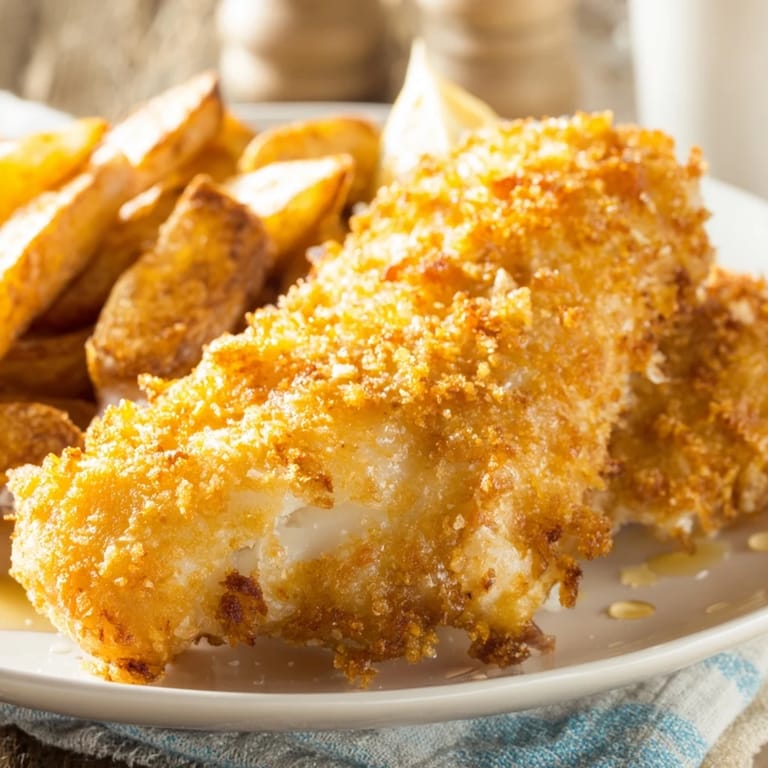
- Pat each fillet dry, dust lightly with flour, then dip into batter, letting excess drip off before carefully lowering it into hot oil. Fry for 5 to 7 minutes, turning once, until the batter is deep golden brown and the fish flakes easily—trust your nose, as the aroma will tell you when it's done.
- Plate with purpose:
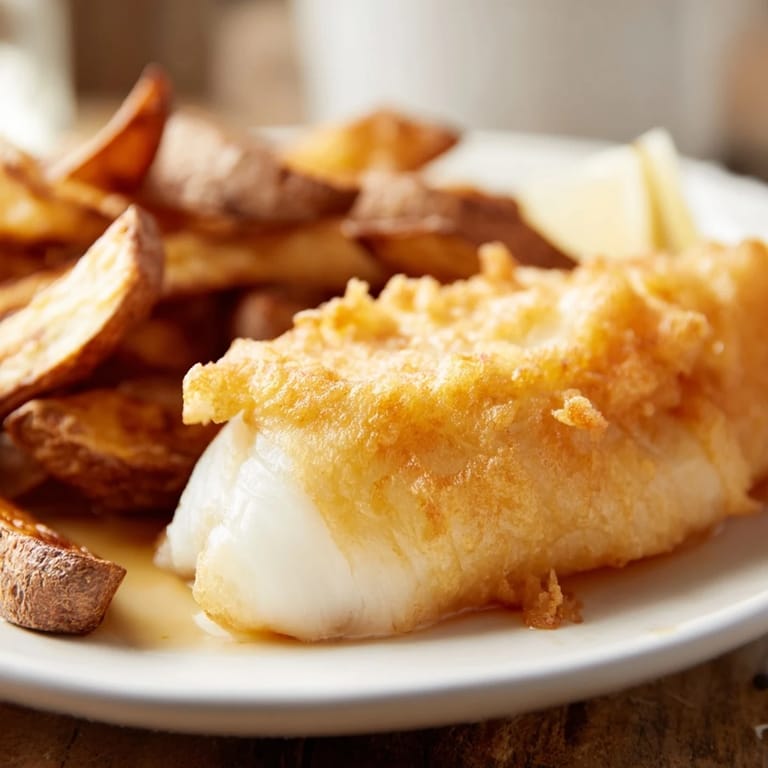
- Serve immediately while everything crackles with heat, with malt vinegar or lemon wedges alongside, and tartar sauce or mushy peas if you're feeling traditional.
 Save
Save I once invited friends over expecting casual delivery takeaway energy, but watching them react to homemade fish and chips felt like sharing something genuinely special—they kept coming back for more, and I realized this dish transcends being just food; it's an act of care wrapped in crispy batter. There's unexpected intimacy in a shared basket of chips passed around a table, everyone reaching in without hesitation.
The Two-Temperature Secret
Most people fail at chips because they jump straight to high heat, but the two-fry method is what transforms potatoes from merely cooked to genuinely transcendent. The first fry at lower temperature cooks the potato through, creating that fluffy interior, while the second fry at high heat shatters the exterior into golden, shattering crispiness. I learned this the hard way after my first batch came out soggy and sad, and now I can't imagine making them any other way—it's genuinely worth the extra five minutes.
Batter Texture Matters More Than You Think
The difference between thick and thin batter is the difference between a cocoon that puffs up around your fish and a thin veil that lets it dry out. Your batter should coat a spoon thickly, almost like pancake batter, and if you're using beer instead of sparkling water, trust that subtle yeasty flavor—it adds a complexity that keeps people wondering what you did differently. The baking powder is what creates those tiny air pockets that make the batter shatter rather than chew.
Timing and Temperature Control
Oil temperature isn't just a suggestion; it's the difference between a golden masterpiece and a greasy disaster that absorbed more oil than fish. If your oil isn't hot enough, the batter will absorb oil instead of frying, and if it's too hot, the outside burns before the inside cooks. Use a thermometer if you have one, and if you don't, drop a tiny piece of batter in—it should sizzle aggressively and rise to the surface within seconds.
- Work in batches so the oil temperature doesn't plummet when you add cold food to hot oil.
- Never overcrowd the pan or fryer, as this drops temperature and creates competition for space.
- Serve everything immediately while it's still crackling with heat, because even five minutes of sitting transforms crispy into merely warm.
 Save
Save This dish is pure comfort, the kind that makes you feel instantly transported to a seaside village or a cozy pub, even if you're cooking in your own kitchen. When the batter shatters and the fish flakes perfectly, you'll understand why this simple combination has endured for generations.
Recipe FAQ
- → What type of fish works best?
White, flaky fillets such as cod or haddock are ideal for a tender yet crispy result.
- → Why soak the potatoes before frying?
Soaking removes excess starch, helping achieve crispy fries with a fluffy interior.
- → Can I use beer instead of sparkling water in the batter?
Yes, beer can add extra crispness and flavor to the batter.
- → How do I get crispy chips?
Double-frying the potatoes—first at lower then higher temperatures—creates a crisp exterior and soft inside.
- → What oils are suitable for frying?
Use sunflower or vegetable oil for its high smoke point and neutral flavor.
- → What to serve alongside for authenticity?
Malt vinegar, lemon wedges, tartar sauce, and mushy peas complement the flavors traditionally.