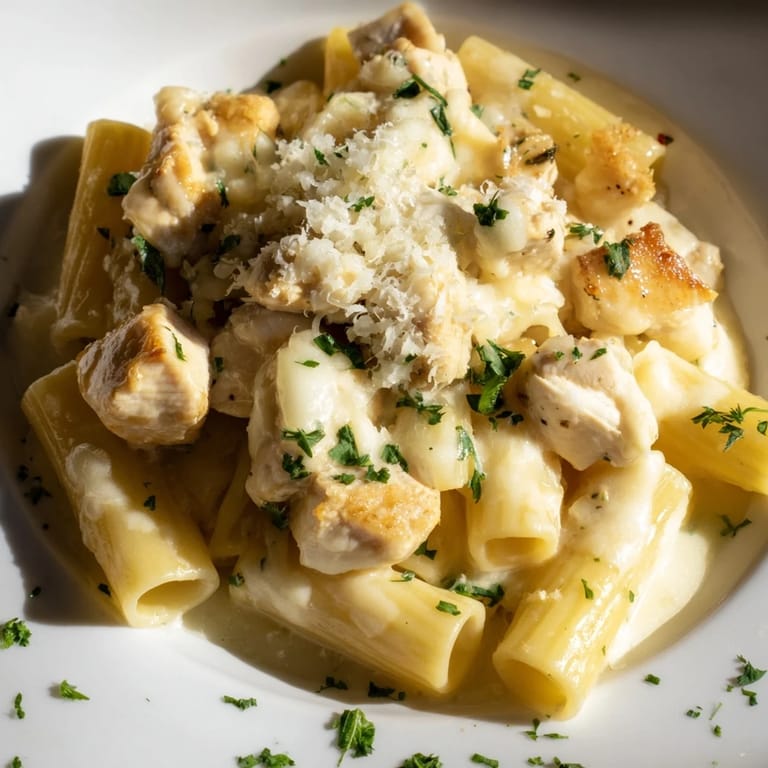
 Save
Save There's something about the smell of butter and garlic hitting a hot pan that makes you feel like you've already won the evening. I stumbled onto my version of this Alfredo bake years ago when I had leftover pasta, some chicken, and a sudden need to impress people without spending hours in the kitchen. What started as a lazy weeknight solution turned into the dish my family now requests by name, the one that fills the house with that golden, creamy warmth you can practically taste before the first bite.
I remember serving this at a dinner party where someone had just broken their diet, and watching their face when they took that first bite—pure relief mixed with genuine pleasure. That moment taught me that good food isn't about restriction or perfection; it's about creating a reason for people to sit down together and exhale.
Ingredients
- Penne or rigatoni, 400 g: The tubes catch sauce like little flavor sponges, which is exactly why you want them here instead of thin pasta.
- Boneless, skinless chicken breast, 500 g, diced: Cut the pieces roughly the same size so they cook evenly and don't leave you with dry edges and raw centers.
- Salt and black pepper for chicken: Don't skip seasoning the chicken before it hits the pan—this is where flavor begins, not where it ends.
- Olive oil, 1 tbsp: Just enough to keep the chicken from sticking and to build a light golden edge that matters more than you'd think.
- Unsalted butter, 3 tbsp: The foundation of your sauce, and unsalted means you control the salt level completely.
- Garlic, 3 cloves minced: Mince it fine and watch for that moment it stops being raw and becomes fragrant—that's when you add the flour.
- All-purpose flour, 3 tbsp: This is your thickener, and stirring it constantly for a full minute gets rid of any raw flour taste that would otherwise linger.
- Whole milk, 600 ml: The bulk of your sauce and why it stays creamy rather than heavy.
- Heavy cream, 120 ml: This is the secret to that glossy, rich coating that makes everything feel decadent.
- Freshly grated Parmesan, 100 g: Grate it yourself if you can—the pre-shredded stuff has anti-caking agents that keep it from melting as smoothly into the sauce.
- Italian seasoning, nutmeg, salt, and pepper for sauce: The nutmeg is the whisper you don't notice until it's gone, adding warmth without tasting like spice.
- Shredded mozzarella, 150 g: This melts into those golden bubbles on top, while the Parmesan adds a slight tang and texture.
- Grated Parmesan for topping, 30 g: A little extra on top deepens the color and adds a crispy edge to the cheese layer.
- Fresh parsley, optional: A small shower of green before serving wakes up the dish and makes it look like you actually tried.
Tired of Takeout? 🥡
Get 10 meals you can make faster than delivery arrives. Seriously.
One email. No spam. Unsubscribe anytime.
Instructions
- Prepare your stage:
- Preheat your oven to 200°C and get a 23x33 cm baking dish ready—a light coating of grease or cooking spray keeps everything from sticking. You want everything prepped before you start cooking because once the chicken hits the pan, you're moving fast.
- Cook the pasta:
- Bring a large pot of salted water to a rolling boil and add your pasta, stirring occasionally so it doesn't clump. Pull it out when it still has a slight bite to it—al dente is the goal because it'll keep cooking a little bit in the oven.
- Sear the chicken:
- Heat that olive oil in a large skillet over medium-high heat until it shimmers, then add your seasoned chicken pieces. You're looking for a golden edge and cooked-through centers, which takes about 5 to 6 minutes if you don't overcrowd the pan.
- Build your sauce base:
- In the same skillet, melt the butter over medium heat and add your minced garlic, letting it become fragrant for about a minute. Sprinkle the flour over everything and stir constantly for a full minute—this cooks out the raw flour taste and creates the base for your sauce.
- Create the creamy coating:
- Slowly pour in the milk and cream while whisking constantly, working out any lumps before they have a chance to set. Keep stirring as it simmers for 3 to 4 minutes until it thickens enough to coat the back of a spoon.
- Season and smooth:
- Add your grated Parmesan, Italian seasoning, nutmeg, salt, and pepper, stirring until the cheese melts and everything tastes balanced. Taste it before moving forward—this is your last chance to adjust seasoning.
- Bring it together:
- Add the drained pasta and cooked chicken to the sauce, folding everything together until every piece is coated and you have a unified, creamy mixture.
- Transfer and top:
- Pour the entire mixture into your prepared baking dish, spreading it evenly. Scatter the mozzarella and extra Parmesan across the top in an even layer—this is where the magic happens in the oven.
- Bake until golden:
- Slide it into your preheated oven for 20 to 25 minutes, watching until the cheese on top melts into those golden-brown bubbles that tell you everything underneath is hot and creamy. You'll know it's ready when the edges are slightly darkened and the center is bubbling at the sides.
- Rest before serving:
- Let it sit for 5 minutes after it comes out of the oven—this lets everything set slightly and makes serving easier. A sprinkle of fresh parsley on top just before serving adds brightness and makes it look intentional.
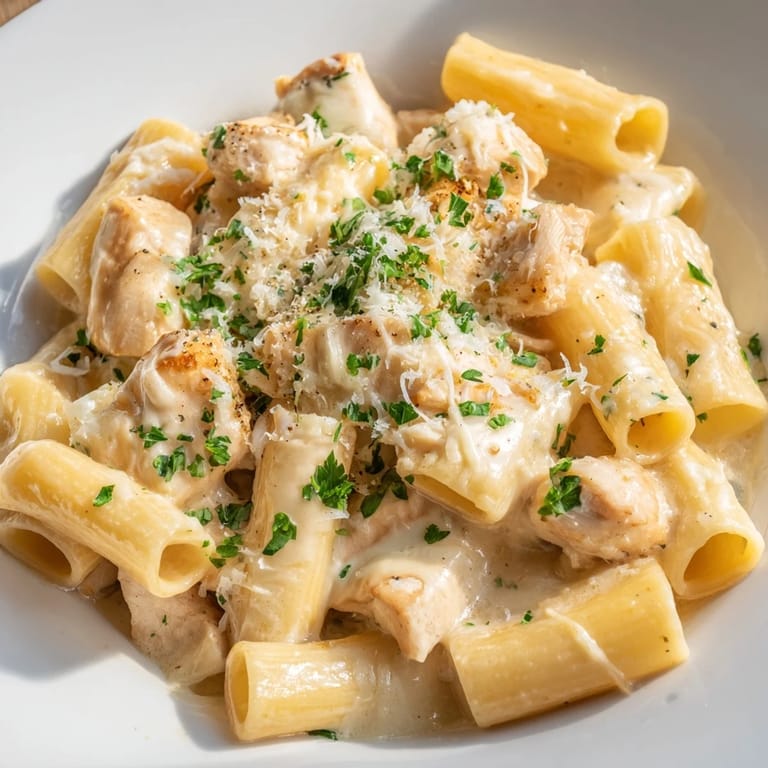 Save
Save I learned the real purpose of this dish one winter when my neighbor's family had just moved in, and I wanted to say welcome without being intrusive. I brought them this warm, generous bake, and it became the reason they felt at home that first week—proof that sometimes the best hospitality tastes like cream and cheese and someone who took an hour to say, you belong here.
Why Fresh Ingredients Matter More Than You'd Think
The quality of your Parmesan and butter genuinely changes everything—a good butter tastes rich and almost sweet, while a lesser one tastes thin and slightly metallic by comparison. Fresh garlic cloves minced by your own hand will taste sharper and more alive than garlic that's been sitting in a jar, and it only takes two minutes of your time. When you grate your own Parmesan from a wedge, it melts into the sauce like it belongs there, becoming part of the whole rather than staying in separate little shreds that never fully integrate.
The Bake is Forgiving
One of the things I love about this dish is that the oven does a lot of the heavy lifting for you—if your sauce seems slightly thin when you pour it in, the bake will concentrate it slightly, thickening everything. The cheese topping insulates the top and keeps it from drying out, so you don't have to nail the exact timing to the minute like you would with more delicate dishes. I've pulled this out at 20 minutes and at 27 minutes and gotten great results both times, which is the kind of flexibility that matters when you're feeding people.
What Happens Next
Leftovers of this keep for three days in the fridge and actually taste better on day two when all the flavors have settled together—you can reheat them gently in a 160°C oven with a splash of milk to loosen them up again if they've tightened slightly. Some people add mushrooms or spinach to make it more vegetable-forward, and that works beautifully as long as you cook your additions beforehand so they don't release water into the bake. This is the kind of dish that adapts to what you have without losing its essential character.
- If you want extra richness, stir in a handful of sun-dried tomatoes along with the pasta—they add tang and depth without overwhelming anything.
- A pinch of red pepper flakes mixed into the sauce gives you a warm kick that doesn't announce itself as spicy, just makes everything taste more alive.
- Serve this alongside a simple green salad and garlic bread to round out the meal, though honestly it's complete enough to stand alone.
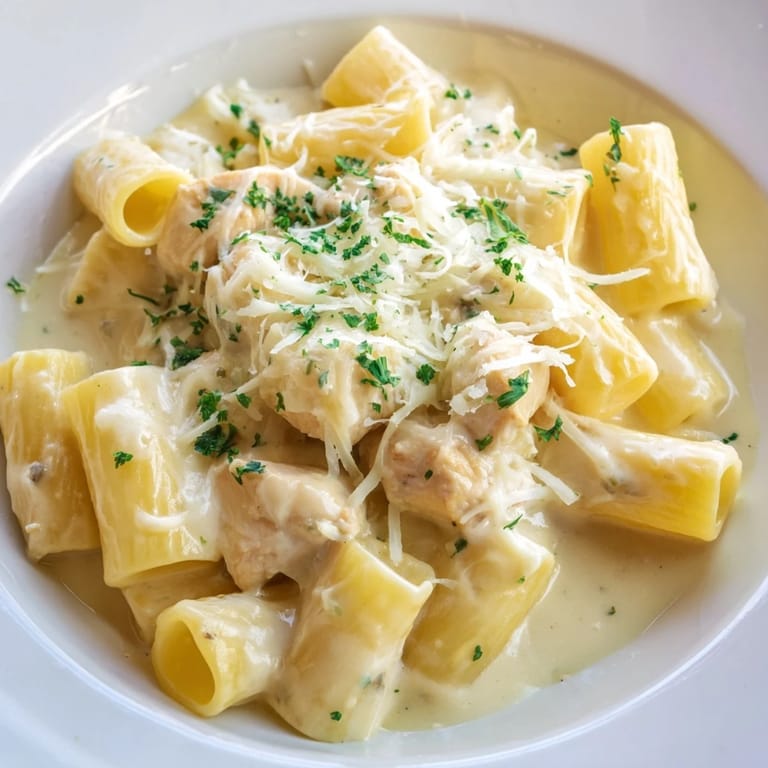 Save
Save This is the meal that reminds you why you learned to cook in the first place—not for technique or accolades, but for the quiet satisfaction of putting something warm and real in front of people you care about. Make it once and it becomes the dish you return to when you want comfort without complication.
Recipe FAQ
- → What type of pasta works best?
Penne or rigatoni hold the creamy sauce well and maintain a firm texture after baking.
- → Can I use pre-cooked chicken?
Yes, rotisserie or leftover cooked chicken can shorten prep time and work beautifully with the sauce.
- → How do I achieve a golden cheese topping?
Ensure an even layer of shredded mozzarella and Parmesan on top and bake until it melts and turns golden brown.
- → Can I add vegetables to this dish?
Sautéed mushrooms, spinach, or sun-dried tomatoes complement the flavors and add texture when mixed in before baking.
- → What's a good wine pairing?
A crisp Chardonnay or light Pinot Grigio balances the richness of the creamy cheese and chicken.