 Save
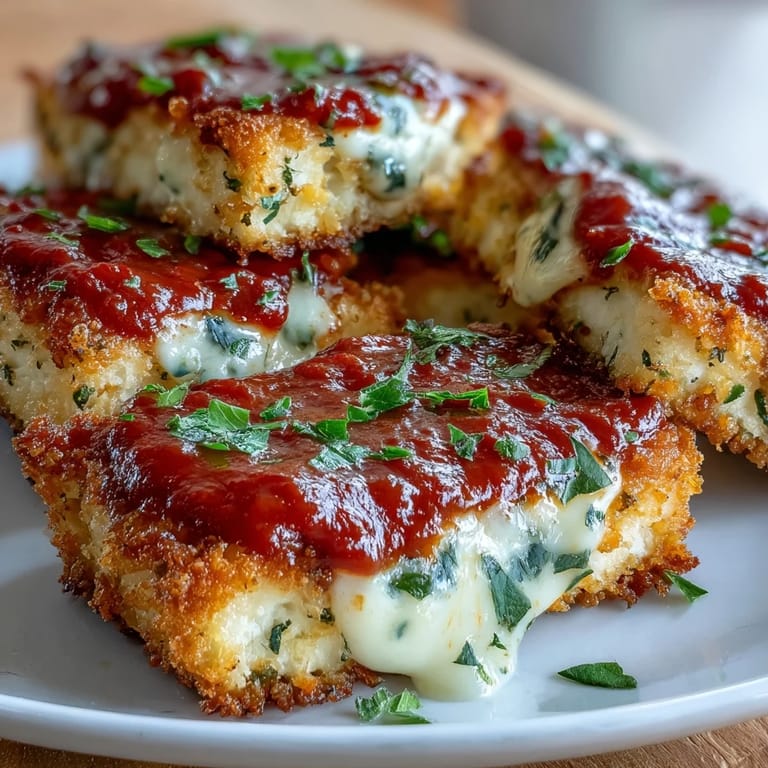
Save My roommate brought home a block of tofu one Tuesday evening, and I was skeptical—until she mentioned the idea of treating it like chicken cutlets. Something about that challenge stuck with me, and I spent the next hour pressing, breading, and frying until golden slices emerged from the oven, bubbling with cheese and marinara. That first bite changed how I thought about vegetarian cooking entirely. It wasn't a substitute for anything; it was its own satisfying thing.
I made this for my sister's dinner party when she went vegetarian, and honestly, I was nervous she'd think I was being condescending with a meat-free version of her favorite dish. Instead, everyone crowded around the baking dish with their forks, and the conversation stopped for a solid five minutes while we all ate. That's when I knew this recipe had real power—it bridges people, not because it's fancy, but because it's genuinely delicious.
Ingredients
- Extra-firm tofu (2 blocks, 14 oz each): The pressing step is non-negotiable—it removes water that would make your crust soggy, so don't skip it or rush it, even though it feels tedious.
- Panko breadcrumbs (1 cup): Panko creates that signature crispy coating; regular breadcrumbs get dense and heavy by comparison.
- Asiago cheese (¾ cup grated): The nutty, salty depth here is what elevates this beyond plain fried tofu—it's worth seeking out rather than substituting with something milder.
- All-purpose flour (½ cup): This acts as your adhesive layer, helping the egg and breadcrumb mixture cling to every surface.
- Eggs (2 large, beaten): Your binding agent and a crucial step that keeps everything together during baking.
- Marinara sauce (2 cups): Use something you actually like eating straight from the jar; this is not a place to economize on flavor.
- Mozzarella cheese (1 cup shredded): The mozzarella is your melting layer—it should get golden and slightly blistered in spots for visual appeal and flavor.
- Fresh basil: Don't underestimate how much this final flourish of green brightness completes the dish.
Tired of Takeout? 🥡
Get 10 meals you can make faster than delivery arrives. Seriously.
One email. No spam. Unsubscribe anytime.
Instructions
- Press and slice your tofu:
- Wrap each block in clean kitchen towels and weigh them down with a cast iron skillet or canned goods for at least 15 minutes. This step determines whether you get crispy edges or a soggy mess, so patience here pays dividends. Once pressed, slice each block into four roughly ½-inch slabs—you want them thick enough to hold together but thin enough to coat and cook evenly.
- Set up your breading station:
- Line up three shallow bowls—flour in the first, beaten eggs in the second, and your breadcrumb mixture in the third. Having everything prepped and within arm's reach keeps the process smooth and prevents your hands from becoming a sticky mess halfway through.
- Coat each slice thoroughly:
- Work through the flour first, shaking off excess, then a quick dip in egg, then a generous press into the breadcrumb-Asiago mixture. Press firmly so the cheese and herbs adhere to every corner and crevice—this is where flavor and texture come from.
- Arrange and oil:
- Lay coated slices on your parchment-lined sheet in a single layer without crowding, then lightly spray or drizzle with olive oil. The oil helps the coating brown and crisp rather than steam.
- First bake for crispness:
- Bake at 400°F for 20 minutes, flipping halfway through, until the coating turns deep golden and sounds crispy when you tap it. You're looking for color here—pale breading won't have that satisfying crunch.
- Top with sauce and cheese:
- Remove from the oven, spoon marinara generously over each piece, then top with mozzarella and Parmesan. Don't be shy with the toppings; they sink slightly during baking.
- Final bake until bubbly:
- Return to the oven for 8–10 minutes until the cheese melts completely and the edges start to brown and bubble. You're done when it looks too good not to eat immediately.
- Garnish and serve:
- Scatter fresh basil over the hot pan—it wilts slightly from residual heat and releases its aroma right before plating. Serve over spaghetti or with crusty bread to catch every drop of sauce.
 Save
Save 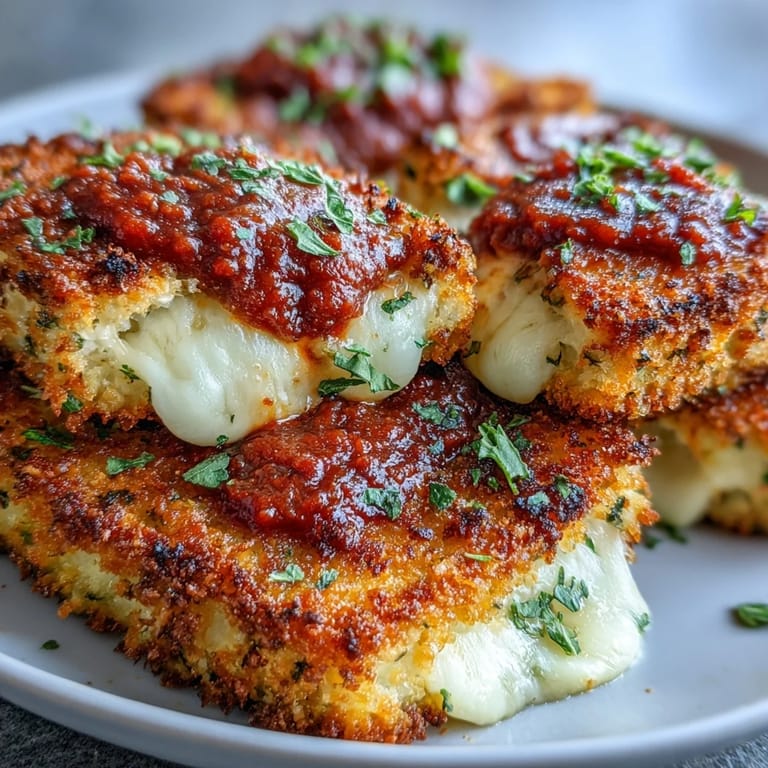 Save
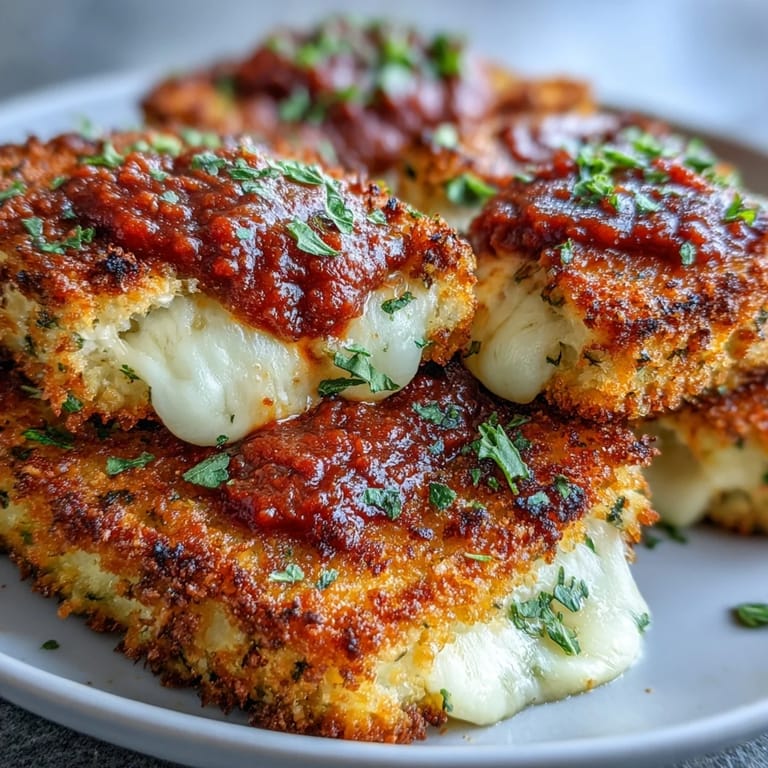
Save There's a moment when the cheese starts bubbling at the edges and the kitchen fills with garlic-marinara steam that feels almost ceremonial. I find myself standing by the oven window, watching, because I know in about 90 seconds this becomes something people will remember.
Why This Works Better Than You'd Expect
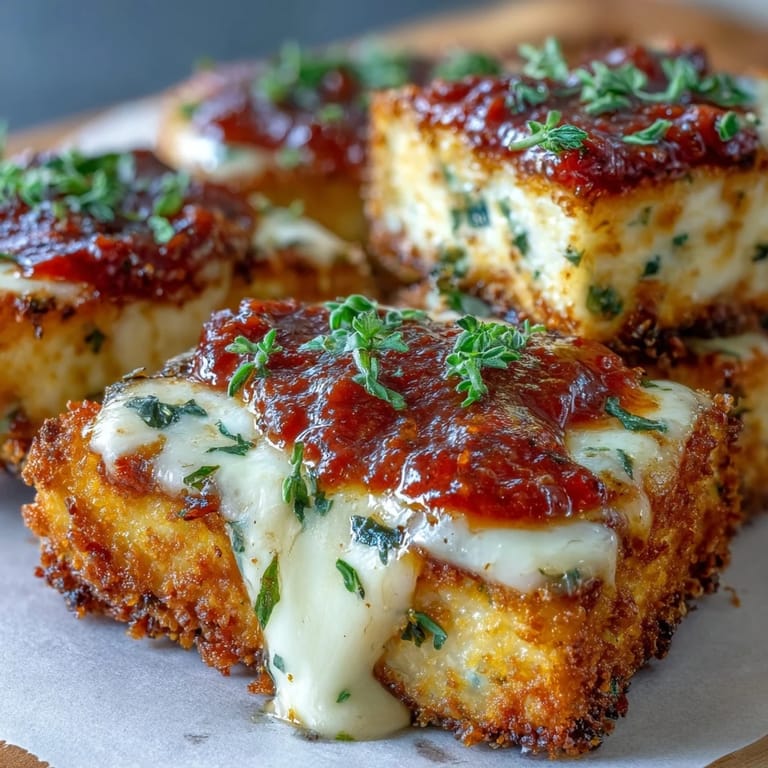
Tofu gets unfairly dismissed by people who've only encountered it rubbery and bland in mediocre stir-fries. But pressed tofu has a neutral, slightly creamy texture that actually accepts flavors beautifully and develops a satisfying crust when breaded and baked. The firm exterior combined with the soft interior, plus all that melted cheese and tangy marinara, creates a contrast that feels indulgent and complete. Most people don't realize they've been eating tofu until you mention it halfway through their second piece.
Customizing Without Losing the Magic
The beauty of this recipe is that it's forgiving enough to play with. Swap the Asiago for Parmesan if that's what you have, or add red pepper flakes to the breadcrumb mixture if you like heat. Some nights I use half marinara and half creamy white sauce for richness, and other times I add fresh oregano or a pinch of garlic powder to the breadcrumb mix. The core structure stays intact, but the dish bends to your mood and your pantry.
Serving and Pairing Thoughts
This dish sits comfortably at the center of the table, whether you're feeding vegetarians, meat-eaters, or anyone who just wants something warm and satisfying. I've served it over spaghetti, alongside roasted vegetables, and even as a casual sandwich on ciabatta bread the next day with leftover slices. A light red wine like Chianti plays beautifully with the garlic and basil notes, but honestly, this is also the kind of food that doesn't need fanfare—a simple salad and good company are all you need.
- Make extra and refrigerate cooked slices for quick lunches throughout the week.
- The uncooked breaded tofu freezes beautifully, so you can prep a batch and bake straight from frozen (add 5–10 minutes to the first bake).
- Leftovers reheat best in a 350°F oven for about 10 minutes rather than the microwave, which softens the crust.
 Save
Save 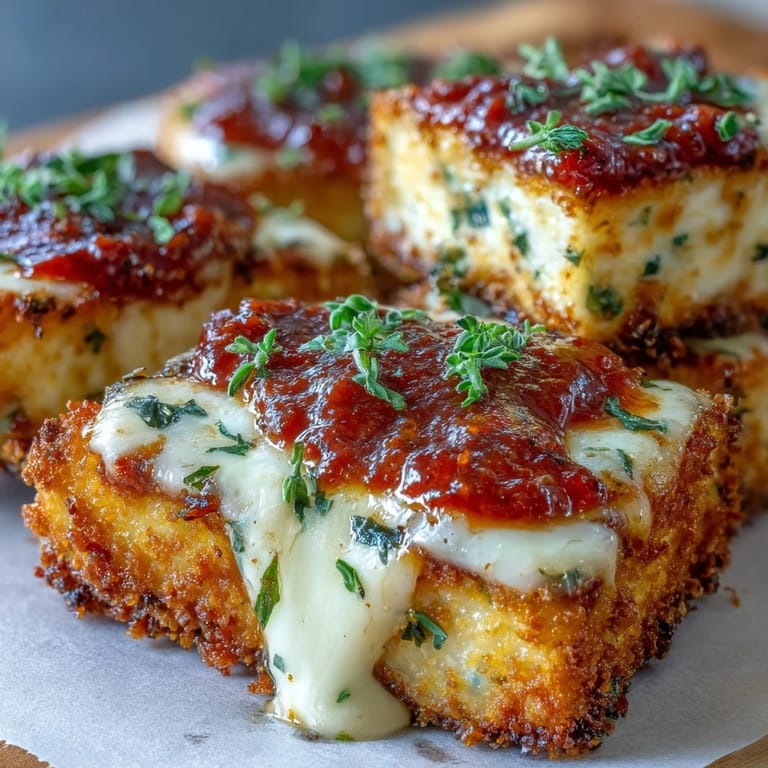 Save
Save This recipe taught me that vegetarian cooking isn't about replicating what meat-eaters have—it's about creating something equally crave-worthy in its own right. Once you nail this version, you'll be making it again and again.
Recipe FAQ
- → How do I get the tofu crispy?
Press the tofu for at least 15 minutes to remove excess moisture before slicing. The three-step coating process—flour, egg, then panko-Asiago mixture—creates a crunchy exterior. Baking at 400°F (200°C) with a light olive oil drizzle ensures golden crispiness.
- → Can I make this vegan?
Yes. Replace the beaten eggs with a plant-based milk and flour slurry for coating. Use non-dairy mozzarella shreds and skip the Parmesan topping, or substitute with vegan alternatives. The Asiago in the breading can be swapped for nutritional yeast or vegan Parmesan.
- → What can I serve with these tofu bakes?
They're excellent over cooked spaghetti tossed with olive oil and garlic. Crusty bread works wonderfully for soaking up the marinara. A simple green salad with balsamic vinaigrette provides fresh contrast. Roasted vegetables like broccoli or zucchini also complement nicely.
- → How long does pressing tofu take?
Minimum 15 minutes, but 30 minutes yields even better results. Wrap the block in paper towels or a clean kitchen towel, place on a plate, and set a heavy object like a cast-iron skillet on top. Drain and replace the towels halfway through for maximum moisture removal.
- → Can I freeze these for later?
The unbreaded tofu slices can be frozen after pressing. For best results, bread and bake fresh. If you have leftovers, they can be refrigerated for up to 3 days and reheated in a 350°F (175°C) oven for 10-15 minutes to restore crispiness.
- → What wine pairs well?
A light Italian red like Chianti complements the rich tomato and cheese flavors beautifully. Sangiovese or Barbera also work well. For white wine lovers, a dry Pinot Grigio provides nice acidity to cut through the cheesy, saucy elements.