 Save
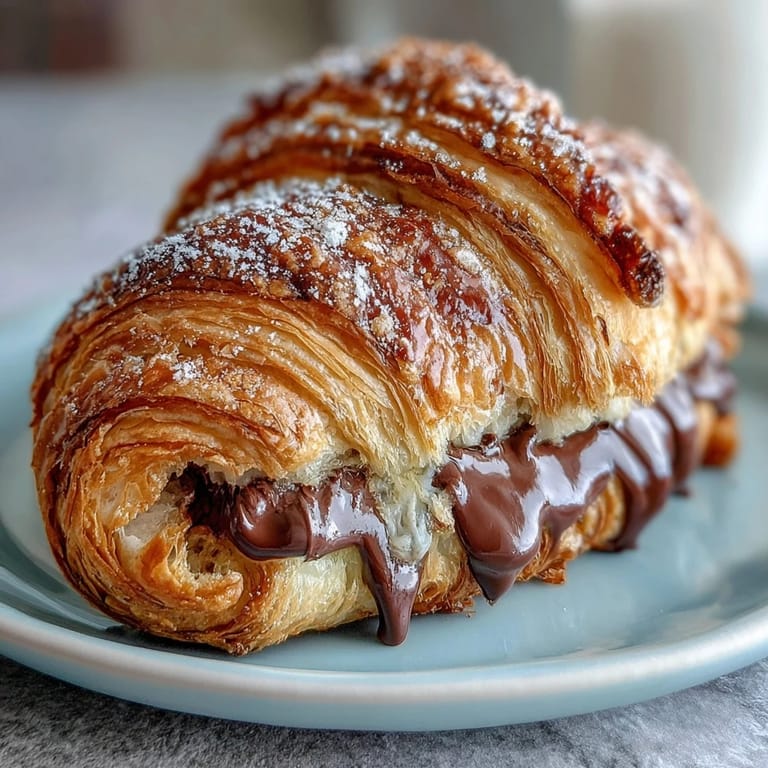
Save There's something utterly enchanting about the marriage of tangy sourdough and buttery laminated pastry—a union that transforms the humble croissant into something extraordinary. These flaky sourdough croissants with dark chocolate filling aren't just pastries; they're edible architecture, built layer by painstaking layer through the ancient art of lamination. Each bite reveals a symphony of textures: the shattering crisp of the golden exterior giving way to tender, honeycomb layers within, all underscored by sourdough's gentle tang and punctuated by pools of melted dark chocolate. This is the kind of baking project that demands patience and rewards it tenfold—a weekend adventure that fills your kitchen with the most intoxicating aromas and your table with pastries worthy of any Parisian boulangerie.
Save The magic of croissant-making lies in the lamination process—the methodical folding of butter into dough to create distinct layers. When the croissants bake, steam from the butter separates these layers, creating that characteristic flaky texture. By incorporating an active sourdough starter, we introduce wild yeast and beneficial bacteria that not only aid in fermentation but also contribute complex flavor notes. The result is a croissant that's simultaneously rich and light, indulgent yet nuanced. The dark chocolate filling, cut into batons and tucked into each pastry before rolling, melts during baking to create ribbons of bittersweet luxury. This is baking as meditation, transformation, and ultimately, celebration.
Ingredients
Tired of Takeout? 🥡
Get 10 meals you can make faster than delivery arrives. Seriously.
One email. No spam. Unsubscribe anytime.
- Sourdough Croissant Dough: 500 g bread flour, 100 g active sourdough starter (100% hydration), 220 ml whole milk (cold), 60 g granulated sugar, 10 g fine sea salt, 30 g unsalted butter (softened), 1 large egg (for egg wash)
- Butter Layer: 250 g unsalted European-style butter (cold, for laminating)
- Filling: 120 g high-quality dark chocolate (at least 60% cocoa), cut into 12 batons or sticks
Instructions
- Make the Dough
- In a large bowl or stand mixer, combine flour, sourdough starter, milk, sugar, salt, and softened butter. Mix until a rough dough forms. Knead for 4–5 minutes until smooth and slightly elastic. Cover and let rest at room temperature for 30 minutes.
- Bulk Fermentation
- Place dough in a lightly oiled bowl, cover, and bulk ferment at room temperature for 2–3 hours, performing 2 stretch-and-folds at 1-hour intervals. Refrigerate overnight (8–12 hours).
- Prepare Butter Block
- Place cold butter between two sheets of parchment paper. Pound and roll into a 20 x 20 cm (8 x 8 inch) square. Refrigerate until firm.
- Laminate the Dough
- On a lightly floured surface, roll dough into a 30 x 30 cm (12 x 12 inch) square. Place butter block in the center, fold dough over to encase butter. Roll out to 60 x 20 cm (24 x 8 inch) rectangle. Fold into thirds (letter fold). Chill for 30 minutes. Repeat rolling and folding twice more, chilling 30 minutes between each turn.
- Shape Croissants
- Roll dough out to a 60 x 30 cm (24 x 12 inch) rectangle, about 4 mm thick. Cut into 12 long triangles (base about 10 cm). Place a chocolate baton at the wide end of each triangle, then roll tightly toward the tip. Place on parchment-lined baking sheets, tip side down.
- Final Proof
- Cover loosely and proof at room temperature for 4–5 hours, or until doubled and very puffy. (If kitchen is cold, proof in a slightly warm, draft-free spot.)
- Bake
- Preheat oven to 200°C (400°F). Beat egg with 1 tbsp water and gently brush croissants. Bake for 18–22 minutes until deep golden brown and crisp.
- Cool
- Transfer to a wire rack and let cool at least 15 minutes before serving.
Zusatztipps für die Zubereitung
Temperature control is absolutely crucial for successful lamination. Your butter must be cold but pliable—if it's too hard, it will crack through the dough; too soft, and it will leak out. Work quickly and return the dough to the refrigerator whenever it starts to feel warm or sticky. Keep your work surface lightly floured but not excessively so, as too much flour can create dry spots in the layers. When rolling, use firm, even pressure and roll from the center outward to maintain uniform thickness. During the final proof, the croissants should look noticeably puffy and almost jiggle when the pan is gently shaken—this ensures maximum flakiness. If your kitchen is particularly warm, you may need to extend chilling times between folds.
Varianten und Anpassungen
While these chocolate-filled croissants are sublime as written, the laminated dough is wonderfully versatile. For a citrus variation, add the zest of one orange to the dough during mixing, which pairs beautifully with the chocolate. You can replace the dark chocolate with milk chocolate, white chocolate, or even a combination of chocolate and almond paste for pain au chocolat aux amandes. For plain croissants, simply omit the chocolate filling. Adventurous bakers might try savory variations: fill with good-quality ham and Gruyère before the final proof, or add herbs to the dough itself. A sprinkle of flaky sea salt on top before baking adds a sophisticated sweet-salty contrast. The dough can also be shaped into pain au raisin by spreading with pastry cream and raisins, then rolling into spirals.
Serviervorschläge
These sourdough chocolate croissants shine brightest when served warm from the oven, when the chocolate is still melted and the layers are at their crispest. Present them on a beautiful platter for a special breakfast or brunch, accompanied by fresh berries, yogurt, and strong coffee or espresso. For an elegant afternoon treat, serve alongside hot chocolate or a café au lait. They're wonderful on their own but can be elevated further with a dusting of powdered sugar or a small bowl of raspberry preserves for dipping. If serving for a gathering, arrange them in a cloth-lined basket to keep them warm. While they're best enjoyed the day they're baked, day-old croissants can be refreshed in a 180°C (350°F) oven for 5–7 minutes to restore some of their original glory.
 Save
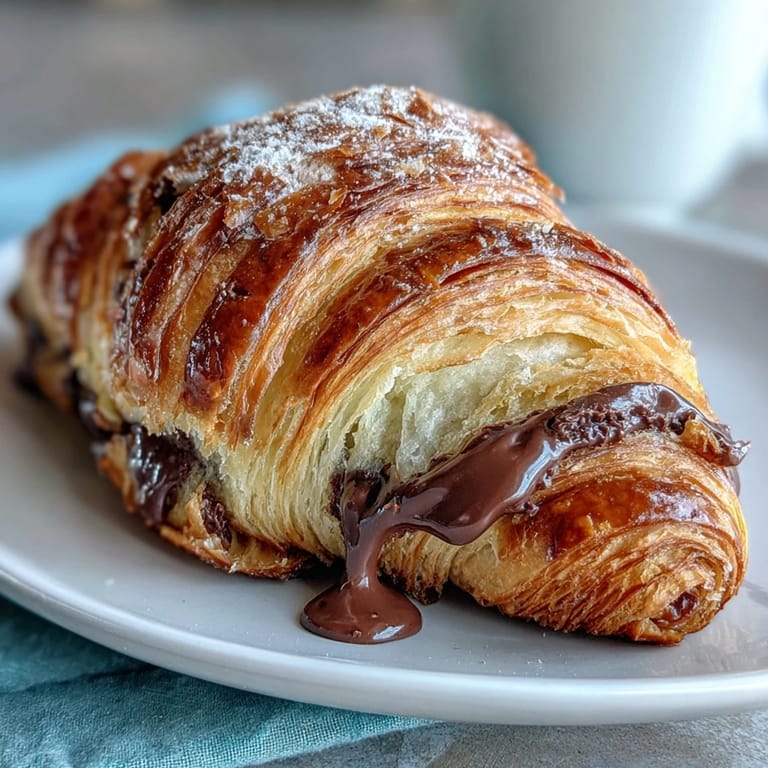
Save Mastering sourdough croissants is a badge of honor in the baking world, and for good reason. The process is lengthy, yes, but the actual hands-on time is surprisingly manageable—much of the timeline is simply waiting for fermentation and chilling. What you're rewarded with is nothing short of spectacular: croissants with character, depth, and a textural complexity that mass-produced versions simply cannot match. The tangy undertone from the sourdough starter plays beautifully against the richness of butter and the bittersweet notes of dark chocolate. These are croissants that tell a story—of time, of patience, of the transformative power of simple ingredients treated with respect. Whether you're an experienced baker looking for your next challenge or an ambitious novice ready to dive into lamination, these sourdough chocolate croissants will become a cherished recipe in your repertoire.
Recipe FAQ
- → How do I achieve flaky layers in sourdough croissants?
Flaky layers come from laminating cold butter into the dough through multiple folds and chills, creating thin, distinct layers that puff up when baked.
- → What’s the best way to proof croissants for a light texture?
Proof croissants at room temperature for 4–5 hours until doubled and very puffy, ensuring a gentle, draft-free environment to develop softness.
- → Can I add extra flavors to the dough?
Yes, adding orange zest to the dough or sprinkling flaky sea salt atop before baking enhances flavor complexity and balances sweetness.
- → What type of chocolate works best for the filling?
High-quality dark chocolate with at least 60% cocoa works best, providing a rich, bittersweet contrast to the buttery pastry.
- → How should I store and reheat leftover croissants?
Store croissants in an airtight container at room temperature for up to one day; reheat gently in an oven to restore crispness and warmth.