 Save
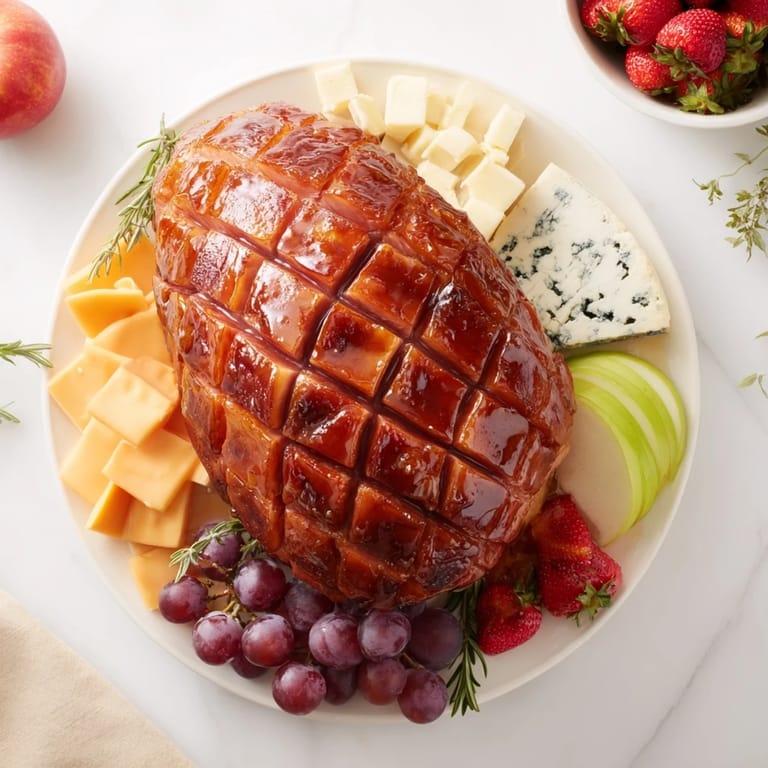
Save I'll never forget the year I decided to stop bringing the same tired dessert to holiday gatherings and instead created a centerpiece that would actually make people pause when they walked into the room. That's when the glazed ham board was born—a moment of inspiration in my kitchen when I realized that hospitality isn't just about feeding people, it's about creating an experience they'll remember. The sweetness of caramelized ham, the variety of textures and flavors, and the sheer beauty of a thoughtfully arranged board became my signature move, and now I can't imagine entertaining any other way.
I remember the first time I made this for my in-laws' Christmas brunch—I was nervous, honestly. But the moment everyone saw that glossy, caramelized ham surrounded by jewel-toned grapes, creamy cheeses, and fresh fruit, the energy in the room shifted. People didn't just eat; they lingered, they shared bites, they told stories. That board became the gathering place, and I realized I'd created something that was as much about connection as it was about flavor.
Ingredients
- Boneless ham (3–4 lbs): This is your star, and choosing a quality ham makes all the difference—look for one that's not overly salty or processed tasting, and bone-in works beautifully too if you want that extra flavor
- Brown sugar: The foundation of your glaze, providing that deep, molasses-forward sweetness that caramelizes gorgeously in the oven
- Honey: Adds complexity and helps create that glossy, sticky coating that catches the light on your finished ham
- Dijon mustard: The secret ingredient that prevents the glaze from being one-note sweet—it brings sophistication and a subtle heat
- Apple cider vinegar: Cuts through the richness with brightness, keeping the ham from feeling heavy
- Ground cloves: Optional but worth it if you enjoy that warm, almost autumnal spice note that whispers rather than shouts
- Aged cheddar, brie, blue cheese, and gouda: Together these create a flavor journey—start mild with the brie, bold with the blue, then smooth out with the gouda, each one playing a different role in the tasting experience
- Red and green grapes on the vine: They add visual drama and a refreshing sweetness that balances the richness of the cheese and ham
- Fresh strawberries: Halve them just before serving so they're juicy and bright, offering that tartness that keeps everything from feeling too heavy
- Apple slices: Toss them with a little lemon juice right before arranging so they don't brown and lose their fresh appeal
- Cherry tomatoes, cucumbers, and dried apricots: These create textural contrast—some juicy and fresh, some chewy and concentrated in flavor
- Baguette, crackers, and breadsticks: Your vehicles for all these beautiful flavors, and having variety means everyone finds their favorite way to eat
- Whole grain mustard, fig jam, olives, cornichons, and nuts: The flavor bridges that make each bite different from the last, preventing palate fatigue and keeping people coming back for more
- Fresh rosemary and thyme: Not just garnish—brush them gently over the finished board and their fragrance becomes part of the experience
Tired of Takeout? 🥡
Get 10 meals you can make faster than delivery arrives. Seriously.
One email. No spam. Unsubscribe anytime.
Instructions
- Prepare your glaze with intention:
- In a small saucepan, whisk together the brown sugar, honey, Dijon mustard, apple cider vinegar, and cloves over medium heat. You're not rushing this—let it warm gently until the sugar fully dissolves and the mixture becomes syrupy and glossy. This takes about 3 to 4 minutes, and you'll know it's ready when it coats the back of a spoon. The aroma that rises up is your first hint that something special is about to happen.
- Score and glaze your ham:
- Pat your ham dry with paper towels, then place it in a roasting pan. Using a sharp knife, score the surface in a crosshatch diamond pattern—not too deep, just enough to create those beautiful caramelized edges. Now brush that glaze generously all over, working it into every crevice, holding nothing back. This is where the magic begins.
- Roast with patience and attention:
- Slide your ham into a 350°F oven and let it roast for 1 to 1.5 hours depending on the size. Every 20 minutes, pull it out and baste it with that gorgeous glaze—this isn't a chore, it's a meditation. You'll watch the glaze deepen in color, the edges caramelize to burnished brown, and the whole thing become irresistibly glossy. The ham is done when it's heated through and the exterior is deeply caramelized and sticky.
- Rest your ham with respect:
- Remove the ham from the oven and let it rest for 15 minutes—this is non-negotiable. It allows the juices to redistribute, keeping everything tender and moist. While it rests, you can finish arranging your board, and your ham will be at its absolute best.
- Build your board like you're composing a painting:
- On a large board or platter, position your ham (whole, sliced, or shaped into roses if you're feeling fancy) at the center. Now radiate outward, grouping similar items together—all your cheeses in one section, fruits clustered by color, the breads and crackers creating structure. Think about color, texture, and height variation. You want people's eyes to travel the board and find something new in every direction.
- Add the final flourishes:
- Scatter your olives, cornichons, nuts, and fig jam into the spaces between the larger components. Sprinkle the fresh herbs over everything—not just for flavor, but for that whisper of fragrance. Step back and look at what you've created. It should make you smile.
- Serve with celebration:
- Bring this to your table immediately, while everything is at its best and your ham is still warm. Watch the faces of the people you've invited. That moment is what this is all about.
 Save
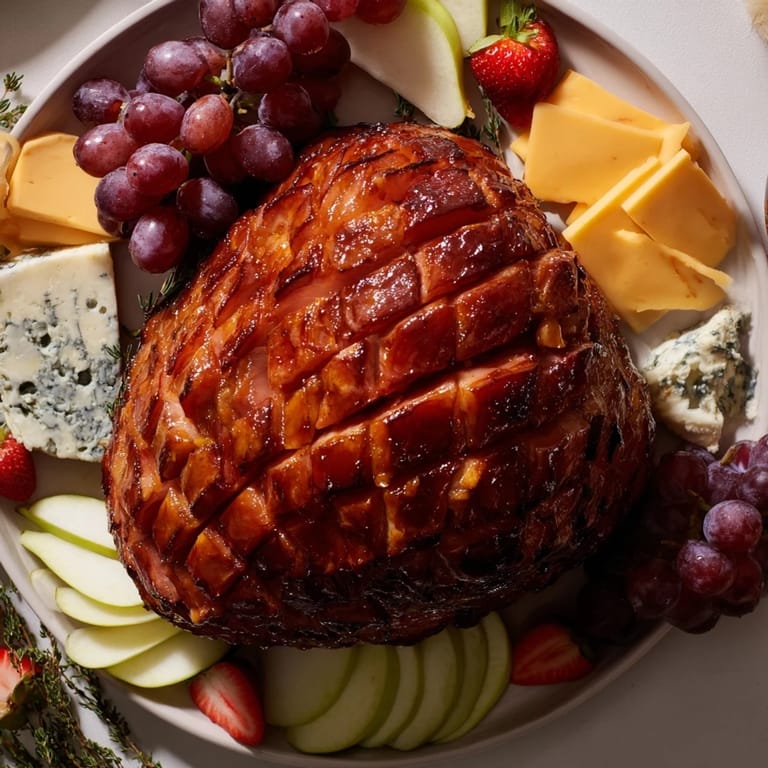
Save There's a moment, just as everyone is settling around the table and the first person reaches for a slice of ham alongside a wedge of brie and a handful of grapes, when you know you've done something right. That board stops being just food and becomes a conversation starter, a gathering place, a reason people will remember this meal with warmth.
The Art of Board Assembly
Creating a beautiful board is equal parts strategy and intuition. I've learned that symmetry matters less than flow—you want your eye to naturally travel around the board, always finding something interesting. Start with your star (the ham), anchor your cheeses in distinct sections so they're easy to access, and use the fruits and vegetables to create color blocking that's almost abstract. The goal is to make people want to taste across categories, not stick to one corner. A truly great board tells a story of flavors that complement each other, and when you step back to look at it, you've essentially created a map of a delicious journey.
Wine and Beverage Pairings
The beauty of a glazed ham board is that it plays well with nearly everything you might serve alongside it. A crisp sparkling wine echoes the brightness of the grapes and apples while cutting through the richness of the cheese and ham. Dry cider brings out the apple notes in both the glaze and the board itself, creating a cohesive experience. If you prefer something still, a light-bodied red wine like a Pinot Noir offers enough tannin to stand up to the ham without overwhelming the more delicate flavors of the cheeses and fruits. The key is choosing something you actually enjoy drinking, because this meal is as much about the experience as it is about the food.
Making It Your Own
One of the greatest gifts of a board like this is how adaptable it is to your taste, your dietary needs, and what you have on hand. I've made this with turkey ham for friends who avoid pork, and the result was just as stunning and delicious. I've added deviled eggs when I had them, creamy burrata when I wanted something indulgent, and roasted vegetables when I wanted to lean into something warmer. The glaze itself is flexible—swap the apple cider vinegar for red wine vinegar, add a splash of bourbon, or incorporate fresh ginger for something more adventurous. The structure stays the same, but the details can be entirely yours.
- Substitute turkey ham if pork isn't in your plans, and adjust cooking time slightly since it may be more delicate
- Add pickled vegetables or deviled eggs to sections where you want extra flavor complexity and visual interest
- Consider what's in season in your area and feature those fruits and vegetables for maximum freshness and flavor
 Save
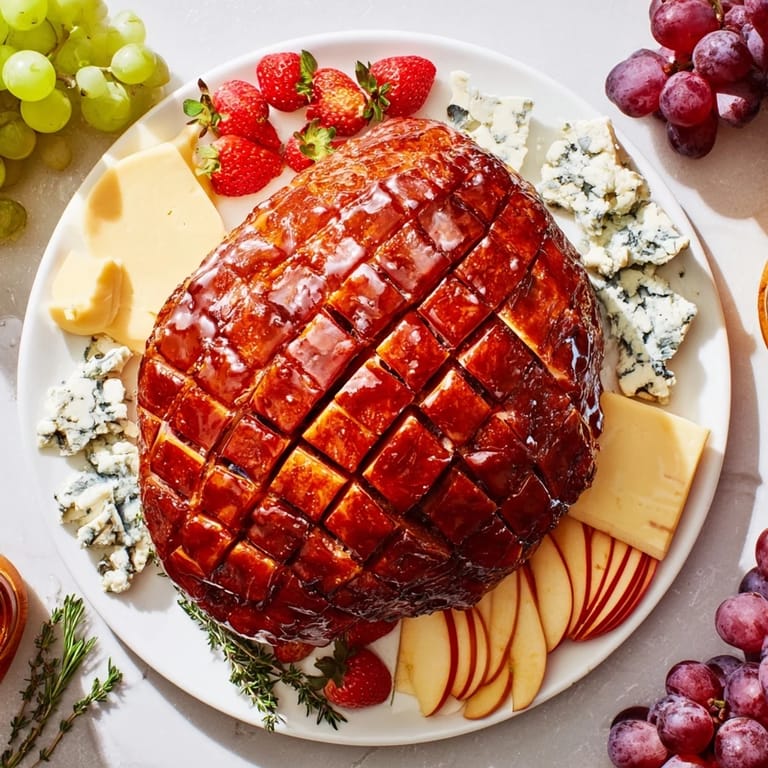
Save A glazed ham board isn't just a meal; it's an invitation to slow down and savor. Whether it's a holiday gathering, a special brunch, or simply a weekend when you want to create something beautiful to share, this is the dish that delivers every single time.
Recipe FAQ
- → How is the glaze for the ham prepared?
The glaze combines brown sugar, honey, Dijon mustard, apple cider vinegar, and optional ground cloves, heated gently until syrupy to brush over the ham during roasting.
- → What cheeses pair well on the board?
Aged cheddar, creamy brie, tangy blue cheese, and smooth gouda provide a diverse and balanced cheese selection.
- → Can the ham be substituted for dietary preferences?
Yes, turkey ham can be used as a pork-free alternative with the same glazing method.
- → How should the board be assembled for best presentation?
Arrange the glazed ham centrally, then symmetrically place cheeses, fruits, vegetables, breads, and accompaniments radiating outward for a visually harmonious display.
- → What drinks would complement this spread?
Light-bodied red wines, dry cider, or sparkling wine pair excellently with the variety of flavors on the board.