 Save
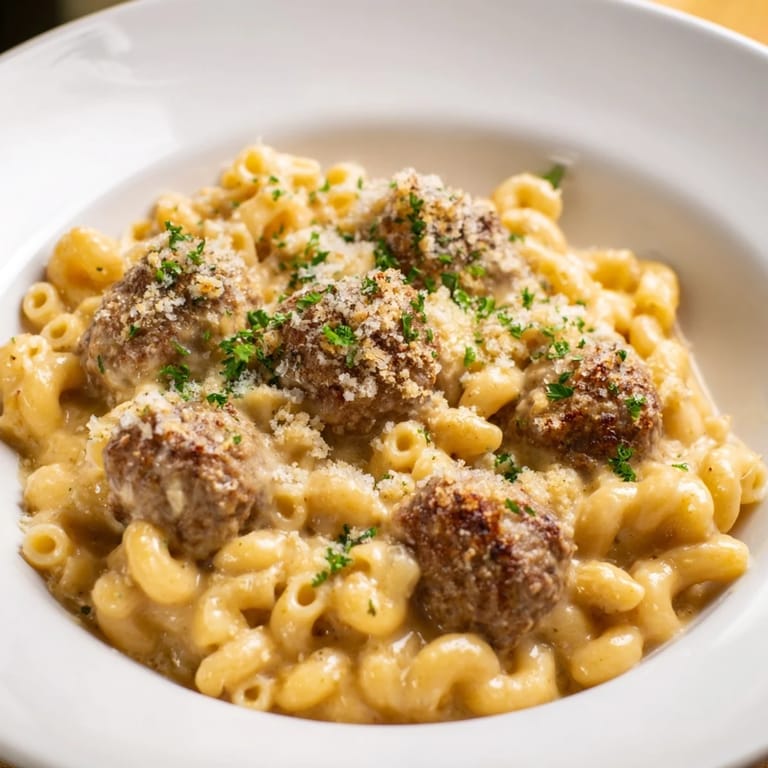
Save My kitchen was chaos that Tuesday night—two kids hungry, a refrigerator that seemed emptier than it should be, and exactly forty minutes before bedtime. I'd thrown together meatballs and pasta dozens of times, but something shifted when I stirred those creamy cheese sauce into the mix and slid the whole thing into the oven. The golden top that emerged wasn't just dinner; it was proof that sometimes the best meals come from working with what you have, not waiting for the perfect plan. This bake has become my quiet victory in those moments when everything feels too much.
I made this for my sister's potluck last spring, nervous because I was bringing a casserole to a house full of elaborate salads and homemade breads. Within minutes, three people circled back for seconds, and her husband—who usually picks at things politely—ate straight from the baking dish with a spoon. That moment taught me that comfort food never apologizes, and neither should we.
Ingredients
- Elbow macaroni or small pasta shells, 340 g: The small shapes trap sauce in every bite, so don't upgrade to penne or rigatoni just because it seems fancier.
- Ground beef or pork, 500 g: A mix of beef and pork gives you more flavor than either alone, but pure beef works beautifully if that's what you have.
- Large egg: This binds everything together without making the meatballs dense, so don't skip it or use egg white.
- Breadcrumbs, 40 g: Use plain panko if you have it; it keeps meatballs light and won't disappear into the meat.
- Milk, 2 tablespoons (for meatballs): A little moisture prevents the meatballs from becoming dense hockey pucks.
- Grated Parmesan cheese, 2 tablespoons (for meatballs): This adds a subtle depth that makes people wonder what your secret is.
- Garlic powder, 1 teaspoon: Measured teaspoons matter here; too much and the meatballs taste like a garlic festival.
- Onion powder, 1 teaspoon: Works with garlic to build a savory foundation without needing to chop anything.
- Dried oregano, 1 teaspoon: The Italian backbone of the whole dish, so use what you actually like.
- Salt, 1 teaspoon (for meatballs): Taste as you go; you'll add more salt in the cheese sauce too.
- Black pepper, ½ teaspoon: Freshly ground if you can manage it, though pre-ground is fine.
- Unsalted butter, 50 g: The foundation of a silky sauce, so don't use margarine here.
- All-purpose flour, 30 g: This thickens the sauce without lumps if you whisk properly.
- Whole milk, 720 ml: Room temperature milk whisks in smoothly without curdling; don't use cold milk straight from the fridge.
- Shredded sharp cheddar cheese, 200 g: Sharp cheddar means flavor without adding more cheese than the recipe can hold.
- Shredded mozzarella cheese, 80 g: This stretches and melts, creating that creamy texture that makes people sigh.
- Dijon mustard, 1 teaspoon: A tiny amount adds complexity that nobody can name but everyone notices.
- Salt, ½ teaspoon (for sauce): Combined with the meatball salt, this brings everything into balance.
- Ground nutmeg, ¼ teaspoon: Optional but not really—a whisper of nutmeg transforms a good sauce into something memorable.
- Panko breadcrumbs, 30 g: The crunch on top survives baking better than regular breadcrumbs, which is why it matters.
- Grated Parmesan cheese, 30 g (for topping): This browns beautifully and adds a crispy, salty finish.
- Melted butter, 1 tablespoon: Keeps the topping from turning dry and gives it that golden appearance.
- Fresh parsley, 1 tablespoon: A garnish that adds color and freshness after the oven's heat, optional but worth the effort.
Tired of Takeout? 🥡
Get 10 meals you can make faster than delivery arrives. Seriously.
One email. No spam. Unsubscribe anytime.
Instructions
- Set your oven and prepare the stage:
- Preheat to 200°C (400°F) and grease your 23x33 cm baking dish with a little butter or oil so nothing sticks later. This five-minute head start means you're not rushing through the rest.
- Cook the pasta until it's almost ready:
- Boil salted water (it should taste like the sea), add the elbow macaroni, and pull it out one minute before the package says it's done—it'll finish cooking in the oven and stay tender instead of turning mushy. Drain and set it aside in the bowl you'll use later.
- Build the meatball mixture with your hands:
- Combine the ground meat, egg, breadcrumbs, milk, Parmesan, and all your spices in a large bowl, then mix gently with your hands until everything is just combined—don't squeeze or knead it like dough, or you'll make them dense. Roll into 2.5 cm balls and place them on a parchment-lined baking sheet.
- Toast the meatballs until golden:
- Bake for 12–15 minutes until they're browned on the outside and cooked through inside; you're looking for that light golden color, not deep brown. They won't be fully done because they'll finish in the casserole.
- Make the cheese sauce with patience:
- Melt butter in a large saucepan over medium heat, whisk in flour, and cook for one full minute to remove the raw flour taste. Gradually pour in room-temperature milk while whisking constantly—this prevents lumps—and keep stirring until the sauce thickens enough to coat the back of a spoon, about 5 minutes.
- Fold in the cheese and seasonings:
- Remove the sauce from heat, then add the cheddar, mozzarella, Dijon mustard, salt, and nutmeg, stirring until completely smooth. Taste it here—this is your only chance to adjust seasoning before everything combines.
- Bring it all together in the baking dish:
- Add the cooked pasta and meatballs to the prepared baking dish, pour the cheese sauce over everything, and fold it together gently until every piece gets coated. It should look rich and creamy, not dry.
- Create the golden top:
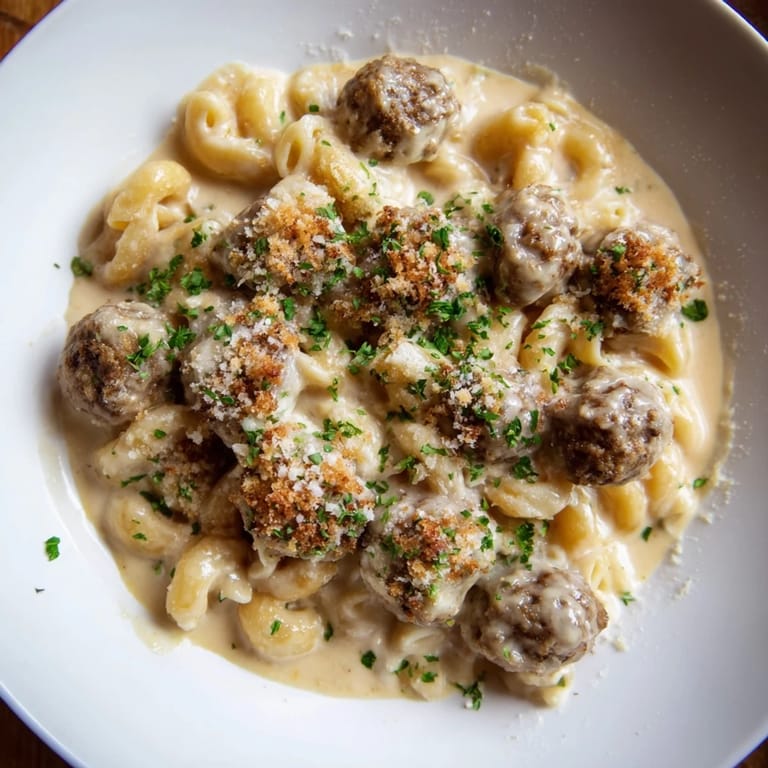
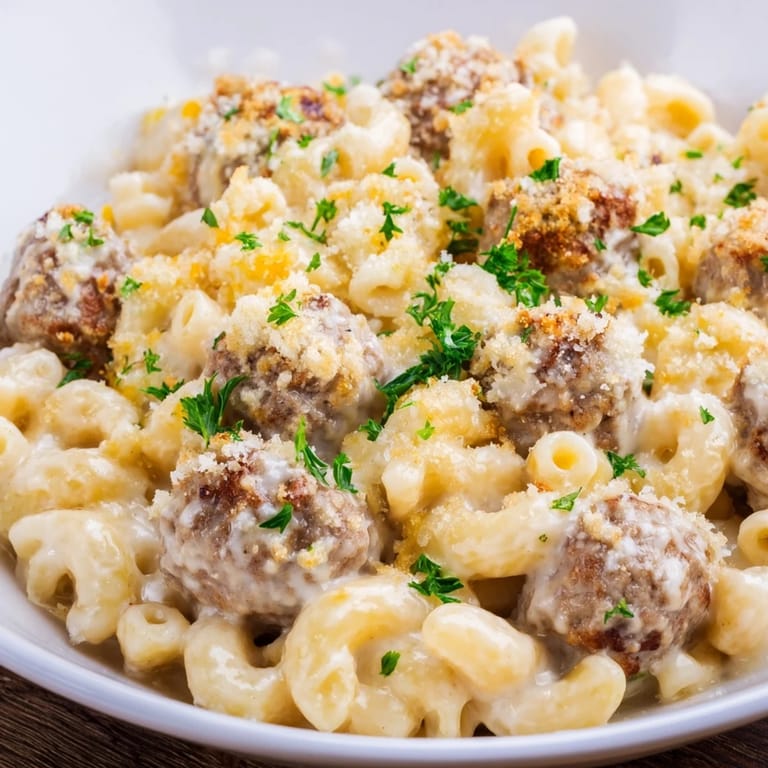
- Mix the panko breadcrumbs, Parmesan cheese, and melted butter in a small bowl until it looks like wet sand, then sprinkle it evenly across the top. This topping will turn golden and crispy while the sauce below stays creamy.
- Bake until the top is golden and the sauce bubbles:
- Bake for 15–20 minutes, watching for golden-brown edges and sauce that's actively bubbling up around the sides. You'll know it's ready when the kitchen smells irresistible and you can't wait another second.
- Let it rest before serving:
- Take it out, let it sit for five minutes so the sauce sets slightly and won't run all over the plate. Garnish with fresh parsley if you have it, then serve while everything is still warm and steaming.
 Save
Save My son asked for thirds that first Tuesday night, and my daughter—who usually negotiates her way out of vegetables—didn't even notice the spinach I'd hidden in a version I made later. It stopped being just dinner and became the meal I could make when I needed everyone at the same table, fed and happy, without overthinking it.
Why This Becomes a House Favorite
There's something about one-dish meals that changes how people gather around a table. When everything lives in the same baking dish, there's no complicated choreography of plating, no sides that need reheating, and no sense that you spent hours in the kitchen when you actually spent forty minutes. The meatballs stay individual enough that everyone feels like they're eating something special, while the creamy sauce and pasta create this canvas of comfort that works on any night of the year.
Customizations That Work
I've made this a dozen different ways depending on what's in my freezer or pantry. Store-bought frozen meatballs shave off fifteen minutes if you're truly strapped, and ground turkey or chicken instead of beef creates a lighter version that tastes equally good. One evening I stirred in sautéed spinach and it disappeared into the sauce, leaving just enough color to make the dish look intentional.
- Frozen meatballs work perfectly if you follow the package directions and add them to the pasta already cooked.
- Ground turkey makes the whole thing lighter without sacrificing any of the comfort factor.
- Sautéed mushrooms or peas add texture and nutrition in a way that doesn't feel like vegetables sneaking in.
The Science of the Sauce
The roux—that butter and flour mixture—is doing more work than you think. It's not just thickening; it's emulsifying the milk and cheese together into something silky instead of grainy. The nutmeg isn't a fancy flourish; it's actually a secret ingredient in classic béchamel sauce and does something chemical to make everything taste deeper and more complex. The temperature matters too; if you heat the sauce too aggressively after adding cheese, it can break and separate, so gentleness pays off here.
 Save
Save This casserole has become my answer to those moments when I want to feed people something that tastes like I care, without spending my whole evening in the kitchen. It reminds me that the best meals are the ones that bring people back to the table.
Recipe FAQ
- → Can I use frozen meatballs in this dish?
Yes, store-bought frozen meatballs can be used. Bake them according to package instructions before combining with pasta and sauce.
- → What types of pasta work best here?
Elbow macaroni or small pasta shells hold the sauce well and provide a nice texture contrast with the meatballs.
- → How can I make the cheese sauce extra creamy?
Using whole milk and melting sharp cheddar with mozzarella cheese gives a rich, velvety sauce. Whisk continuously to avoid lumps.
- → Are there suitable substitutions for the ground meat?
Ground turkey or chicken can be used for a lighter protein option without compromising flavor.
- → Any tips for achieving a crispy topping?
Mix panko breadcrumbs with grated Parmesan and melted butter, then sprinkle evenly before baking to get a golden, crunchy crust.
- → Can vegetables be added to this dish?
Yes, sautéed spinach or peas can be stirred in for extra color and nutrition.