 Save
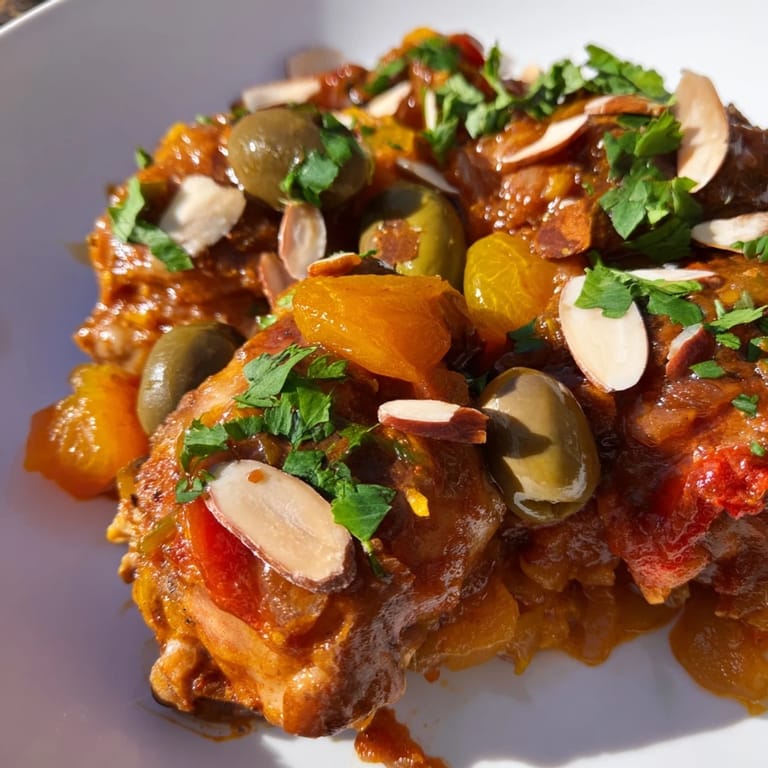
Save The first time I made tagine, my kitchen filled with this cloud of warm spice that made my roommate ask what smelled so incredible. I'd just returned from a market trip with my hands full of preserved lemons and apricots, completely uncertain whether I could actually pull off this Moroccan dish. But something about the way those spices—cinnamon, cumin, coriander—whispered together convinced me to try. Three hours later, as the chicken fell from the bone and the sauce had deepened into this gorgeous mahogany glaze, I realized I'd stumbled into something special.
I made this for a dinner party on a rainy November evening when everyone was a bit tired and needed cheering up. I served it family-style straight from the tagine pot, with couscous piled high on the side and everyone reaching across each other for more. One friend took a bite, closed her eyes, and said absolutely nothing for a solid minute—just kept eating. That's when I knew this recipe was a keeper.
Ingredients
- Bone-in, skin-on chicken thighs (1.5 lbs): Thighs stay so much juicier than breasts, and the skin renders down into pure flavor; don't skip this part.
- Onion, garlic, and fresh ginger: This aromatic base is your foundation—grating the ginger fresh instead of using ground makes all the difference in brightness.
- Ground cumin, coriander, and cinnamon: Toast these spices briefly in the pan to wake them up; your nose will tell you the exact moment they're ready.
- Preserved lemon: This is the secret weapon that adds that authentic North African tang; if you can't find it, a squeeze of fresh lemon at the end works in a pinch.
- Dried apricots: Buy them unsweetened and halve them so they plump up beautifully into the sauce.
- Green olives and sliced carrot: The olives add brininess that cuts through richness, while the carrot keeps things grounded and sweet.
- Chicken broth and diced tomatoes: Low-sodium broth lets the spices sing, and canned tomatoes are actually perfect here—no need to fuss with fresh ones.
Tired of Takeout? 🥡
Get 10 meals you can make faster than delivery arrives. Seriously.
One email. No spam. Unsubscribe anytime.
Instructions
- Dry and season your chicken:
- Pat each thigh completely dry with paper towels—this tiny step is what gets you that golden, crispy skin when they hit the hot oil.
- Get a beautiful brown on the chicken:
- Heat your oil until it shimmers, then lay the thighs skin-side down and resist the urge to move them; let them sit for 4-5 minutes until they're mahogany brown. Flip and brown the other side, about 2-3 minutes.
- Build your aromatic base:
- Once the chicken is out of the pot, sauté your onion, carrot, and a tiny pinch of salt until the onion is translucent and the carrot softens slightly.
- Wake up the spices:
- Add your garlic, ginger, and all the ground spices at once, stirring constantly so nothing burns. You're looking for that moment when the kitchen smells absolutely intoxicating—that's your signal to move forward.
- Build the sauce:
- Stir in your tomatoes and let them cook down for a couple of minutes, scraping the bottom of the pot to grab all those caramelized bits that are pure flavor.
- Bring it all together:
- Return the chicken to the pot, then add your apricots, preserved lemon slivers, and broth. Bring everything to a gentle simmer.
- The long, slow braise:
- Cover and let it cook low and slow for 45 minutes—the chicken needs time to become completely tender and the flavors need to marry.
- Add the olives and finish:
- Uncover, scatter in your pitted olives, and simmer for another 10 minutes so the sauce thickens slightly and the chicken flavors deepen.
- Taste and adjust:
- Take a spoonful of sauce, taste it, and add more salt or spice if your instincts say so.
 Save
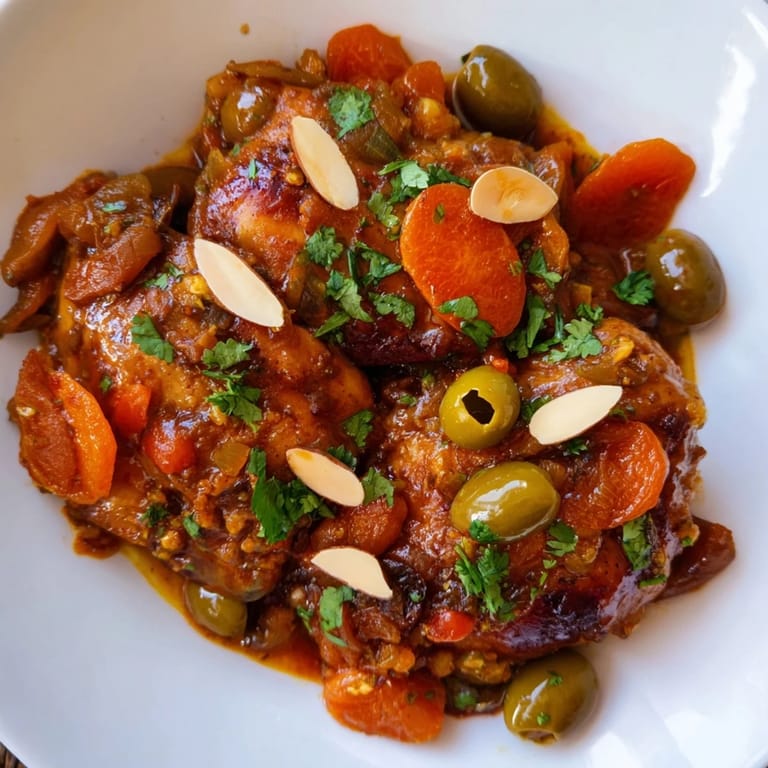
Save There's a moment near the end of cooking when you lift the lid and the steam rolls out carrying that cinnamon-and-apricot perfume, and you realize you've created something genuinely beautiful. It stops being just dinner and becomes this small kitchen ceremony.
Serving Suggestions That Actually Matter
Couscous is the obvious choice, and it's perfect—fluffy couscous soaks up every drop of that incredible sauce. But I've also had tremendous success with warmed flatbread or even creamy rice. The key is something neutral that lets the tagine be the star.
Making It Your Own
This recipe is honestly flexible in the best way. If apricots aren't your thing, try dried prunes or dates instead. If you can't find preserved lemon, finish with fresh lemon juice right before serving and you'll get similar brightness. Some nights I add a pinch of harissa for heat, other times I let the natural sweetness be the main event.
The Tiny Details That Change Everything
Getting the flavor right in tagine is all about layers and balance. The sweetness of apricots should never overpower the savory spices, and the olives should cut through just enough to keep everything interesting. Taste as you go and trust your palate—every stove cooks differently, every batch of spices has its own personality, and your seasoning adjustments at the end aren't cheating, they're essential.
- Toast your almonds in a dry skillet for 2-3 minutes before garnishing so they're crispy and fragrant.
- Don't cook the olives for the full time—add them in the last 10 minutes so they stay firm and briny instead of getting soft.
- If your sauce seems too thin at the end, simmer uncovered for a few more minutes; if it's too thick, add a splash of broth.
 Save
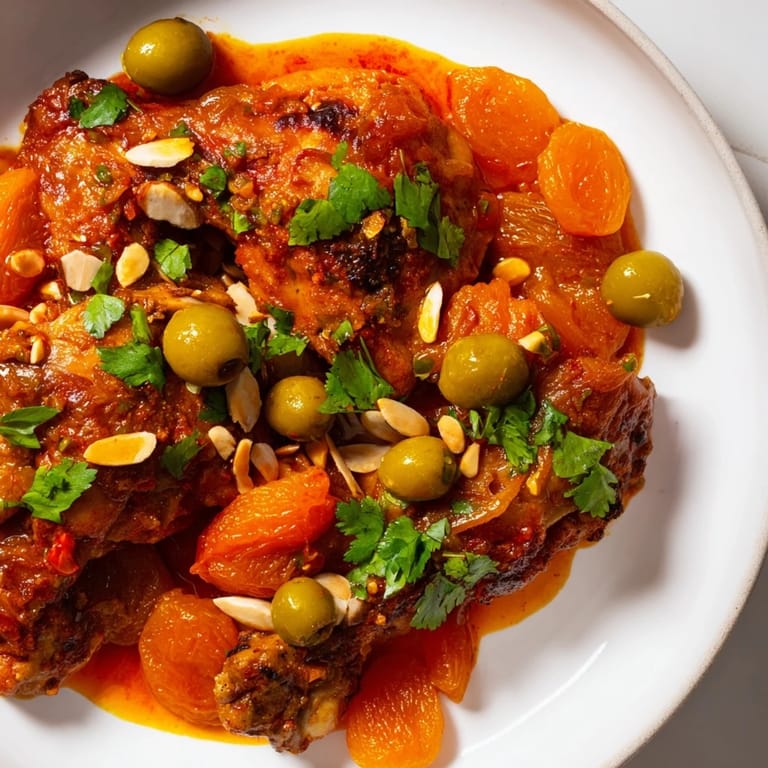
Save This dish has a way of turning an ordinary Tuesday night into something memorable. Serve it, watch people's faces light up, and accept the compliments knowing you've just shared something genuinely special.
Recipe FAQ
- → What cut of chicken works best for this dish?
Bone-in, skin-on chicken thighs are ideal for tender, juicy results and to keep the dish flavorful during slow simmering.
- → Can dried apricots be replaced with fresh ones?
Dried apricots provide concentrated sweetness and texture; fresh apricots may alter the cooking time and flavor intensity.
- → Is preserved lemon essential for authenticity?
Preserved lemon adds a distinct tangy brightness, but the dish remains flavorful without it if unavailable.
- → What side dishes pair well with this preparation?
Steamed couscous, fluffy rice, or warm flatbreads complement the rich, aromatic flavors beautifully.
- → Can this dish be made dairy-free?
Yes, as the ingredients naturally omit dairy, the dish suits dairy-free diets without modification.
- → How can the dish be adjusted for extra heat?
Add harissa or cayenne pepper to taste during cooking to introduce spiciness without overpowering aromatics.