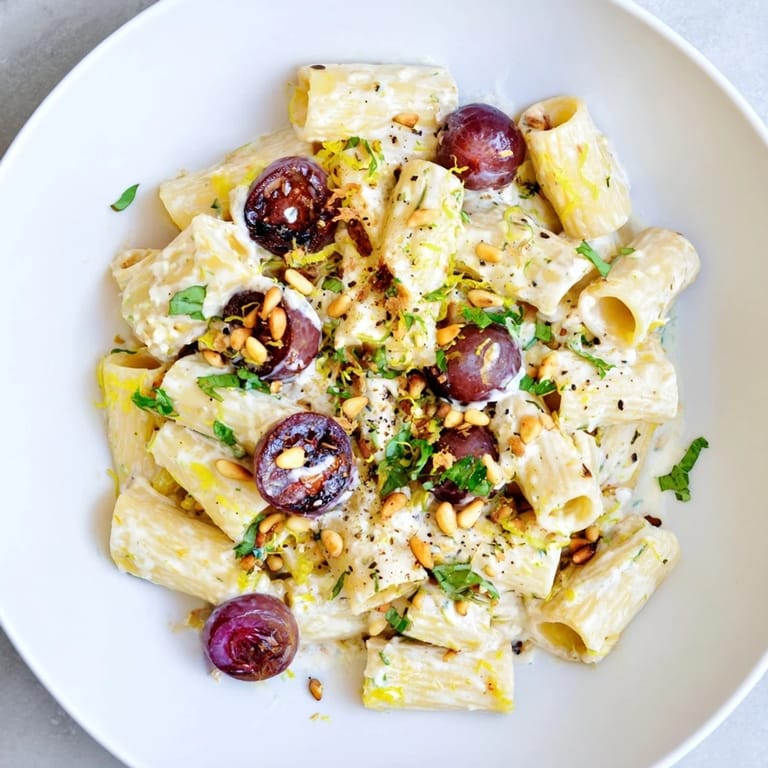
 Save
Save There's this moment that happens every autumn when I'm wandering through the farmers market and spot those perfect bunches of grapes—the kind that catch the light like tiny stained glass windows. One Saturday, I bought far too many with no real plan, and while they sat on my counter, I got curious about what happens if you roast them. The burst of caramelized sweetness that came out of that oven changed how I think about pasta entirely. That single accident led me to this dish, which somehow manages to feel elegant enough for guests but honest enough for a Tuesday night.
I made this for my neighbor Elena one evening after she'd had a rough week, and watching her face when she tasted it—the way her fork paused—reminded me that sometimes the most unexpected combinations are exactly what you need. She asked for the recipe three times before I finally wrote it down, and now she makes it for her book club. That's when I knew this wasn't just a happy accident anymore.
Ingredients
- Dried short pasta (penne, rigatoni, or fusilli): 350 g (12 oz)—I prefer penne because it catches the ricotta mixture and holds onto the roasted grapes beautifully.
- Seedless red or black grapes: 300 g (2 cups)—stems removed because they'll only get in your way, and their sweet juice is what makes this whole dish sing.
- Olive oil for roasting: 1 tbsp—enough to coat and coax out the grapes' natural sugars without drowning them.
- Coarse salt: 1/2 tsp—this matters for roasting; it helps draw out moisture and intensifies sweetness.
- Freshly ground black pepper: 1/4 tsp—freshly ground is essential; it tastes nothing like the pre-ground stuff.
- Fresh ricotta cheese: 250 g (1 cup)—this is your creamy base, so use the best quality you can find, preferably from a specialty store or deli counter.
- Lemon zest: 1/2 tsp—use a microplane if you have one; it makes all the difference in brightness.
- Fresh lemon juice: 1 tbsp—bottled will work in a pinch, but fresh lemons are worth the squeeze.
- Fresh basil: 2 tbsp chopped, plus more for garnish—this is what ties everything together with a whisper of herbaceousness.
- Fresh parsley: 1 tbsp chopped—the unsung hero that keeps things grounded and green.
- Salt for ricotta mixture: 1/4 tsp—don't skip this; it seasons the entire dish from the inside out.
- Extra-virgin olive oil: 2 tbsp—the finishing touch that makes it taste like you cared.
- Toasted pine nuts (optional): 40 g (1/4 cup)—these add a buttery crunch that's optional but honestly, why would you skip them?
- Parmesan cheese for serving (optional): A light shower of freshly grated Parmesan brings everything into focus if you want it.
Tired of Takeout? 🥡
Get 10 meals you can make faster than delivery arrives. Seriously.
One email. No spam. Unsubscribe anytime.
Instructions
- Heat your oven and prep:
- Preheat to 220°C (425°F) and line a baking tray with parchment paper so cleanup is effortless and nothing sticks.
- Ready the grapes for transformation:
- Spread your grapes on the tray, drizzle with that tablespoon of olive oil, sprinkle with salt and pepper, and toss until everything's coated. They should look glossy and ready for their moment.
- Roast until they burst:
- Pop them in for 20–25 minutes, shaking the tray halfway through so they caramelize evenly. You'll know they're done when they're soft, blistered, and smell like something between jam and caramel. Set them aside and let them cool slightly while you work on the pasta.
- Cook pasta to perfect tenderness:
- Bring a big pot of salted water to a rolling boil—salt it generously so the pasta itself tastes good. Cook according to package directions until it's al dente, that perfect moment where it still has a tiny bit of resistance. Before draining, measure out 120 ml (1/2 cup) of that starchy pasta water and set it aside; this liquid gold will become your sauce.
- Build the ricotta base:
- In a bowl, combine the ricotta with lemon zest, lemon juice, basil, parsley, and that final pinch of salt. Stir until it's smooth and feels alive with flavor—taste it and adjust if you need more lemon or herbs.
- Bring it all together gently:
- Return your drained pasta to the pot and add the ricotta mixture. Toss slowly and carefully, adding splashes of reserved pasta water as you go until you have a creamy sauce that coats each piece without being soupy. The starch in that water is what makes the magic happen.
- Fold in the caramelized grapes:
- Add the roasted grapes and their precious juices, tossing lightly so they don't break apart. Drizzle with a final glug of excellent olive oil and toss once more.
- Plate and finish:
- Divide among plates and top with pine nuts, a crack of black pepper, fresh basil leaves, and Parmesan if you're using it. Serve immediately while everything's still warm and the grapes are still blushing.
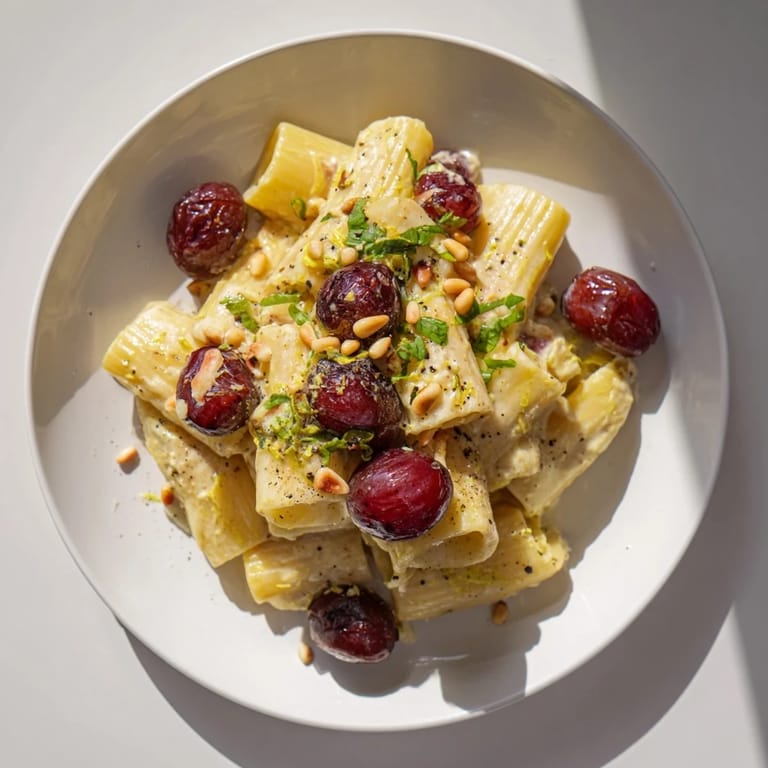 Save
Save I'll never forget my dad tasting this for the first time and saying, 'Wait, are those really grapes?' like I'd pulled off some kind of kitchen magic. That's when I realized this dish works because it's honest—it doesn't try to hide what it is, it just brings unexpected things together and lets them become something better.
The Magic of Roasted Grapes
Roasting grapes is genuinely one of those cooking discoveries that feels too simple to work. Those little orbs of juice sitting on a hot baking tray don't just warm up—they concentrate, they blister, they start to caramelize at the edges. The skin splits and releases this deep, almost wine-like sweetness that's nothing like raw grapes. Once you've roasted grapes even once, you'll start thinking about adding them to other dishes, to salads, to cheese boards. It's one of those small kitchen moments that opens up a whole new way of thinking about ingredients.
Why This Balancing Act Works
The beauty of this dish lives in contrast. Sweet grapes meet creamy ricotta. Bright lemon meets buttery pine nuts. Fresh herbs whisper against everything else. What could feel scattered somehow becomes balanced, like each element is holding the others up. The pasta is your neutral ground, the thing that brings it all together and makes it actually a meal instead of just interesting flavors. This is pasta that proves you don't need heavy cream or complex sauces to feel indulgent.
Variations and Thoughts
I've played with this recipe enough times now to know where you can improvise. Goat cheese gives you a tangier bite if ricotta feels too mild. Whole-wheat pasta adds an earthiness that almost makes the grapes taste even sweeter by comparison. You could skip the pine nuts entirely and nobody would know, though honestly, their toasted butteriness changes the whole texture. Sometimes I add a handful of arugula right before serving, and the peppery green against those sweet grapes is a conversation all on its own.
- For nut-free versions, leave the pine nuts off and maybe add a sprinkle of breadcrumbs toasted in olive oil instead.
- If you ever find yourself with goat cheese instead of ricotta, use it—you'll get something tangier and more sophisticated.
- White wines like Sauvignon Blanc or Pinot Grigio are waiting for this dish; they're basically essential for the full experience.
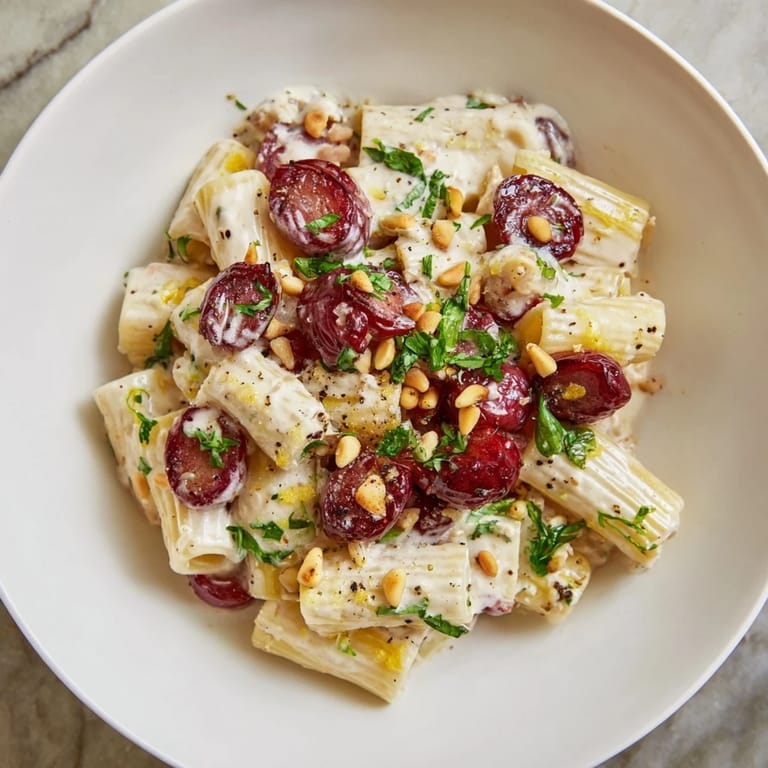 Save
Save This pasta has become one of those recipes I make when I want to remind myself why cooking matters—it's simple enough to feel relaxed about, but interesting enough to feel like you've done something worth doing. Every time someone tastes it, there's that pause, that moment of surprise, and that's what keeps me coming back to it.
Recipe FAQ
- → How do roasted grapes enhance the dish?
Roasting grapes caramelizes their sugars, intensifying natural sweetness and adding a subtle smoky flavor that complements the creamy ricotta and pasta.
- → Can I use different types of pasta?
Yes, short pastas like penne, rigatoni, or fusilli work best to hold the creamy ricotta and roasted grape mixture.
- → What herbs are best for this dish?
Fresh basil and parsley provide aromatic freshness and balance the richness of ricotta and sweetness of grapes.
- → Is it necessary to reserve pasta water?
Reserving pasta water helps loosen the sauce, creating a silky texture that coats the pasta evenly without drying.
- → What are good serving suggestions?
Serve with a drizzle of extra-virgin olive oil, toasted pine nuts for crunch, and grated Parmesan if desired to elevate the flavors.
- → Can any ingredient substitutions be made?
Goat cheese can replace ricotta for a tangier flavor; gluten-free or whole wheat pasta can be used to suit dietary needs.