 Save
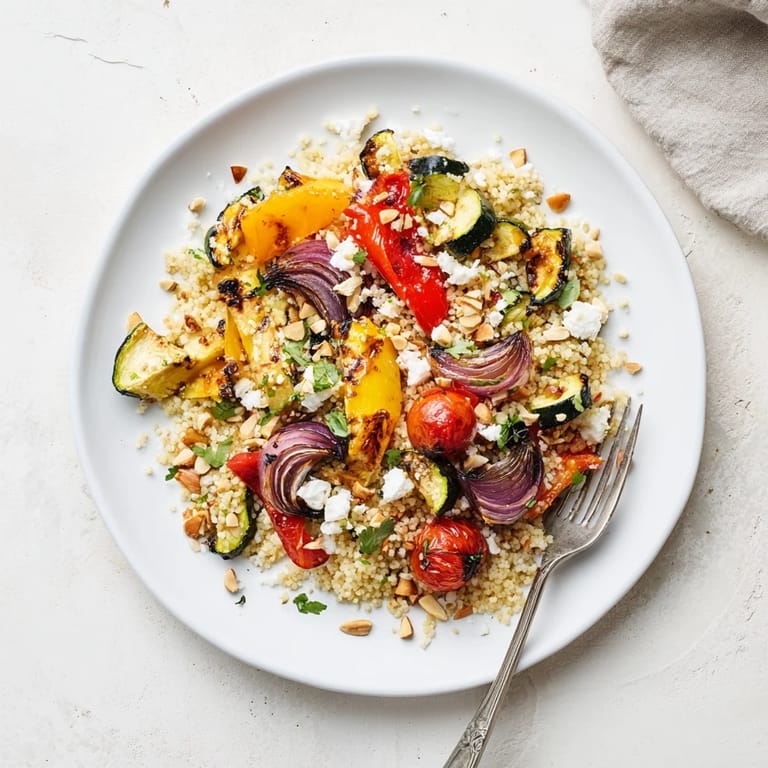
Save My kitchen window was open when I first roasted vegetables for couscous, and the smell drifted into the neighbor's yard. She knocked twenty minutes later asking what I was making. That's the thing about bell peppers and onions caramelizing in olive oil—they announce themselves. I handed her a bowl over the fence, and she's been asking for it ever since. Now I make extra on purpose.
I brought this to a potluck once where everything else was pasta salad and potato salad. Mine was gone first. Someone asked if I'd used quinoa, and when I said couscous, they looked relieved—like they'd been given permission to enjoy carbs again. A guy in a Patagonia vest asked for the recipe on a napkin. I still see him at the farmer's market sometimes.
Ingredients
- Zucchini: Dice it into chunks about the size of a grape so it roasts evenly and doesn't turn to mush.
- Red and yellow bell peppers: The mix of colors isn't just pretty, the yellow ones are sweeter and the red ones get smokier when roasted.
- Red onion: Cut into wedges, not rings, so they hold their shape and caramelize on the edges without falling apart.
- Cherry tomatoes: Halve them so their juices concentrate and add a tangy sweetness to the bowl.
- Olive oil for roasting: Don't skimp here, it's what helps the vegetables brown and develop flavor instead of steaming.
- Couscous: It cooks in five minutes and fluffs like a dream, just don't stir it while it sits or it'll clump.
- Vegetable broth: Using broth instead of water gives the couscous a richer base that doesn't need much help.
- Lemon juice and zest: The zest is where the magic lives, it has oils that make everything taste brighter without extra acid.
- Dijon mustard: It emulsifies the dressing and adds a subtle sharpness that balances the honey.
- Garlic: Mince it fine so it disappears into the dressing and doesn't overpower the lemon.
- Honey or maple syrup: Just a touch to round out the acidity, you won't taste it as sweetness.
- Fresh parsley and mint: Parsley is the backbone, mint is the surprise, use both if you have them.
- Feta cheese: Crumble it yourself from a block, the pre-crumbled stuff is dry and doesn't melt into the warm couscous the same way.
- Toasted pine nuts or almonds: Toast them in a dry skillet until they smell nutty, it takes two minutes and makes all the difference.
Tired of Takeout? 🥡
Get 10 meals you can make faster than delivery arrives. Seriously.
One email. No spam. Unsubscribe anytime.
Instructions
- Preheat and Prep the Vegetables:
- Set your oven to 425°F and line a baking sheet with parchment so nothing sticks. Toss the zucchini, peppers, onion, and tomatoes with olive oil, salt, and pepper until everything glistens.
- Roast Until Caramelized:
- Spread the vegetables in a single layer and roast for 20 to 25 minutes, stirring halfway so they brown evenly. You'll know they're done when the edges are golden and the tomatoes have collapsed into themselves.
- Cook the Couscous:
- Bring the vegetable broth to a boil, stir in the couscous, olive oil, and salt, then cover and pull it off the heat. Let it sit undisturbed for five minutes, then fluff it gently with a fork.
- Make the Lemon Dressing:
- Whisk together the lemon juice, zest, olive oil, Dijon, garlic, honey, salt, and pepper in a small bowl until it's smooth and emulsified. Taste it and adjust the salt or lemon if needed.
- Combine and Toss:
- In a large bowl, mix the couscous, roasted vegetables, parsley, and mint, then pour the dressing over and toss until everything is coated. The warm couscous will soak up the dressing like a sponge.
- Finish and Serve:
- Top with crumbled feta and toasted nuts just before serving. Serve it warm, or let it sit at room temperature where the flavors really come together.
 Save
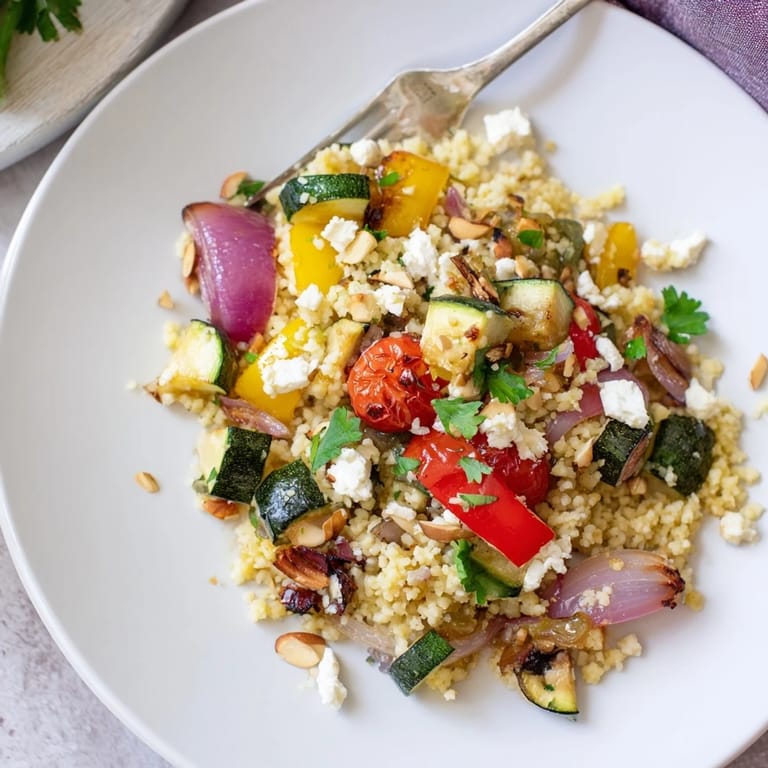
Save I made this the night before a long drive once and ate it cold from a container in a rest stop parking lot. It was better than any fast food I passed on the highway. My brother called while I was eating and asked what I was doing, and I said having the best lunch of my trip. He laughed, but it was true.
Make It Your Own
This recipe is flexible in the best way. Swap the zucchini for eggplant if that's what you have, or add chickpeas straight from the can for more protein. I've thrown in grilled halloumi when I wanted something heartier, and it turned the salad into dinner. If you're serving it to someone who doesn't like mint, just use more parsley and they'll never miss it.
Storing and Serving
Leftovers keep in the fridge for up to two days, and honestly, they get better as the couscous soaks up more dressing. I like to pull it out thirty minutes before eating so it comes back to room temperature. If you're making it ahead for a party, hold off on adding the feta and nuts until just before you serve so everything stays fresh and textured.
What to Serve Alongside
I've served this next to grilled chicken, baked salmon, and even lamb skewers, and it works every time. It's also great on its own as a light dinner with a piece of crusty bread. One time I packed it for a picnic with some hummus and pita, and it felt like the kind of meal you'd eat on a terrace somewhere warm.
- Add a dollop of Greek yogurt on the side for extra creaminess.
- Serve with warm flatbread or naan to scoop up every last bite.
- Pair it with iced mint tea or a crisp white wine if you're feeling fancy.
 Save
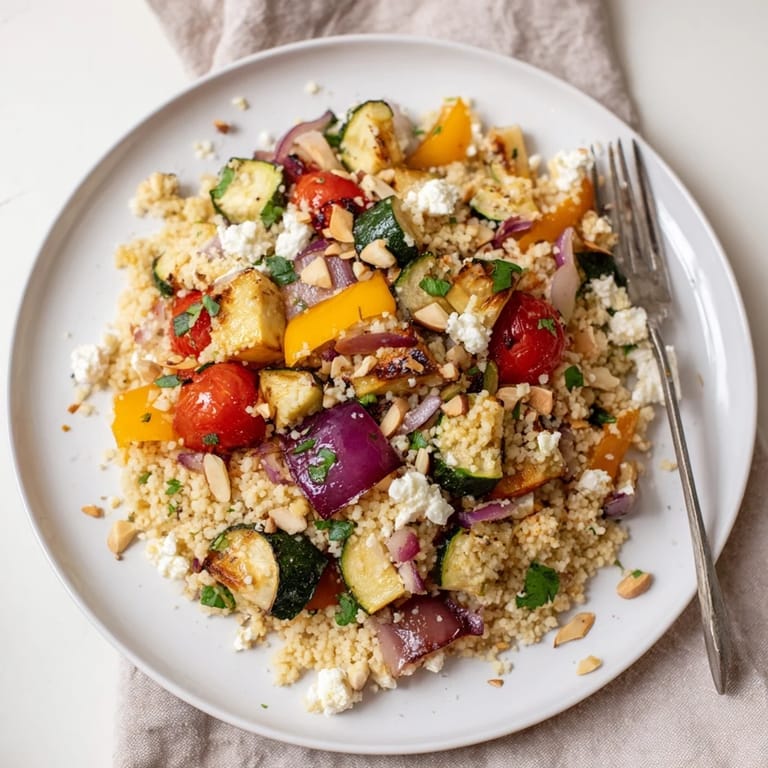
Save This is the kind of dish that makes you look like you tried harder than you did. Serve it at your next gathering and watch people go back for seconds.
Recipe FAQ
- → Can I prepare this salad ahead of time?
Yes, you can assemble the salad up to 2 days in advance. Store it in an airtight container in the refrigerator. Add the dressing just before serving to keep the couscous from becoming too soft. Toppings like feta and nuts are best added fresh.
- → What vegetables can I substitute?
You can use eggplant, mushrooms, asparagus, broccoli, or sweet potato. Keep pieces roughly the same size for even roasting. Adjust cooking time slightly depending on vegetable density—denser vegetables may need an extra 5 minutes.
- → How do I make this vegan?
Omit the feta cheese or replace it with vegan cheese alternatives. Use maple syrup or agave in the dressing instead of honey. All other ingredients are naturally plant-based, making this easily adaptable for vegan diets.
- → Can I use regular couscous instead of another grain?
Absolutely. You can substitute with quinoa, bulgur, or even brown rice. Adjust cooking times and liquid ratios according to the grain's package directions. The salad works beautifully with any whole grain.
- → What's the best way to store leftovers?
Store in an airtight container in the refrigerator for up to 2 days. The salad can be served cold or reheated gently. If the couscous dries out, add a splash of water or extra dressing when serving.
- → How can I add more protein?
Stir in chickpeas, white beans, or lentils for a heartier salad. Alternatively, top with grilled halloumi, feta, or serve alongside grilled chicken, fish, or shrimp for a complete meal.