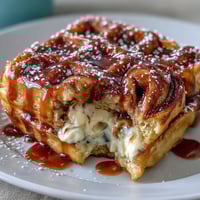
 Save
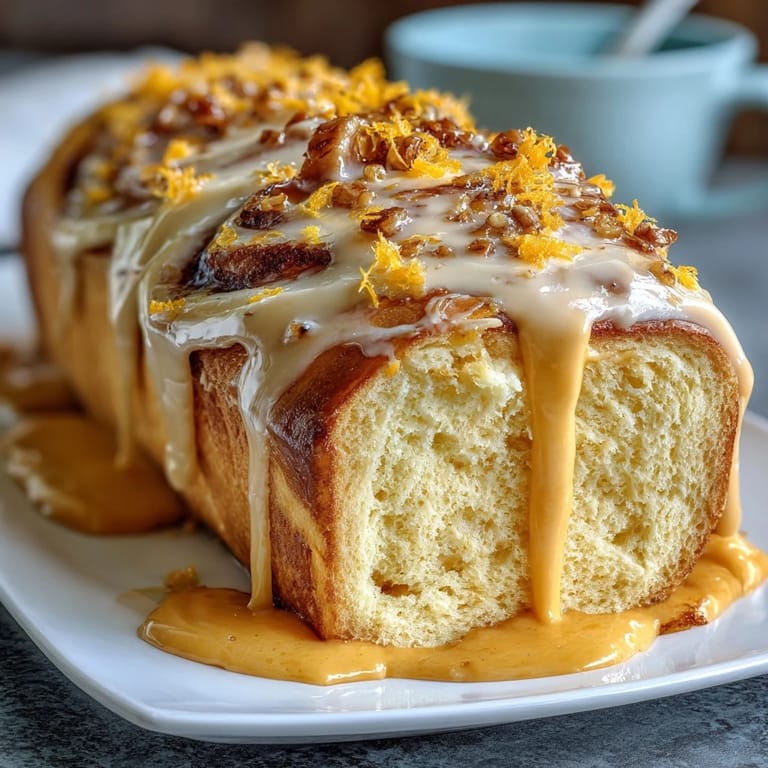
Save There's something almost magical about the moment when orange zest hits warm milk and yeast—the kitchen fills with this bright, citrusy perfume that makes you forget you're still in your pajamas at 6 AM. My neighbor knocked on the door one Sunday morning, drawn in by the smell alone, and ended up staying for breakfast. These rolls were my answer to the question of how to make something feel both comforting and unexpectedly luxurious at the same time.
I made these for my sister's brunch party last spring, and she asked for the recipe before people had even finished their coffee. What surprised me most was watching grown adults go quiet while eating them—not the polite quiet of politeness, but the genuine quiet of someone who's completely focused on what's in their mouth. That's when I knew I'd stumbled onto something worth repeating.
Ingredients
- All-purpose flour (3 1/4 cups): The foundation for pillowy-soft rolls that rise beautifully without becoming tough—I learned the hard way that measuring by weight rather than scooping saves a lot of frustration.
- Active dry yeast (2 1/4 tsp): Make sure it's fresh and stored in a cool spot, because stale yeast is the silent killer of otherwise perfect rolls.
- Whole milk (1/2 cup, warmed): Warm milk wakes up the yeast and contributes to that tender crumb you're after—not hot enough to kill it, just warm enough to make it happy.
- Fresh orange juice (1/4 cup): This isn't just flavoring; it changes the texture of the dough slightly and adds a subtle tang that elevates the whole thing.
- Orange zest (from 3 oranges total across dough and filling): Use a microplane or fine grater, and zest before you juice—it's easier and the oils are more vibrant.
- Unsalted butter (1/2 cup total): The melted butter in the dough keeps rolls tender, while softened butter in the filling spreads like a dream.
- Eggs (2 large, room temperature): Cold eggs can shock the dough, so let them sit out while you're prepping other ingredients.
- Granulated sugar (1/2 cup for filling): Combined with zest, it becomes aromatic paste that infuses every bite.
- Cream cheese (4 oz, softened): The secret to frosting that's creamy without being cloying—it adds a sophisticated tang that balances sweetness.
- Powdered sugar (1 1/4 cups): Sift it if you have time to avoid grainy frosting, but honestly, a quick whisk does the job.
Tired of Takeout? 🥡
Get 10 meals you can make faster than delivery arrives. Seriously.
One email. No spam. Unsubscribe anytime.
Instructions
- Wake up the yeast:
- Pour warm milk and orange juice into a bowl with sugar and yeast, then wait. Those 5 to 10 minutes when it gets foamy are the magic that tells you everything's working—if it doesn't foam, your yeast is sleepy and it's time to start over.
- Build the dough:
- Add butter, zest, eggs, and salt to the foamy mixture, then start bringing in flour gradually. You want a soft, slightly sticky dough that clings to your fingers but isn't a soupy mess.
- Knead until silky:
- Whether by hand or machine, spend 8 to 10 minutes working the dough until it's smooth and elastic. You'll feel it transform from shaggy to supple—that's when you know it's ready.
- First rise:
- Place dough in a buttered bowl, cover with a damp towel, and let it sit in a warm spot until it's doubled. A kitchen corner away from drafts, or even your oven with just the light on, works perfectly.
- Prepare the filling paste:
- Mix sugar and fresh orange zest in a small bowl and let it sit for a minute—the zest oils will release into the sugar, creating something intensely fragrant.
- Roll and fill:
- Punch down the dough, roll it into a 16x10-inch rectangle on a lightly floured surface, spread with softened butter, then sprinkle the zest sugar evenly. The butter keeps the filling from seeping out during rolling.
- Cut the rolls:
- Roll the rectangle tightly from the long side, then slice into 12 equal pieces—dental floss works surprisingly well if you don't have a sharp serrated knife.
- Second rise:
- Arrange rolls in a buttered 9x13-inch baking dish, cover loosely, and let them puff up for 30 to 40 minutes until they're touching and puffy. They'll look ready when they've visibly risen but still hold their shape.
- Bake to golden:
- Bake at 350°F for 22 to 25 minutes until the tops are deep golden brown. The edges might be slightly darker, which is perfect.
- Whip the frosting:
- While rolls bake, beat softened cream cheese and butter until completely smooth, then add powdered sugar, orange juice, zest, vanilla, and salt. Beat until it's spreadable but not runny.
- Frost while warm:
- Let rolls cool just 10 minutes—when they're still warm, the frosting melts slightly into the nooks and crannies, creating a dreamy finish.
 Save
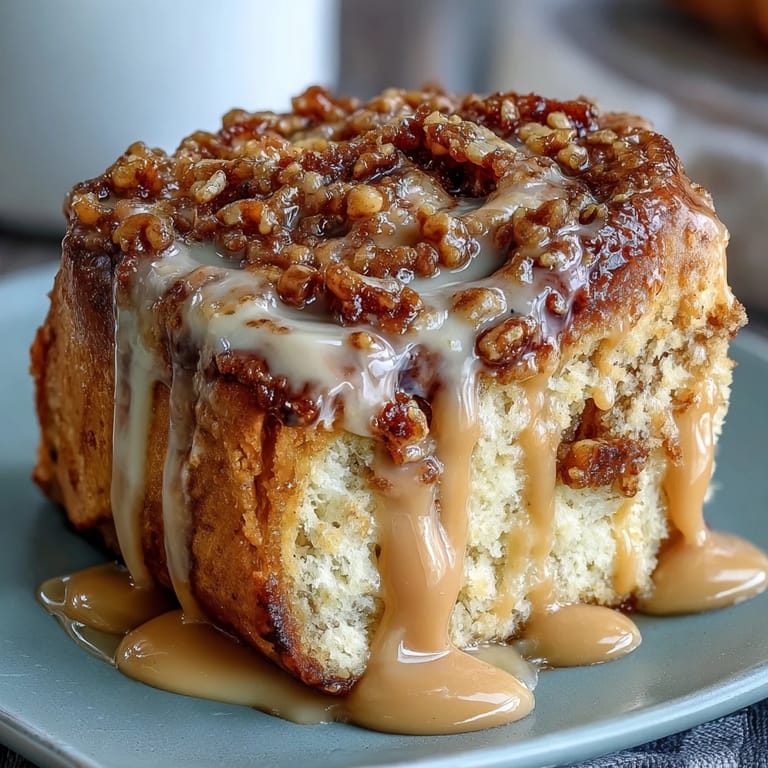
Save The first time someone took a roll apart and showed me how the filling had spiraled through every layer, perfectly distributed, I realized these rolls represent something I love about cooking: the careful attention to technique that makes something feel effortless to eat. That's when good food stops being just breakfast and becomes a small moment of care.
Why Orange Zest Changes Everything
I used to think zest was decorative, a finish for fancy desserts, until I started adding it to the dough itself. The oils in the zest infuse the entire roll as it rises, so every bite carries citrus all the way through instead of just on top. It's the difference between a cinnamon roll that tastes like cinnamon and these rolls that taste like pure bright morning from the center outward.
Make-Ahead Magic
There's something deeply satisfying about shaping these rolls at night, covering them in plastic wrap, and sliding them into the fridge. In the morning, you let them come to room temperature for their second rise while your coffee brews, then bake them fresh. It transforms what could be a time-consuming process into something manageable, and the rolls taste just as good—maybe even better because the flavors had time to develop overnight in the cold.
Serving and Pairing
These rolls are confident enough to stand alone, but they're also generous with company. I've served them at baby showers with champagne, at lazy weekend breakfasts with strong coffee, and even as a slightly fancy dessert with tea. The tartness of the cream cheese frosting plays beautifully against Earl Grey's bergamot, and fresh orange juice alongside them feels like a natural choice.
- Serve them still slightly warm if possible, when the frosting is soft and the roll structure is at its most tender.
- Leftovers keep for two days in an airtight container, and while they're best fresh, reheating gently brings them back to life.
- If you're making these for a crowd, double the batch and freeze unbaked rolls on a sheet pan before transferring to a freezer bag—bake straight from frozen, just add a few extra minutes.
 Save
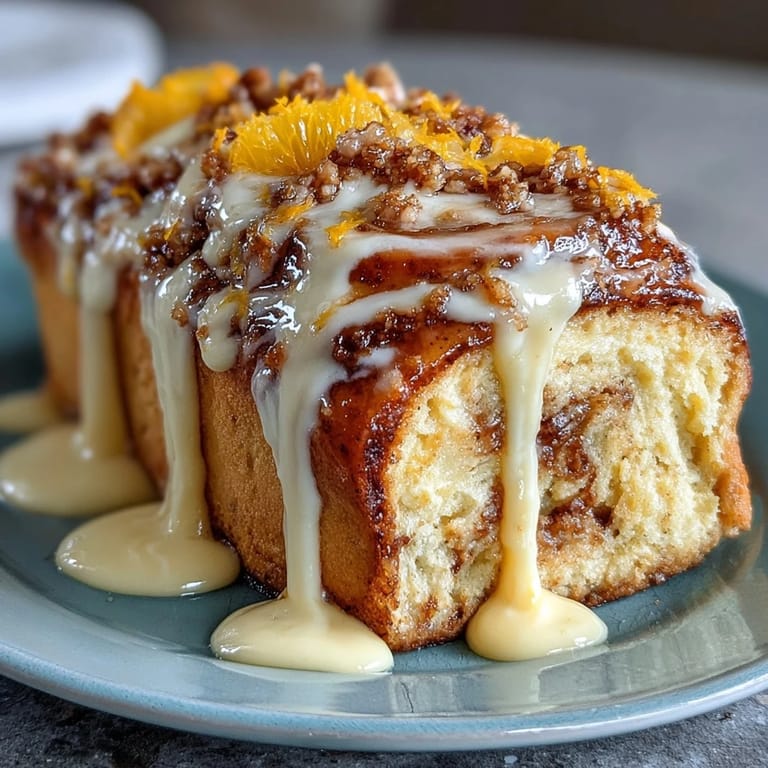
Save These rolls remind me that the best recipes are the ones people ask for, and the best moments in the kitchen are when something smells so good that it stops people in their tracks. Make them, and watch what happens.
Recipe FAQ
- → What ingredients give the rolls their orange flavor?
Fresh orange zest and juice are incorporated into the dough, filling, and frosting to provide a consistent citrus aroma and taste throughout.
- → How long should the dough rise before baking?
The dough should rise until doubled in size, approximately 1 hour, and then after shaping, let the rolls rise for 30–40 minutes before baking.
- → Can I prepare these rolls the night before baking?
Yes, rolls can be shaped and refrigerated overnight. Bring them to room temperature and let them rise before baking for best results.
- → What is the best way to cut the rolled dough evenly?
Use a sharp knife or dental floss to slice the dough log into equal-sized rolls for uniform baking.
- → How do I achieve a creamy frosting with orange flavor?
Beat cream cheese and butter until smooth, then add powdered sugar, fresh orange juice, zest, vanilla, and a pinch of salt for a balanced creamy citrus glaze.