 Save
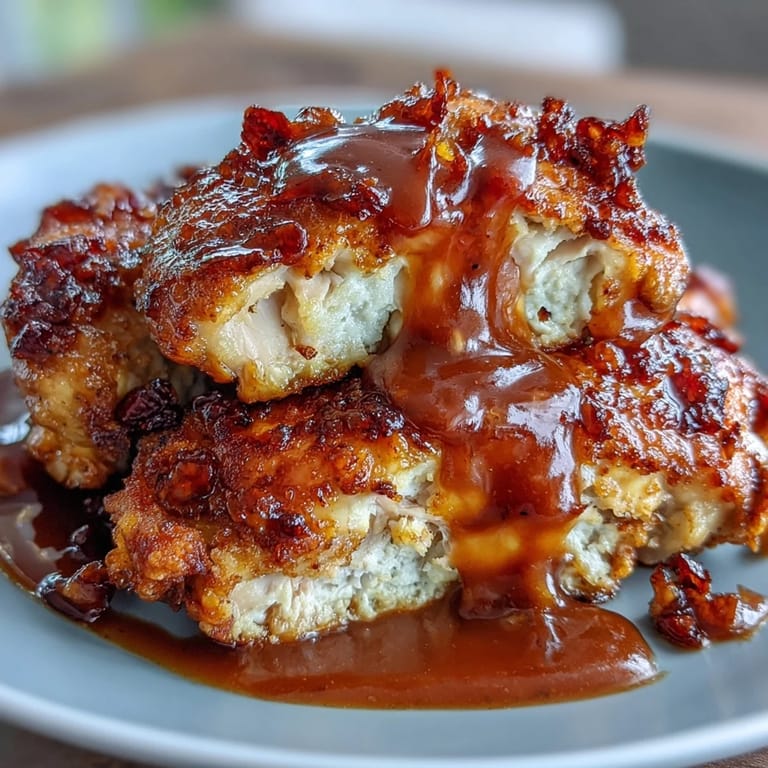
Save My grandmother's kitchen always smelled like caramelizing onions and cast iron when she made this dish on Sunday afternoons. There was something about watching her brown the chicken skin until it crackled, then build that gravy from nothing but patience and good technique that made me understand comfort food wasn't just about taste—it was about the ritual. Years later, I recreate that same magic in my own kitchen, and the smell alone brings people to the table before I even call them.
I learned to make this properly during a winter when my best friend was going through a rough patch, and I invited her over without explaining why. She walked in to find chicken sizzling in the pan, onions turning golden, and the whole house wrapped in that distinctive Southern comfort smell. By the time we sat down with full plates, she didn't need to talk about what was bothering her—the food did the work of saying I'm here for you in a way words sometimes can't.
Ingredients
- Bone-in, skin-on chicken thighs and drumsticks: These cuts stay moist through the long simmer and the skin renders down to crispy gold; white meat dries out too easily in this braise, so don't substitute it.
- All-purpose flour for breading: Creates a light crust that catches the gravy and adds body; use the reserved flour directly for the gravy to build flavor layers.
- Vegetable oil: Neutral oil with a high smoke point keeps the heat steady; don't use butter alone or it'll brown too fast and burn.
- Large yellow onions, thinly sliced: The sweetness develops as they cook low and slow, becoming the backbone of your gravy; thick slices won't soften properly in the time allowed.
- Low-sodium chicken broth: Allows you to control the salt and prevents the gravy from becoming one-dimensional; homemade stock elevates this to another level entirely.
- Dried thyme: Optional but worth including—it whispers herbs without overpowering the onion-forward flavor profile.
- Unsalted butter: Added at the end to enrich the gravy and give it a silky finish that oil alone can't achieve.
Tired of Takeout? 🥡
Get 10 meals you can make faster than delivery arrives. Seriously.
One email. No spam. Unsubscribe anytime.
Instructions
- Prepare and season the chicken:
- Pat each piece completely dry with paper towels—moisture is the enemy of crispiness. Season all sides generously, getting into the crevices where skin meets meat so every bite has flavor.
- Coat the chicken:
- Dredge each piece in the flour mixture, shaking off the excess so it doesn't clump up. Save that remaining flour in the bowl; you'll use it to thicken the gravy.
- Fry until golden:
- Listen for the sizzle when the skin hits the hot oil—that's your signal you're getting the crust. Don't move the chicken around; let it sit for a minute before flipping so the skin can crisp up properly.
- Build the onion base:
- After removing the chicken, there should be flavorful browned bits stuck to the bottom of the skillet. Add the onions to that same pan and let them cook slowly, stirring often, until they're soft and caramel-colored.
- Create the roux:
- Sprinkle that reserved flour over the caramelized onions and stir constantly for a minute or two until it turns light brown. This cooked flour thickens the gravy and prevents lumps.
- Build the gravy:
- Slowly pour in the broth while whisking to break up any flour clumps, scraping those browned bits from the bottom as you go. Add thyme, paprika, salt, pepper, and butter, then let it simmer until it thickens enough to coat the back of a spoon.
- Finish with the chicken:
- Nestle the partially cooked chicken back into the gravy, skin-side up if you can, and spoon some of that sauce over the top. Cover and let it braise low and slow until the meat is fall-off-the-bone tender and the internal temperature hits 165°F.
- Serve with generosity:
- Spoon that rich onion gravy over each piece so the chicken gets one last soak of flavor. The beauty of this dish is that every plate should be swimming in sauce.
 Save
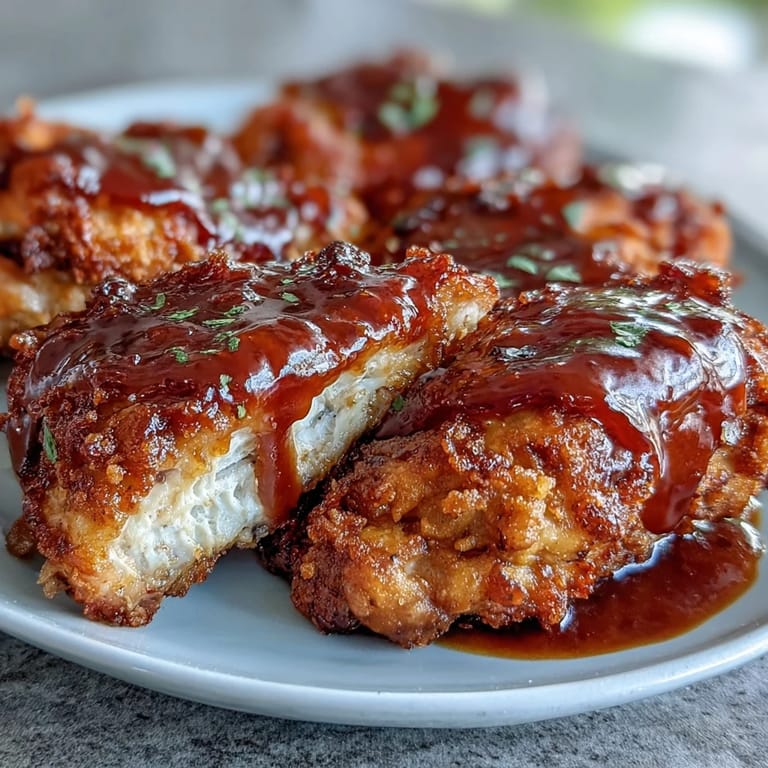
Save There's a moment in cooking this dish when you pour that broth into the onions and scrape up all those caramelized bits—the whole skillet transforms from scattered ingredients into something cohesive and purposeful. That's when I know the meal is going to be good, not just because of taste but because something real is being built.
The Power of Skin-On Chicken
Bone-in, skin-on pieces are non-negotiable here because the skin renders its fat into the oil during frying, creating a foundation of flavor that boneless chicken simply can't match. That fat seasons everything it touches, and the collagen in the bones breaks down into gelatin during the long simmer, making the gravy naturally silky. I've tried shortcuts with boneless chicken, and while it works in a pinch, it never quite delivers that same richness—the dish becomes lighter, less satisfying, more like something from a weeknight shortcut than a proper Sunday meal.
Why the Gravy Matters Most
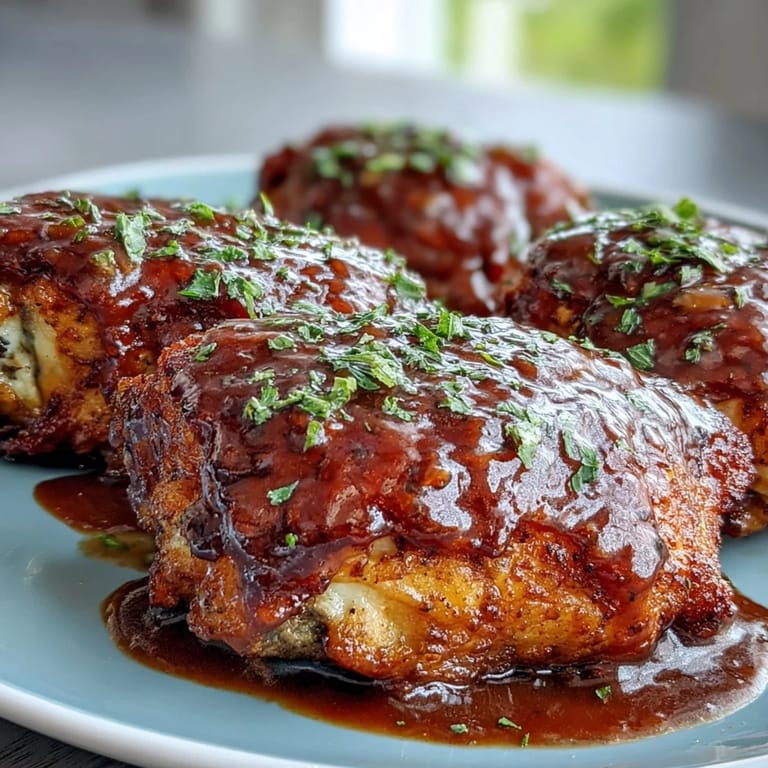
This isn't a dish where the chicken is the star and the gravy is the supporting player—they're equally important, and the gravy is what people ask about when you serve this. The combination of caramelized onions, thyme, paprika, and that browned flour base creates a sauce that's savory and slightly sweet, rich but not heavy, and absolutely essential to every forkful. I once served this with store-bought gravy on the side because I was in a rush, and someone actually asked if I had forgotten the real sauce—that's how important it is to get this part right.
Serving Suggestions and Storage
This dish was born to be served over mashed potatoes or rice, where that gravy can soak in and become part of the meal rather than just a topping. Collard greens on the side complete the picture, offering a slight bitterness that balances the richness of the chicken and sauce beautifully. Leftovers actually improve as they sit because the flavors meld overnight, and reheating gently on low heat brings everything back to life without drying anything out.
- Store in an airtight container for up to three days, keeping the chicken submerged in the gravy to prevent it from drying out.
- Reheat low and slow on the stove rather than the microwave to preserve the texture of the skin and keep the gravy silky.
- Freeze for up to two months, though the skin texture won't be quite as crisp after thawing—still delicious, just not quite the same.
 Save
Save Every time I make this, I think about all the hands that prepared it before mine, all the kitchen tables where it appeared on a plate and made people feel cared for. It's simple food elevated by patience and technique, the kind that reminds you why cooking for others matters so much.
Recipe FAQ
- → What cut of chicken works best for this dish?
Bone-in, skin-on thighs and drumsticks are ideal for juiciness and flavor, providing a tender, moist texture when cooked.
- → How is the onion gravy thickened?
The gravy thickens naturally by cooking flour with caramelized onions before gradually whisking in chicken broth, creating a smooth, rich sauce.
- → Can this dish be made spicier?
Yes, adding a pinch of cayenne pepper to the breading mix will introduce a mild heat without overwhelming the savory flavors.
- → What are suitable side dishes to serve with this chicken?
Mashed potatoes, rice, or collard greens complement the smoky, savory notes and provide a balanced Southern-inspired meal.
- → Is it better to use homemade or store-bought chicken broth for the gravy?
Homemade broth enhances depth and richness of the gravy, but quality low-sodium store-bought broth also works well.
- → How long should the chicken simmer in the gravy?
Simmering for 25–30 minutes allows the chicken to become tender and absorb the savory onion flavors without drying out.