 Save
Save There's something about autumn that makes me want to fill a pot with something golden and warming, and that's exactly when this soup came into my life. A friend brought a thermos of it to a chilly afternoon hike, and the moment I tasted that first spoonful—the squash so silky, the apples adding this gentle sweetness—I knew I had to figure out how to make it myself. What struck me most was how simple the ingredient list felt, yet how it tasted like something that had simmered for hours. I've made it dozens of times since, and it never fails to turn an ordinary Tuesday into something a bit more special.
I made this for my mom when she was having a rough week, and watching her face light up as she ate it reminded me that food is sometimes the only language that really works. She asked for the recipe immediately, and now it's become her go-to when she wants to feel grounded. There's something about serving someone a bowl of something warm and velvety that says more than words ever could.
Ingredients
- Butternut squash (1 medium, about 2 lbs): The star of the show—look for one that feels heavy for its size and has a deep, even color, as these tend to be sweeter and less watery.
- Apples (2 medium, Gala or Fuji): These varieties hold their flavor without turning mushy, and they add brightness without making the soup taste cloying.
- Yellow onion (1 medium): The foundation layer that builds flavor as it softens; don't skip the sauté step or you'll miss that depth.
- Garlic (2 cloves): Minced small so it distributes evenly and adds a whisper of savory against all that sweetness.
- Vegetable broth (4 cups): Use a good quality broth you'd actually drink on its own, since it's the liquid backbone of the whole thing.
- Apple cider or unsweetened apple juice (1/2 cup): This adds a subtle tang and reinforces the apple flavor without overpowering the squash.
- Heavy cream or coconut milk (1/2 cup, optional): A splash at the end transforms it from nice to absolutely silky—coconut milk works beautifully if you're going plant-based.
- Ground cinnamon (1/2 tsp): Warm and comforting, but use fresh from the spice jar because old cinnamon loses its magic.
- Ground nutmeg (1/4 tsp): Just a pinch goes a long way; too much and it tastes medicinal, so measure carefully.
- Ground ginger (1/4 tsp): Adds a subtle spice that makes people wonder what the secret ingredient is.
- Salt and black pepper: Season at the very end so you can taste and adjust to your preference.
Tired of Takeout? 🥡
Get 10 meals you can make faster than delivery arrives. Seriously.
One email. No spam. Unsubscribe anytime.
Instructions
- Build Your Base:
- Heat olive oil in a large pot over medium heat, then add the chopped onion and let it soften for 4 to 5 minutes, stirring occasionally—you're looking for it to turn translucent and smell sweet, which signals it's ready for the next step. This is where all the flavor begins.
- Toast the Vegetables and Fruit:
- Stir in the minced garlic, cubed squash, and diced apples, cooking for about 3 minutes until the raw edge comes off and everything starts smelling like autumn. The goal is to warm everything through and let the garlic bloom without burning.
- Bloom Your Spices:
- Add the cinnamon, nutmeg, and ginger right to the pot and stir constantly for about 30 seconds—this wakes up the spices and distributes them evenly. You'll smell the difference immediately, and that's how you know it's working.
- Simmer Until Tender:
- Pour in the vegetable broth and apple cider, bring everything to a boil, then reduce the heat and let it simmer uncovered for 25 to 30 minutes until the squash and apples are fall-apart tender when you pierce them with a spoon. The kitchen will smell so good you'll have to stop yourself from eating it straight from the pot.
- Blend Until Silky:
- Remove from heat and use an immersion blender to purée the soup directly in the pot, working in steady strokes until it's completely smooth—if you prefer a countertop blender, work in batches and be careful since the mixture is hot. This is where the magic happens and it transforms into something restaurant-quality.
- Finish and Season:
- Stir in the cream or coconut milk if you're using it, then taste and adjust your seasoning with salt and pepper until it feels right to you. This final taste is crucial because every broth is different and you want it to be perfect.
- Serve with Love:
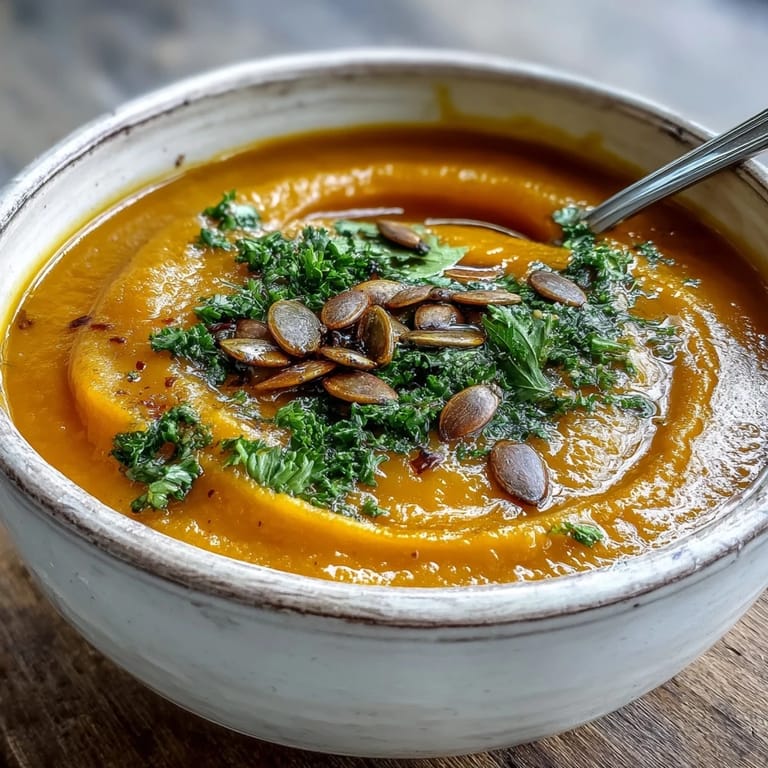
- Gently reheat if the soup has cooled while you were blending, then ladle into bowls and top with toasted pumpkin seeds and fresh parsley if you have them on hand. A drizzle of cream on top looks beautiful too, if you're feeling fancy.
 Save
Save I served this soup at a small dinner party last November, and my friend Sarah went completely quiet after her first spoonful, which is the highest compliment anyone could pay in my kitchen. She told me later it tasted like comfort, which is exactly what I was going for but couldn't quite articulate until she said it out loud.
The Secret to Silky Texture
The difference between soup that's merely good and soup that tastes like someone's been stirring it all day comes down to how thoroughly you blend it. I used to stop when it looked smooth, but then I realized that an extra minute of blending makes all the difference—the squash and apples break down so completely that they become almost velvety, creating a natural creaminess that feels luxurious without being heavy. It's the kind of detail that feels small in the moment but gets noticed immediately when someone takes a bite.
Timing and Temperature Matter
The first time I made this, I rushed the cooking time and the squash wasn't quite tender enough, so the blender had to work overtime and the soup never reached that perfect silky consistency. Now I set a timer for 25 minutes and use that time to prep a salad or set the table, checking in at the 20-minute mark by piercing a piece of squash with a fork—it should slide through with almost no resistance. Temperature-wise, you want a gentle simmer, not a rolling boil, which keeps the flavors from cooking off and the soup from becoming watery.
Ways to Make It Your Own
This recipe is a beautiful canvas, and I've played with it in ways that surprised me—sometimes I roast the squash cubes beforehand for deeper caramelized flavor, other times I add a tiny pinch of cayenne to keep people guessing. The core formula of squash, apple, and warmth is flexible enough to handle additions without falling apart, which is exactly what makes it feel like a home recipe rather than something you're strictly following.
- Roasting the squash at 400°F for 20 minutes before adding it to the pot adds a subtle caramelized depth that elevates the whole dish.
- A whisper of cayenne pepper adds intrigue and warmth without making anyone realize they're eating something slightly spicy.
- Swirl in a little maple syrup or honey at the very end if you want to adjust the sweetness, but taste first because the apples already provide plenty.
 Save
Save This soup has become my answer to so many seasons and moments—it's what I make when I want to feel grounded, what I bring to someone who needs comfort, and what I come back to again and again because it never disappoints. Once you make it, you'll understand why.
Recipe FAQ
- → Can I make this soup ahead of time?
Yes, this soup reheats beautifully. Prepare it up to 3 days in advance and store in an airtight container in the refrigerator. Reheat gently over medium-low heat, stirring occasionally. The flavors often develop and deepen after resting overnight.
- → What type of apples work best?
Sweet apples like Gala, Fuji, or Honeycrisp complement the squash's natural sweetness. Avoid tart varieties like Granny Smith as they can overpower the delicate balance. The apples should be firm enough to hold their shape during simmering.
- → Can I freeze this soup?
Absolutely. Cool completely before transferring to freezer-safe containers, leaving some room for expansion. It freezes well for up to 3 months. Thaw overnight in the refrigerator, then reheat slowly. If using cream, add it after reheating to prevent separation.
- → How can I make this soup thicker?
Roasting the squash cubes at 400°F for 20 minutes before simmering concentrates their natural sugars and adds depth, creating a thicker base. Alternatively, reduce the simmering time slightly or add a peeled potato during cooking for extra body.
- → What can I substitute for apple cider?
Unsweetened apple juice works well as a direct substitute. For a slightly different flavor profile, try white wine or additional vegetable broth. The cider adds subtle sweetness and acidity that enhances the apples, but the soup remains delicious without it.
- → Is this soup suitable for meal prep?
Perfect for meal prep. Make a batch on Sunday and portion into containers for easy lunches throughout the week. The soup actually tastes better after the flavors meld together. Keep garnishes separate until serving to maintain their texture.