 Save
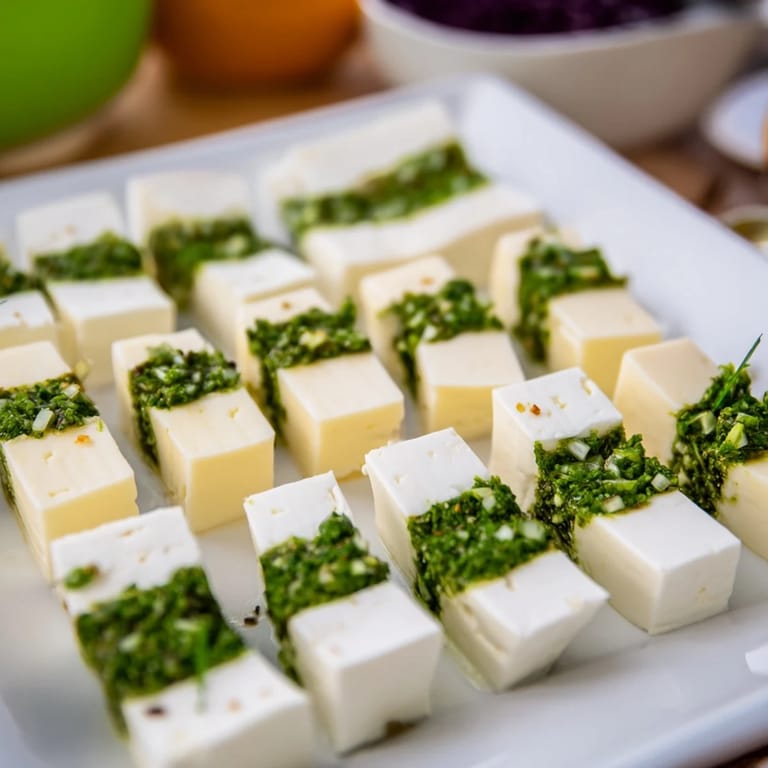
Save The first time I assembled a checkerboard on a platter, I was trying to impress someone who claimed they didn't eat appetizers. That shifted something in me—I realized presentation could change minds before taste ever did. The alternating squares of white cheese and green herb paste felt almost architectural, like I was building something delicate with my hands. It took longer than I expected, but watching the pattern emerge square by square was oddly meditative. Now whenever I make this, I remember how that simple arrangement turned skeptics into people who came back for seconds.
I made this for a picnic once where someone brought store-bought hummus and called it homemade. When I set down the checkerboard, the conversation shifted entirely—suddenly we were all talking about the fresh basil, the way the lemon zest brightened everything, why the feta tasted different here than it did last week. Food became the thing that mattered most in that moment, not the one-upmanship. That's when I knew this recipe had something special.
Ingredients
- Fresh mozzarella, 150 g sliced: This is your blank canvas—it needs to be really fresh, tender, and delicate, so slice it just before assembly or it'll oxidize and turn gray.
- Ricotta cheese, 150 g: The creamy anchor of the checkerboard; it pipes beautifully if you spoon it into a piping bag, which makes the edges clean and architectural.
- Feta cheese, 150 g sliced: Its saltiness is essential—it's what makes people keep reaching for another piece, so don't skip it or substitute it with something milder.
- Fresh basil leaves, 1 cup: The star of the herb mixture; use young leaves if you can, as they're more delicate and vibrant than the older, tougher ones.
- Fresh flat-leaf parsley, 1 cup: This steadies the basil's intensity and adds an earthy undertone that keeps the whole thing balanced.
- Chives, 2 tbsp chopped: A whisper of onion flavor that nobody can quite identify but everyone notices when it's missing.
- Extra virgin olive oil, 2 tbsp: This is what binds everything into a paste, so use something you'd actually taste on its own—it matters.
- Garlic clove, 1 small: Raw garlic is sharp, so use just a sliver and taste as you go; one clove can easily overpower the whole thing.
- Lemon zest, 1 tsp: The brightness that wakes everything up; don't use juice instead, as it'll make the herb paste watery and hard to work with.
- Salt and pepper, to taste: Taste the herb mixture before it hits the platter, because once it's arranged, adjusting becomes impossible.
- Microgreens or edible flowers, optional: These are the final flourish that makes people pull out their phones; they're not essential, but they're worth the small effort.
Tired of Takeout? 🥡
Get 10 meals you can make faster than delivery arrives. Seriously.
One email. No spam. Unsubscribe anytime.
Instructions
- Blend your green into silk:
- Drop the basil, parsley, chives, garlic, and lemon zest into the food processor, pulse a few times, then add the olive oil while it's running until everything becomes a smooth, vivid paste that smells like summer. Taste it, adjust the salt and pepper, then set it aside in a small bowl so you can see its true color.
- Prep your canvas:
- Line your serving tray with parchment paper so the whole checkerboard lifts off cleanly when you're ready to serve, which is the difference between impressive and messy.
- Cut your cheese into soldiers:
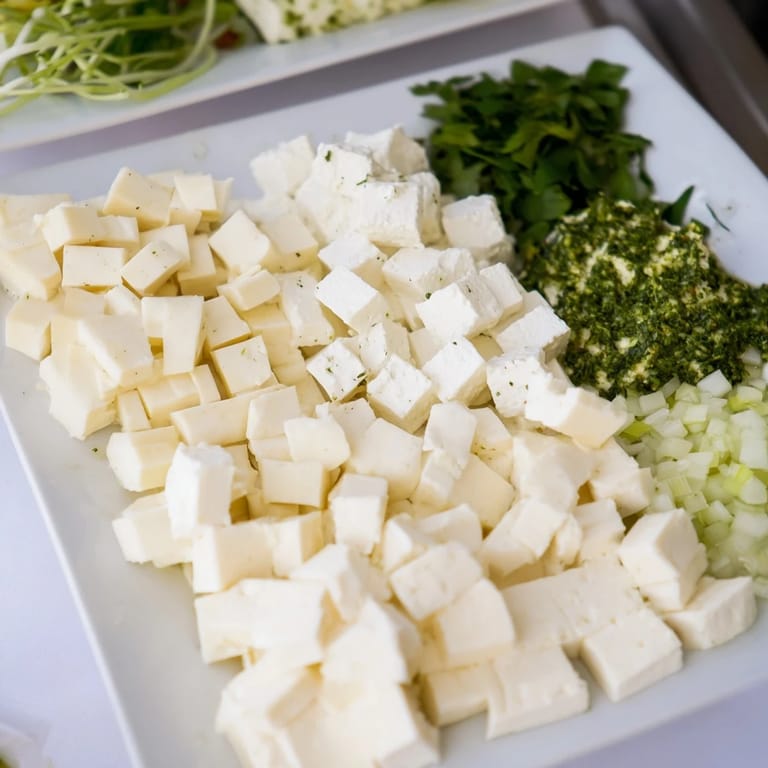
- Slice the mozzarella and feta into squares roughly the same size as your herb squares will be—using a ruler or a cookie cutter keeps everything uniform and intentional-looking. Precision here is what catches the eye.
- Spread the ricotta base:
- Dollop ricotta into alternating squares with an offset spatula, spreading it smooth, or load a piping bag for cleaner edges that look less homemade and more intentional. Either way, the key is consistency—each square should be roughly the same thickness.
- Arrange your pattern:
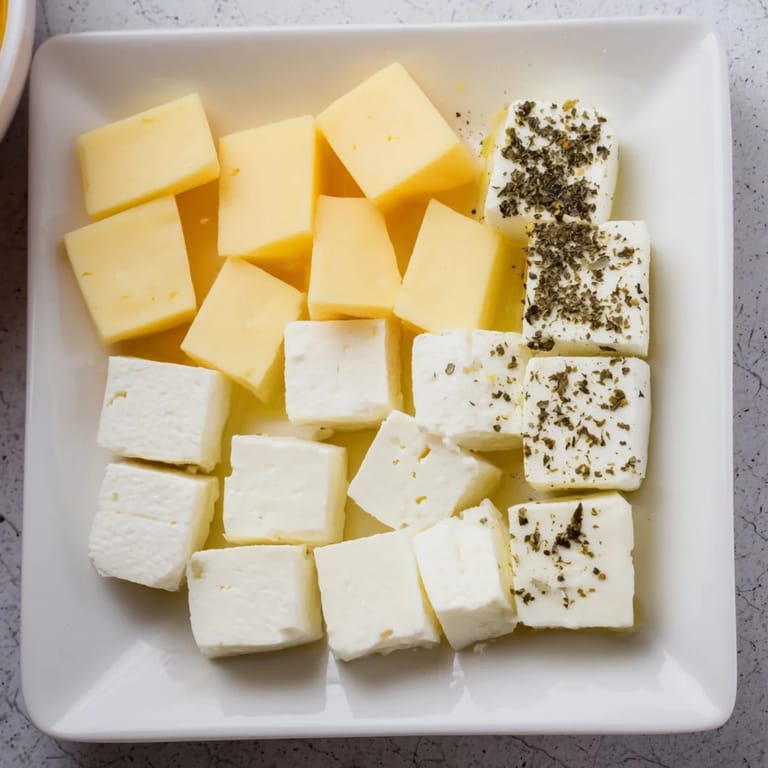
- Start in one corner and alternate white cheese (mozzarella or ricotta) with green herb paste, then add the feta slices where they fit, keeping your lines clean and your squares aligned. Step back every few squares to make sure the pattern reads clearly from above.
- Finish with intention:
- Scatter microgreens or edible flowers across the top if you have them, or just grind fresh black pepper over everything for simplicity. Neither is required, but both make people believe you're more skilled than you actually are.
- Chill and serve:
- Pop it in the fridge for 10–15 minutes so the cheeses firm up slightly and everything sets into place. Serve with crackers, toasted bread, or fresh vegetables alongside.
 Save
Save I once made this for a dinner party where everyone was too polite to dig in, afraid of messing up the pattern. Eventually someone's kid just grabbed a square and ate it like it was nothing, and suddenly everyone relaxed and started eating like humans instead of art critics. That's when I understood: the checkerboard isn't meant to be preserved, it's meant to be consumed and enjoyed the moment it arrives at the table.
Why Color and Precision Matter
The whole appeal of this dish lives in the contrast—the bright, almost neon green of the herb paste against the soft white of the cheese creates a visual statement before anyone tastes anything. When you take the time to make clean lines and keep things intentional, you're essentially saying 'I care about this enough to get it right.' That respect for craft, even in something as simple as an appetizer, is what separates a memorable moment from something people forget by dessert.
Playing with Flavors and Swaps
The beauty of this recipe is that it's a framework, not a mandate. I've swapped goat cheese for ricotta when I wanted something tangier, layered thin cucumber slices beneath the white cheese for a cool crunch, and once experimented with tarragon instead of basil because I had a bunch that needed using. The only rule that matters is balance—if you make one element stronger, make sure the others can stand up to it. The herb paste is what makes this sing, so that's the one thing I wouldn't cut corners on.
Pairing and Presentation Tips
Serve this with crisp white wine—a Sauvignon Blanc or light Pinot Grigio works perfectly because the acidity cuts through the richness of the cheese and complements the bright herbs. The checkerboard sits beautifully on a neutral platter or even a wooden board, and it looks especially striking if you place it at eye level so people see the pattern before they reach for anything.
- Make the herb paste the day before if you're anxious about timing, but assemble the checkerboard fresh just before guests arrive.
- If you don't have microgreens or edible flowers, a simple grind of black pepper or a whisper of fleur de sel gives you that final refinement.
- This scales easily—double the recipe for a crowd, and the time investment barely changes because you're just repeating the same pattern on a larger surface.
 Save
Save This checkerboard is the kind of appetizer that makes people ask for the recipe, then realize halfway through explaining it that what they really want is just to watch you make it again. That's the real win.
Recipe FAQ
- → How is the herb mixture prepared?
Fresh basil, parsley, chives, garlic, lemon zest, olive oil, salt, and pepper are blended into a smooth, vibrant paste for layering.
- → Can I substitute any cheeses?
Yes, swapping ricotta for goat cheese can add a tangy note, and ensure all cheeses are fresh and sliced evenly for best results.
- → What tools help with assembling the checkerboard?
Using a ruler or square cutter ensures uniform cheese squares, while an offset spatula or piping bag helps spread the softer cheeses and herb paste precisely.
- → How long should the dish be chilled before serving?
Chilling for 10–15 minutes allows the layers to set, enhancing the presentation and making it easier to serve.
- → What garnishes pair well with this dish?
Microgreens, edible flowers, and a sprinkle of freshly ground black pepper add color and bright flavor contrasts.