 Save
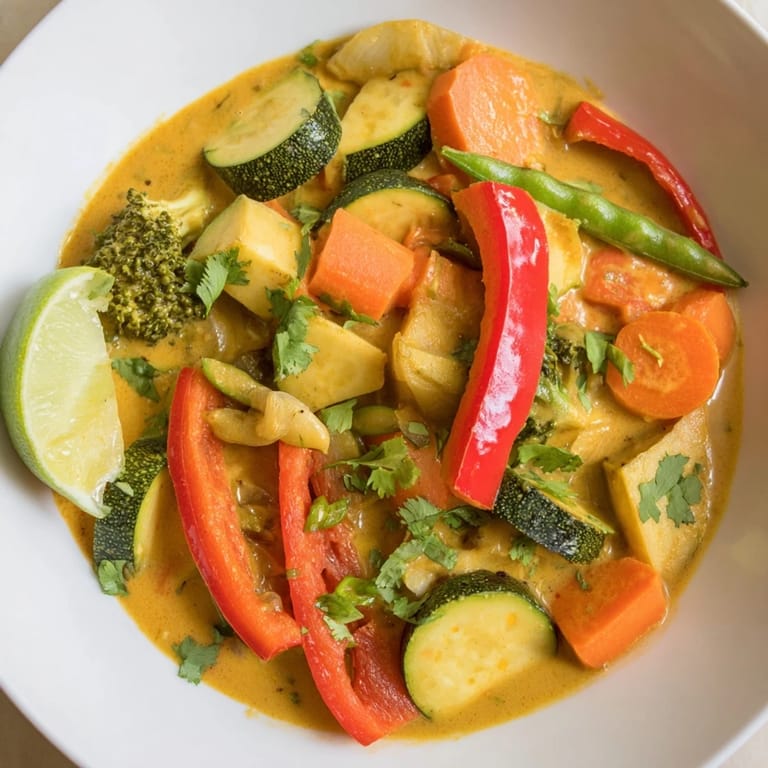
Save I stumbled onto this curry on a rainy Tuesday when my fridge was a chaotic mix of half-used vegetables and good intentions. The coconut milk had been sitting there for weeks, and I figured it was time to either use it or toss it. What started as fridge clean-out dinner turned into something I now crave on loop. The house filled with ginger and garlic within minutes, and I knew I was onto something good.
The first time I made this for friends, one of them scraped her bowl clean and asked if there was more. There wasnt, but I took it as a compliment. We sat around the table longer than usual that night, talking over second helpings of rice soaked in leftover sauce. It became my go-to whenever I wanted to feed people something warm and satisfying without spending all day in the kitchen.
Ingredients
- Red bell pepper: Adds a subtle sweetness that balances the spice, and it holds its shape beautifully without turning mushy.
- Carrot: Brings a slight earthiness and a pop of color, plus it soaks up the coconut sauce like a dream.
- Zucchini: Softens quickly and acts like a sponge for all those aromatic flavors.
- Broccoli florets: They stay just tender enough to bite into while adding a hearty, almost nutty texture.
- Snap peas: These go in at the end to keep their crisp snap and bright green color intact.
- Red onion: Mellows out when sautéed and adds a gentle, sweet backbone to the whole dish.
- Coconut oil: The best fat for this job because it echoes the coconut milk and handles high heat without smoking.
- Garlic and ginger: The aromatic duo that makes your kitchen smell like a restaurant, and they build the foundation of flavor here.
- Red curry paste: This little spoonful is where the magic lives, so buy a good brand and check the label if you need it vegan.
- Turmeric, cumin, coriander: These ground spices deepen the curry and give it that warm, golden glow.
- Coconut milk: Full fat is non-negotiable for creaminess, the light stuff just does not cut it.
- Vegetable broth: Thins the sauce just enough so it coats everything without becoming a thick paste.
- Soy sauce or tamari: A splash of umami that makes the whole thing taste richer and more complex.
- Lime juice: Brightens everything up at the end and cuts through the richness with a little zing.
- Cilantro and lime wedges: Fresh, green, and the perfect finish that makes each bowl feel complete.
Tired of Takeout? 🥡
Get 10 meals you can make faster than delivery arrives. Seriously.
One email. No spam. Unsubscribe anytime.
Instructions
- Start with the onion:
- Heat the coconut oil until it shimmers, then add the red onion and let it soften and turn translucent. You will smell it sweetening as it cooks, and that is your cue to keep going.
- Wake up the aromatics:
- Toss in the garlic and ginger, stirring constantly so they do not burn. Within a minute, your kitchen will smell incredible.
- Bloom the spices:
- Add the curry paste and ground spices, stirring them into the oil until they sizzle and release their fragrance. This step is quick but crucial for deep flavor.
- Sauté the sturdier vegetables:
- Throw in the bell pepper, carrot, zucchini, and broccoli, stirring them around so they get coated in all those spices. Let them cook for a few minutes until they start to soften at the edges.
- Pour in the liquid:
- Add the coconut milk and vegetable broth, and bring everything to a gentle simmer. Do not let it boil hard or the coconut milk might separate.
- Finish with snap peas and soy sauce:
- Stir in the snap peas and soy sauce, then cover and let it all simmer together until the vegetables are tender but still have some life in them. This takes about 10 minutes, and you will know it is ready when everything looks glossy and vibrant.
- Brighten and season:
- Pull the pot off the heat, squeeze in the lime juice, and taste for salt and pepper. Adjust until it feels balanced and just right.
- Serve it up:
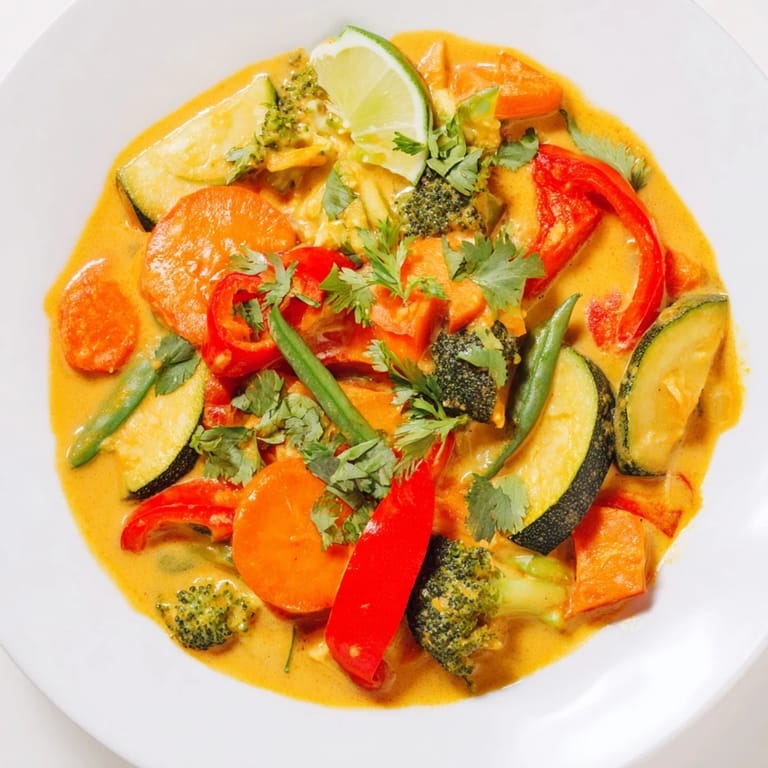
- Ladle the curry into bowls, top with fresh cilantro, and tuck a lime wedge on the side.
 Save
Save One evening, I served this over jasmine rice to my mom, who usually prefers her vegetables plain and simple. She went quiet for a moment, then asked for the recipe. That felt like winning something. It reminded me that food does not have to be fancy to mean something, it just has to taste like you cared enough to make it well.
How to Make It Your Own
Swap in whatever vegetables you have on hand, cauliflower and green beans work beautifully, and mushrooms add a meaty texture. If you want more protein, stir in a can of drained chickpeas or cubed tofu during the simmering step. You can also dial the heat up or down by adjusting the amount of curry paste, start with less if you are sensitive to spice and add more as you go.
What to Serve Alongside
This curry begs for something to soak up all that sauce, so I usually serve it over steamed jasmine rice or fluffy quinoa. Sometimes I tear up pieces of warm naan and use them to scoop up every last bit. A simple cucumber salad with lime and mint on the side adds a cool, refreshing contrast that balances the richness.
Storage and Leftovers
Leftovers keep in the fridge for up to four days in an airtight container, and honestly, they taste even better the next day after everything has had time to meld. Reheat gently on the stovetop with a splash of broth or water to loosen the sauce. You can also freeze it for up to two months, though the vegetables might soften a bit more once thawed.
- Let the curry cool completely before transferring it to storage containers to avoid condensation.
- If freezing, portion it out so you can thaw only what you need for a quick weeknight dinner.
- Garnish with fresh cilantro and lime after reheating, not before storing, so they stay bright and fragrant.
 Save
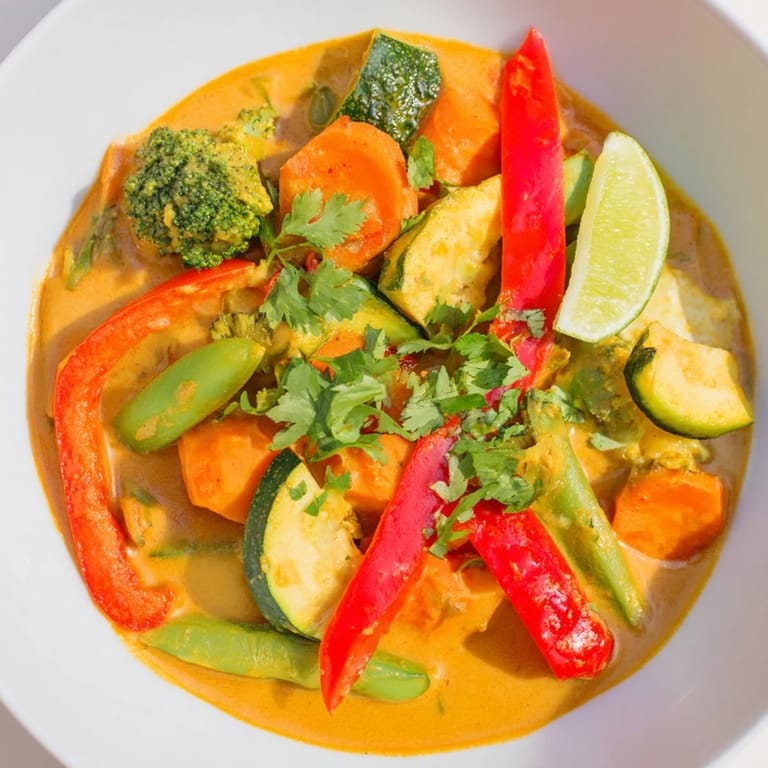
Save This curry has become my answer to busy weeks and cold evenings when I need something that feels like a hug in a bowl. I hope it does the same for you.
Recipe FAQ
- → What vegetables work best in this dish?
Bell pepper, carrot, zucchini, broccoli, snap peas, and red onion create a vibrant mix, but cauliflower, green beans, or mushrooms can be added or substituted as desired.
- → Can the heat level be adjusted?
Yes, adjusting the amount of red curry paste controls the spice level to suit mild or spicier preferences.
- → What can I add for extra protein?
Ingredients like chickpeas or firm tofu can be stirred in during the simmering step for added protein.
- → What are good serving suggestions?
Serve hot with steamed jasmine rice, quinoa, or naan bread to complement the rich coconut sauce.
- → Are there any common allergens to watch for?
The dish contains soy from soy sauce or tamari and coconut from coconut milk. Use coconut aminos for a soy-free option and verify curry paste ingredients if allergic.