 Save
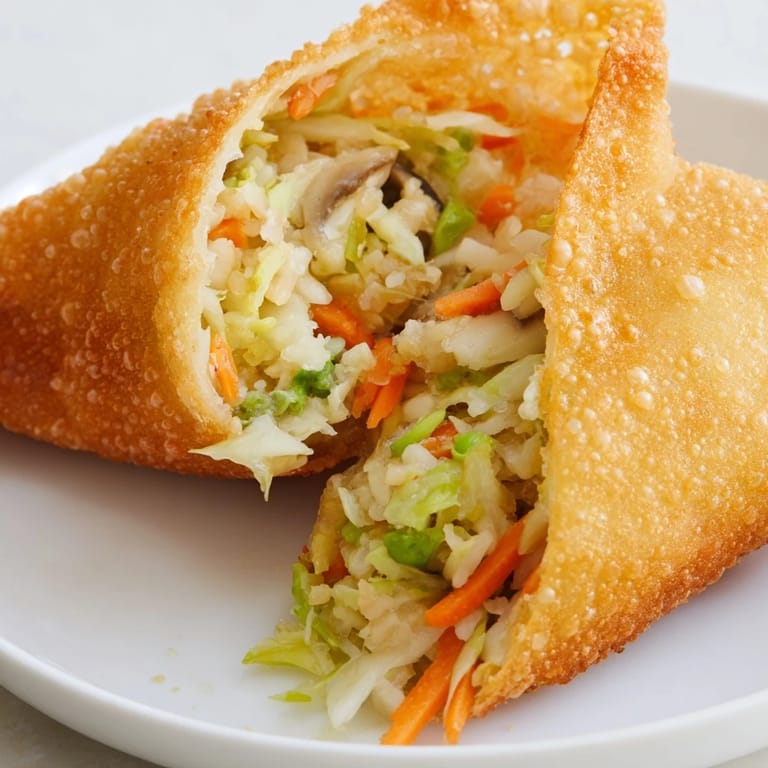
Save The first time I made these crispy rice paper dumplings, I was standing in my kitchen on a rainy Tuesday afternoon with a bag of rice paper I'd bought on impulse. I'd watched them disappear within seconds at a friend's dinner party the week before, and I couldn't stop thinking about that golden crunch and the way the filling steamed inside. Something clicked while chopping vegetables—this wasn't going to be complicated, just intentional. Twenty-five minutes later, I had twelve perfect little bundles sizzling in a hot pan, and the sound they made was pure confirmation that I'd nailed it.
I remember bringing these to a potluck and watching people reach for a second one almost immediately, then pause mid-bite to ask what was in them. The surprise on their faces when I said it was just veggies, rice paper, and oil—nothing fancy—was worth every second of prep work. Someone actually asked if I'd made them that morning, and I felt absurdly proud standing there in my regular clothes, not a chef's coat in sight.
Ingredients
- Green cabbage: Use the freshest head you can find; it stays crisp inside the dumpling and adds a subtle sweetness that balances the umami from soy sauce.
- Carrot: Grating it finely helps it soften evenly during the quick sauté without turning mushy.
- Shiitake mushrooms: These have an earthiness that regular mushrooms can't match, and they give the filling real substance and flavor depth.
- Green onions: Slice them thin so they distribute throughout the filling and add brightness without overpowering it.
- Garlic and ginger: Both are essential for that savory-aromatic backbone that makes people ask what secret ingredient you used.
- Sesame oil: Just a teaspoon is enough; it adds a toasted richness that transforms the filling from good to memorable.
- Soy sauce or tamari: Tamari keeps these gluten-free, and a touch of umami is what makes you crave another one immediately.
- Rice paper sheets: Buy the thinnest ones you can find—they'll crisp up faster and shatter beautifully when you bite into them.
- Neutral oil: Avocado or canola works perfectly; the heat tolerance matters more than the flavor here.
- Dipping sauce ingredients: Rice vinegar adds tang, maple syrup brings balance, and chili flakes are there if you want heat.
Tired of Takeout? 🥡
Get 10 meals you can make faster than delivery arrives. Seriously.
One email. No spam. Unsubscribe anytime.
Instructions
- Mix your filling together:
- Combine the cabbage, carrot, mushrooms, green onions, garlic, soy sauce, sesame oil, and ginger in a large bowl, stirring until everything is evenly coated. The mixture should smell incredibly fragrant at this point—trust that aroma.
- Warm the filling briefly:
- Heat a nonstick skillet over medium heat and add the entire mixture, stirring gently for three to four minutes just until the vegetables soften slightly and release their moisture. You want them tender but still with a bit of bite, so don't linger too long; remove from heat and set aside to cool for a few minutes.
- Prepare your workspace:
- Fill a large shallow dish with warm water and lay out a clean, damp kitchen towel nearby. This is your assembly station, and having everything within arm's reach makes the process feel effortless instead of chaotic.
- Soften each rice paper:
- Dip one sheet of rice paper into the warm water for about five to ten seconds—you're looking for it to feel pliable and almost silky, not stiff. Over-soaking makes them tear, so count slowly and trust your instincts.
- Fill and fold with intention:
- Lay the softened rice paper on the damp towel and place two tablespoons of filling in the center, leaving enough space around the edges to fold comfortably. Fold in the left and right sides first, then roll from the bottom upward, tucking as you go, until you have a tight cylinder that looks like a little burrito.
- Repeat the assembly:
- Continue with the remaining rice paper and filling until you have twelve dumplings, placing them on a clean plate as you finish. If you want extra crunch, this is where you'd wrap each finished dumpling in a second sheet of rice paper, but the single wrap is already plenty crispy.
- Fry until golden:
- Heat the oil in your nonstick skillet over medium heat until it shimmers slightly, then carefully place the dumplings seam side down, leaving a little space between each one so they can crisp evenly. Cook for two to three minutes per side, flipping gently with tongs or a spatula, until they're golden brown and make a satisfying crackle sound when you press them lightly.
- Make your dipping sauce:
- While the dumplings cook, mix together the soy sauce, rice vinegar, maple syrup, and chili flakes in a small bowl, stirring until the maple syrup dissolves. Taste it and adjust the balance—if it's too salty, add a splash of water; if it needs more depth, add a tiny drizzle more sesame oil.
- Serve immediately:
- Transfer the hot dumplings to a serving plate and place the dipping sauce alongside. The magic window for maximum crispiness is right now, so gather everyone and eat while they're still sizzling.
 Save
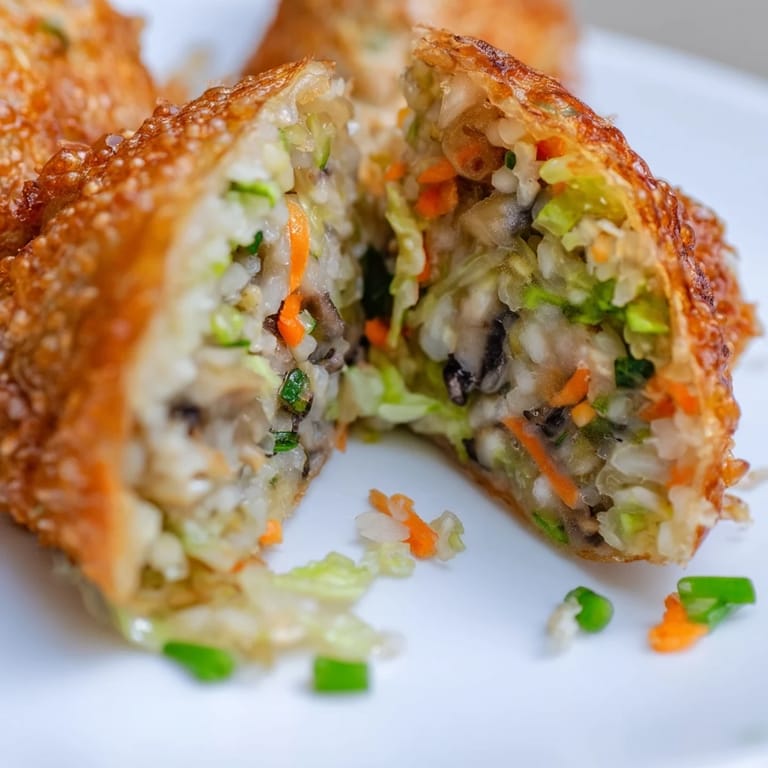
Save There was this moment when I made these for my sister and she took a bite, closed her eyes for a second, and then looked at me like I'd just revealed some kind of culinary magic trick. She asked if they were really vegan, really gluten-free, and really as easy as I'd said they were. I realized right then that these dumplings had crossed over from being just a recipe into something that felt like a small gift, something I could make for people and actually feel like I was giving them something special.
Why Rice Paper Works Here
Rice paper is honestly the secret ingredient that makes this whole thing work. Unlike wheat wrappers, it crisps up almost impossibly fast when you fry it, turning into something that shatters between your teeth but still holds everything together. I've tried other wrappers before—wonton skins, gyoza wrappers—and they get puffy or chewy, but rice paper stays true to itself. The texture is what makes people keep reaching for another one, and that's worth recognizing.
Building Flavor Without Complexity
The genius of this filling is that it doesn't need a ton of ingredients to taste incredible. Cabbage, carrot, and mushrooms form the base, but garlic, ginger, and sesame oil are the players that make everything sing together. I've learned that when you're working with simple ingredients like these, the quality of each one matters more than the quantity. Fresh ginger makes a difference, good soy sauce or tamari makes a difference, and real sesame oil—not the cheap imitation—is what separates these from tasting like every other dumpling.
Making These Your Own
Once you've nailed the basic technique, these dumplings become your blank canvas. I've experimented with adding finely chopped tofu for extra protein, swapping in different mushrooms, and even trying a double-wrap for serious crunch enthusiasts. The beauty is that the method stays exactly the same, and the filling is forgiving enough to handle your creative impulses. The dipping sauce is just as flexible—some nights I add more chili flakes for heat, other nights I squeeze in fresh lime juice for brightness.
- For extra protein, dice firm tofu finely or use cooked shredded chicken mixed into the filling before sautéing.
- A second rice paper sheet creates a crunchy-crunchy texture that some people find irresistible.
- Serve these immediately after frying when they're still hot and crispy, not sitting on a plate getting soft.
 Save
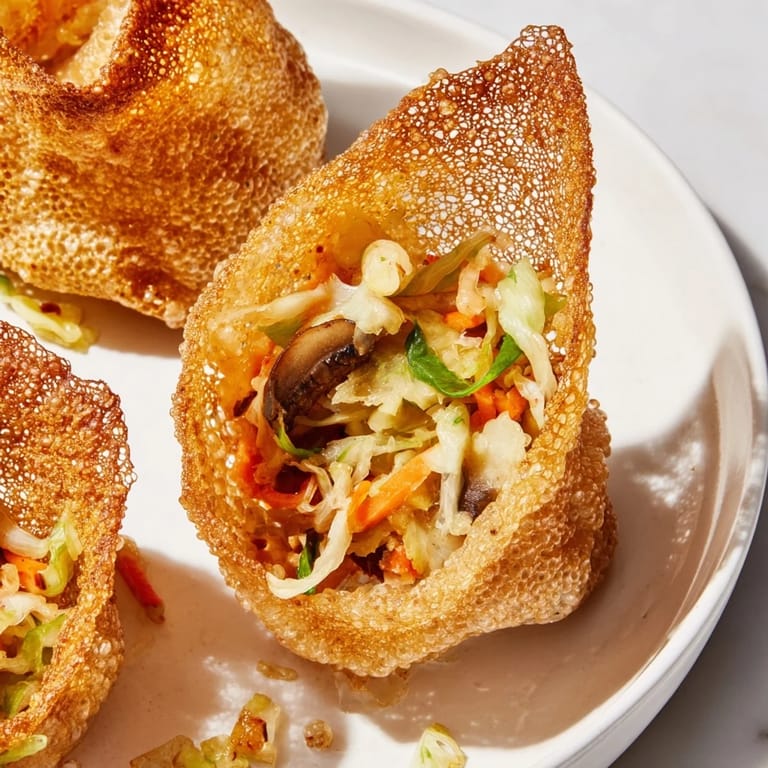
Save These dumplings remind me why cooking for people matters. It's not about impressing anyone with complicated techniques or rare ingredients; it's about taking simple things and turning them into something that makes people smile, something they ask you to make again. Every time I make these, I get a little faster, a little more confident, and somehow they still taste like a small victory.
Recipe FAQ
- → How do I achieve crispy dumplings?
Pan-fry the filled rice paper over medium heat using neutral oil, cooking each side until golden and crispy. Avoid overcrowding the pan to ensure even crispiness.
- → What is the best way to soften rice paper wrappers?
Dip each sheet in warm water for about 5–10 seconds until pliable but not soggy. Lay on a damp towel before filling to prevent sticking.
- → Can I add protein to the filling?
Yes, finely chopped tofu or cooked chicken can be incorporated into the filling for extra protein and texture.
- → How should I store leftover dumplings?
Store leftovers in an airtight container in the refrigerator and reheat in a skillet to maintain crispiness rather than microwaving.
- → Is there a recommended dipping sauce?
A simple mix of soy sauce, rice vinegar, maple syrup, and optional chili flakes enhances the flavors and complements the dumplings well.