 Save
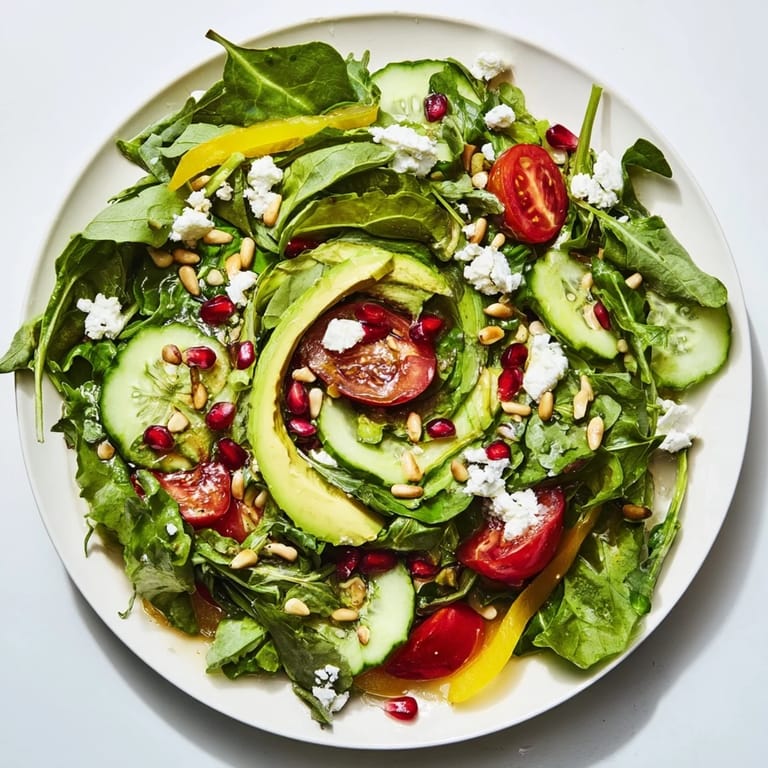
Save I discovered this salad by accident while organizing my kitchen and stumbling upon a book about the Golden Ratio in nature. Something clicked—why not apply that same mathematical beauty to food? The first time I arranged one, my dinner guests stood silent for a moment before eating, which told me everything about how food appeals to more than just our taste buds.
I made this for a friend who was going through a rough patch, and watching her face light up when she saw it arranged on the platter—before she even tasted it—reminded me that nourishment isn't just about calories. She asked me to teach her how to make it, and now it's become our thing whenever we need to celebrate small victories.
Ingredients
- Mixed baby greens (arugula, spinach, watercress): Use 4 cups total—the combination gives you peppery bite, earthy sweetness, and subtle spice that makes each leaf interesting.
- Cherry tomatoes: Halve 1 cup; their natural sweetness balances the bitter greens beautifully.
- Ripe avocado: Slice 1 just before serving to prevent browning, and this creamy element becomes your salad's anchor.
- Yellow bell pepper: Thin slice 1; the color is essential to the visual spiral, and the sweetness rounds out sharper flavors.
- Cucumber: Slice 1 small one thin; it adds refreshing crunch and dilutes any heaviness.
- Pomegranate seeds: Use 1/2 cup for both jewel-like color and tart pops of flavor that cut through richness.
- Feta cheese: Crumble 1/2 cup—the saltiness wakes up all the fresh vegetables around it.
- Toasted pine nuts: Toast 1/4 cup yourself if you can; the nutty warmth makes the whole salad feel intentional, not rushed.
- Extra-virgin olive oil: Use 3 tbsp of one you actually enjoy tasting, because you'll notice it here.
- Fresh lemon juice: Squeeze 1 tbsp right before dressing; bottled tastes flat by comparison.
- Honey: Just 1 tsp balances the acid and adds a gentle sweetness that ties everything together.
- Dijon mustard: Only 1/2 tsp, but it emulsifies the dressing and adds subtle depth.
- Salt and pepper: Taste as you go; this is where you make it yours.
Tired of Takeout? 🥡
Get 10 meals you can make faster than delivery arrives. Seriously.
One email. No spam. Unsubscribe anytime.
Instructions
- Set your stage:
- Place your large platter in front of you and take a moment to visualize the spiral you're about to create. Spread the mixed greens across it in a loose, flowing base—think of it like the canvas that holds everything else.
- Start the spiral:
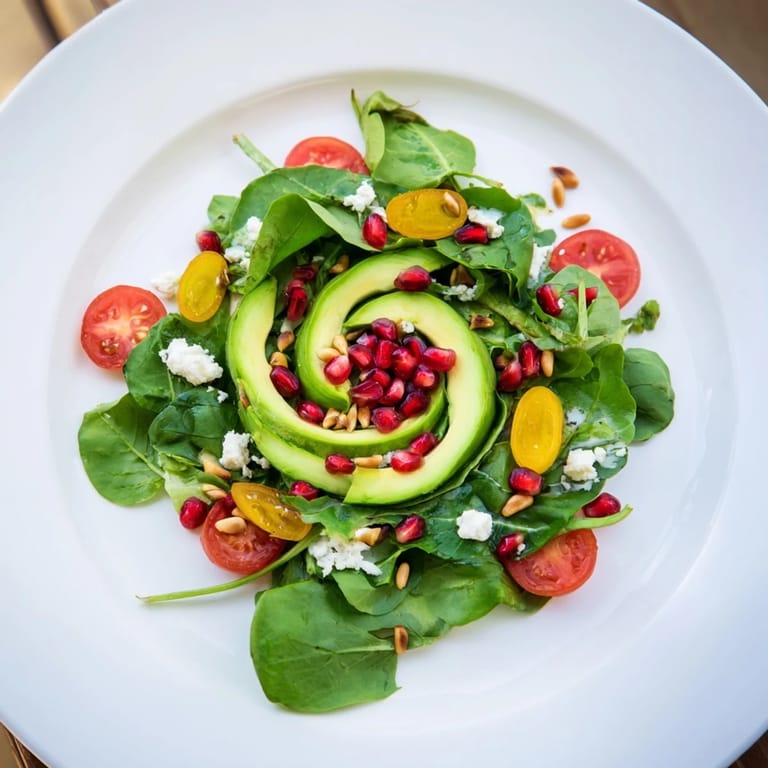
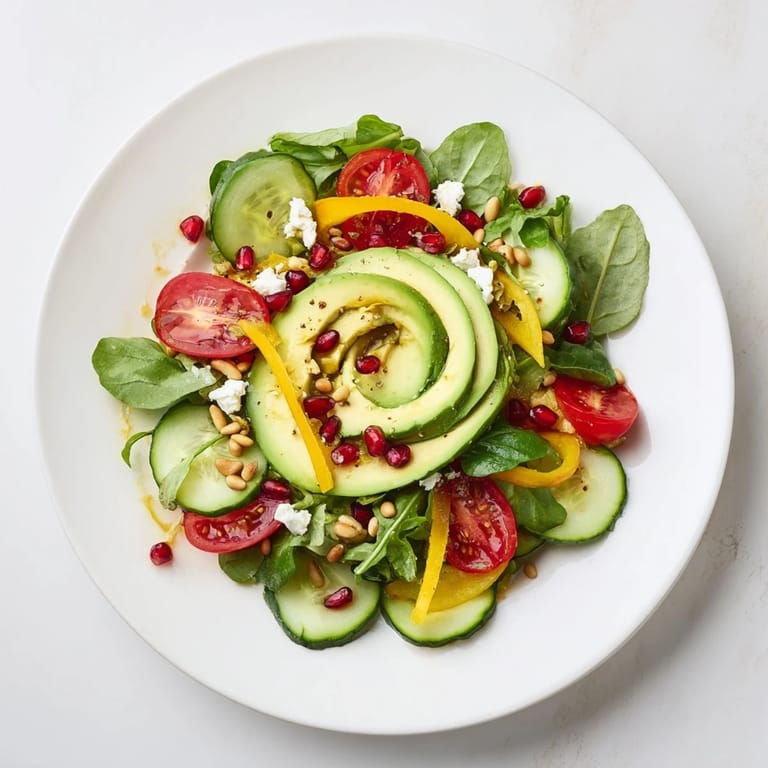
- Begin placing your largest, most striking ingredients—the avocado slices and tomato halves—starting near the center-right of your platter, about 61.8% along the main axis if you're feeling mathematical, but honestly, just where it looks balanced. Let them curve outward in a gentle spiral, like a nautilus shell unfolding.
- Fill the curves:
- Tuck the bell pepper slices and cucumber between your anchor pieces, letting them follow the same spiral pattern. The goal is rhythm and repetition—your eye should be able to follow a path around the platter without thinking about it.
- Scatter the jewels:
- Drop the pomegranate seeds along your spiral like little punctuation marks, concentrating a few more toward that focal point where everything started. They should look like they landed naturally, not placed with tweezers.
- Add richness:
- Sprinkle the crumbled feta and toasted pine nuts over everything, with just a slight emphasis near the center. These add texture and anchor flavors that make each element taste more like itself.
- Make the dressing:
- In a small bowl, whisk the olive oil, lemon juice, honey, and mustard together until the mixture emulsifies and becomes slightly creamy. Taste it—adjust salt and pepper until it sings with brightness.
- The finale:
- Drizzle the dressing gently over the entire salad just before serving, letting it pool slightly in the curves of your spiral. Serve immediately while everything is still crisp and the colors haven't started to fade.
 Save
Save One evening, I made this for a dinner party where half the guests were salad skeptics, the kind who see greens as obligation. By the end of the meal, they were asking for seconds and talking about how it felt different—fresher, more intentional. That's when I realized the beauty wasn't just pretty; it actually made the food taste better.
The Art of Arrangement
The Golden Ratio isn't mystical—it's just a pattern that appears in nature and happens to please the human eye. When you arrange food following this invisible guide, something shifts. Each ingredient gets space to shine, and your guests unconsciously eat in a way that lets them experience every element together rather than picking favorites. I learned this by accident, but now I use it for almost every composed salad I make.
Timing and Freshness
This salad demands that you serve it immediately after dressing. Unlike hearty salads that sit around getting soggy and sad, this one only works when everything is at peak crispness—when the tomatoes are still juicy, the avocado still pale green, the nuts still toasty. It's not a make-ahead dish, and that's actually liberating because it forces you to be present in the moment rather than stressed about prep hours before guests arrive.
Making It Your Own
The beauty of this salad is that while the spiral structure matters, the ingredients inside it are flexible. I've made it with grilled chicken for heartier appetites, switched feta for goat cheese when that's what I had on hand, and even tossed in some crispy chickpeas when I wanted more protein and crunch. The structure holds, and the magic stays.
- Try pairing it with a crisp Sauvignon Blanc or light sparkling wine to echo its fresh, bright energy.
- For extra protein without meat, crumble some toasted chickpeas or add a soft-boiled egg at the center as your focal point.
- Make the dressing in a jar and shake it before serving—it's faster than whisking and travels better if you're bringing this to someone else's table.
 Save
Save This salad taught me that sometimes the most delicious moments come from slowing down and paying attention to how food looks before you taste it. It's become my favorite way to celebrate gatherings where people deserve to feel special.
Recipe FAQ
- → What greens work best for this salad?
Mixed baby greens such as arugula, spinach, and watercress provide a tender, peppery base that complements the fruits and nuts well.
- → How are the ingredients arranged for the Golden Ratio effect?
Ingredients are placed spirally on the platter starting at about 61.8% along the main axis, tapering outward to create a natural, balanced visual flow.
- → Can I substitute ingredients for dietary preferences?
Yes, goat cheese can replace feta for a different flavor, and adding grilled chicken or chickpeas boosts protein content.
- → What dressing complements this salad?
A light blend of extra-virgin olive oil, freshly squeezed lemon juice, honey, and Dijon mustard enhances the freshness without overpowering the flavors.
- → How should leftovers be stored?
Keep the salad chilled in an airtight container and add the dressing just before serving to maintain crispness and color.