 Save
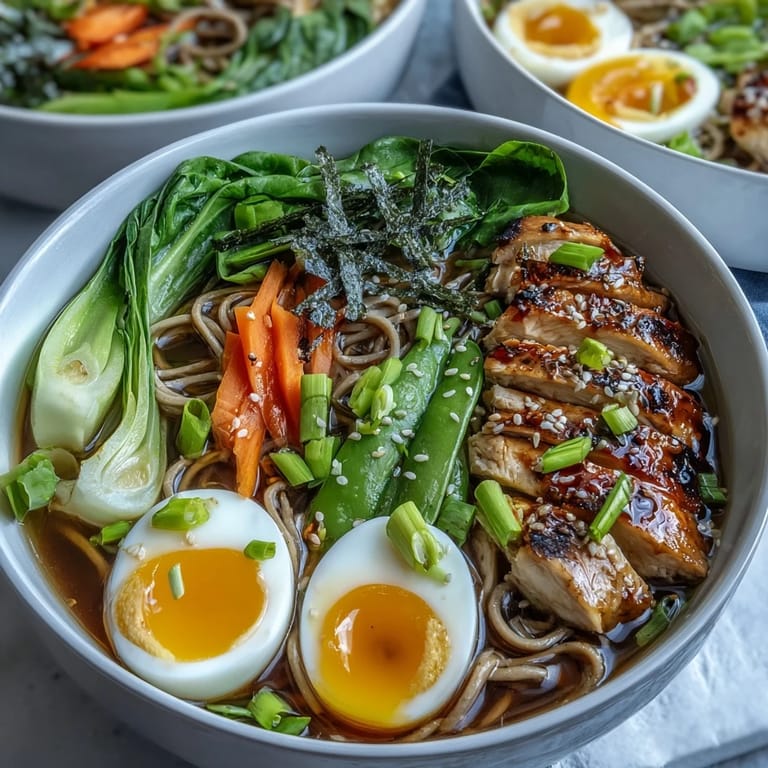
Save My tiny apartment kitchen smelled incredible the first time I made these bowls, with miso and ginger steaming up every window. I'd been craving something warming but not heavy, and this broth hit the spot perfectly. The way the miso dissolves into the broth still feels like a small kitchen magic trick.
Last winter, my sister came over exhausted from work and I practically forced this bowl into her hands. She took one spoonful, looked up with wide eyes, and asked if I'd secretly ordered from a restaurant. We've made it together three times since then.
Ingredients
- Chicken thighs: Thighs stay juicier than breasts, especially when marinated in that miso mixture
- White miso paste: The backbone of both marinade and broth, bringing that deep umami flavor
- Soba noodles: Their nutty flavor and chewy texture hold up beautifully in hot broth
- Baby bok choy: Adds fresh crunch and soaks up the broth like little flavor sponges
- Soft-boiled eggs: The runny yolks create an extra creamy element when stirred into the soup
Tired of Takeout? 🥡
Get 10 meals you can make faster than delivery arrives. Seriously.
One email. No spam. Unsubscribe anytime.
Instructions
- Marry the chicken with miso:
- Whisk miso, soy sauce, vinegar, honey, ginger, garlic, and sesame oil until smooth. Coat chicken thoroughly and let it rest in the fridge for at least 30 minutes so those flavors really sink in.
- Get your noodles ready:
- Cook soba noodles until just al dente, then immediately rinse under cold water. This stops the cooking and keeps them from turning into a gummy mess later.
- Sear the chicken:
- Cook the marinated chicken in a hot skillet until beautifully browned and cooked through. Let it rest before slicing so those juices redistribute instead of running all over your cutting board.
- Build the broth:
- Simmer your broth with whisked miso, then add mushrooms, carrots, bok choy, and snow peas until just tender. Toss in spinach right at the end so it wilts but stays vibrant.
- Assemble your bowls:
- Divide noodles between bowls, top with sliced chicken, then ladle that steaming miso broth and vegetables over everything. Crown with your favorite toppings and serve immediately.
 Save
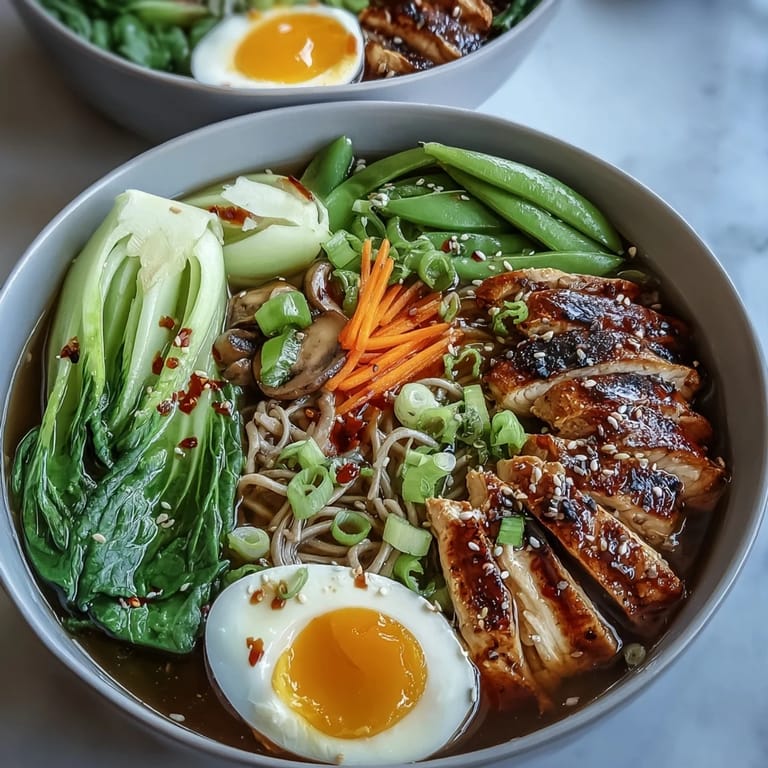
Save Something about assembling these bowls feels therapeutic, arranging the toppings just so before that first satisfying stir that mixes everything together. I've started keeping soft-boiled eggs in the fridge specifically for noodle soup emergencies.
Broth That Wakes Up Your Senses
The combination of miso and fresh ginger creates this aroma that fills your whole kitchen and makes your stomach growl before you even take a bite. I've learned to have all my vegetables prepped before starting the broth, because once that smell hits, I want to be eating immediately.
Perfecting the Soft-Boiled Egg
After dozens of attempts, I've found that 6 and a half minutes gives me that just-set white with gorgeously jammy yolks every time. I drop them into an ice bath immediately to stop the cooking, making them easier to peel perfectly.
Make It Your Own
Sometimes I add extra vegetables or swap in whatever looks fresh at the market, and the broth always embraces the changes. The recipe is forgiving enough that you can experiment confidently.
- Try adding kimchi for a spicy fermented kick
- Swap in rice noodles if you want something lighter
- Fried shallots on top add the most incredible crunch
 Save
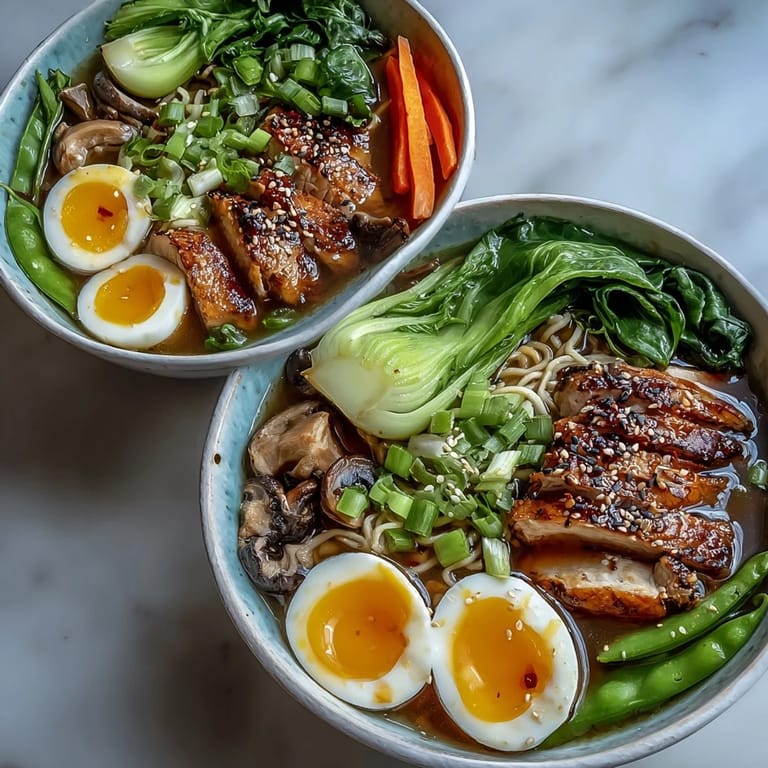
Save Hope this recipe brings as much cozy comfort to your table as it has to mine.
Recipe FAQ
- → Can I make these bowls vegetarian or vegan?
Absolutely! To make it vegetarian, simply swap the chicken for extra-firm tofu, pressed and cubed, and use a high-quality vegetable broth instead of chicken broth. For a vegan version, also ensure your miso paste is vegan-certified and omit the soft-boiled eggs and honey (use maple syrup).
- → What type of noodles are best if I don't have soba?
While soba noodles offer a distinct flavor and texture, whole wheat spaghetti is a good alternative. For a gluten-free option, look for 100% buckwheat soba noodles or other gluten-free noodle varieties that cook quickly, such as rice vermicelli or ramen-style gluten-free noodles.
- → How can I add more depth of flavor to the broth?
For an even richer broth, consider using a good quality homemade chicken stock. Additionally, ensure the miso paste is fully dissolved and taste-test to adjust seasoning. A splash of mirin or a small piece of kombu simmered with the broth can also enhance its umami.
- → What's the best way to store and reheat leftovers?
To prevent the noodles from becoming soggy, it's best to store the broth, cooked noodles, and chicken/vegetables in separate airtight containers in the refrigerator. When ready to eat, reheat the broth gently, then add the warmed chicken and vegetables, and pour over freshly warmed noodles. Assemble just before serving.
- → Can I prepare any parts of this dish in advance?
Yes, many components can be prepped ahead. The chicken can be marinated for up to 8 hours, or even overnight, in the refrigerator. You can also chop all your vegetables in advance and store them. Cook the noodles and broth closer to serving time for the best texture and flavor.