 Save
Save I'll never forget the first time I created a grazing board inspired by The Nutcracker Suite. It was mid-November, and my sister had just invited twelve people to an unexpected holiday gathering. I had three hours and wanted to create something that felt theatrical and special, something that would make everyone pause before diving in. That's when I remembered the magic of color-blocking from a ballet I'd seen, and I realized I could translate that visual drama onto a board. The result was mesmerizing—layers of jewel-toned cheeses, ruby pomegranate seeds, and glossy dark chocolate arranged like a edible stage set. My guests spent the first ten minutes just photographing it before the board transformed into a beautiful, happy mess of shared bites and laughter.
What I love most is watching people interact with a board like this. It becomes a gathering point, a reason to slow down and try something new. I remember one guest who'd never tried brie before reaching for it because of how beautifully it was presented in its white block, and she spent the rest of the evening asking me about cheese. That's when I understood that presentation isn't shallow—it's an invitation.
Ingredients
- Brie: The creamy anchor of your white block. Choose one that's ripe but not oozing, as it needs to hold its shape during assembly. A room-temperature brie spreads like butter on crackers.
- Aged cheddar: This golden block brings sharpness and substance. Aged versions have those delightful little crystals that catch the light and add texture.
- Blue cheese: Your dramatic blue statement. It's pungent and wonderful, so a little goes a long way. Consider a creamy Danish blue if you want guests who are nervous about bold flavors to actually try it.
- Gouda: Silky and slightly sweet, the orange block grounds your warm tones. It tastes different at different temperatures, so let pieces warm slightly on the board.
- Cranberry goat cheese: This pink beauty gives you elegance and a slight tartness that cuts through richer elements. The color is almost jewel-like.
- Prosciutto: Drape it loosely so it doesn't get crushed. Its delicate rose-pink color is essential to your color story.
- Salami and soppressata: These bring depth and earthiness. Fold them into loose ribbons rather than stacking flat—it creates visual interest and makes them easier to grab.
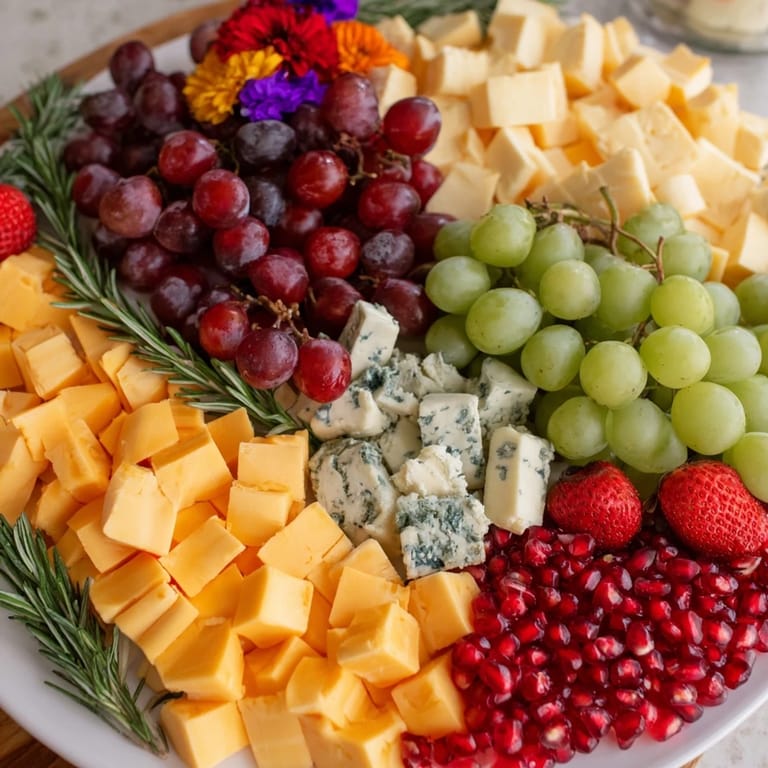
- Red and green grapes: These act as natural color blockers and provide refreshing palate cleansing between rich bites. I cluster them in small grape-sized spaces rather than spreading them thin.
- Blueberries, strawberries, dried apricots, and pomegranate seeds: These are your jewels. The pomegranate seeds especially catch light and add luxury. Dried apricots bring chewiness and warm tones.
- Marcona almonds and pistachios: Marcona almonds are buttery and round, much friendlier than regular almonds. Pistachios bring that green-hued earthiness.
- Candied pecans: These are your sweet-savory moment. Make or buy ones with just enough sugar to add crunch without overwhelming.
- Mixed olives: Use a variety of sizes and colors. Castelvetrano olives are buttery and mild if you're worried about briny flavors dominating.
- Crackers and baguette: Choose sturdy, plain crackers that won't overpower delicate cheeses. The baguette should be sliced thin but not so thin it breaks when people reach for it.
- White chocolate bark and dark chocolate: These bookend your sweet story. Chocolate adds richness and elegance to the board's narrative.
- Macarons and petit fours: Buy these from a good bakery or chocolatier if you can. They should look precious because they are.
- Fresh rosemary and edible flowers: These aren't just decoration—they ground everything in the season and add those little moments of visual surprise.
Tired of Takeout? 🥡
Get 10 meals you can make faster than delivery arrives. Seriously.
One email. No spam. Unsubscribe anytime.
Instructions
- Build your foundation:
- Start with your board or boards. If you're creating height, position your cake stands and pedestals now. Imagine you're building a stage set, not just laying out food. The structure creates the drama.
- Create your base layer:
- Begin with the neutral elements—crackers, baguette slices, and nuts arranged at the bottom tier. These should feel abundant but not crowded. Leave breathing room for the eye to rest.
- Establish your color blocks:
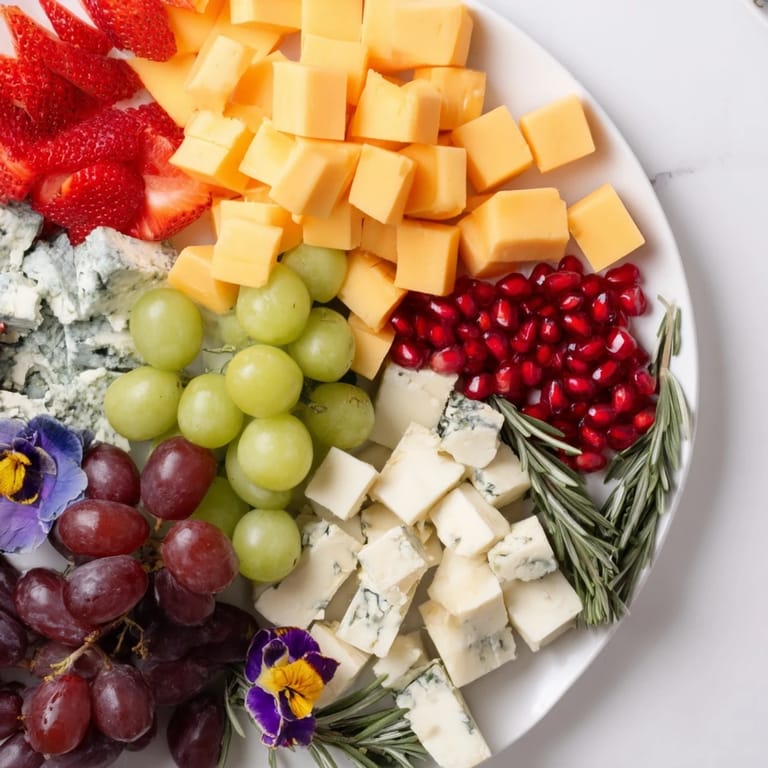
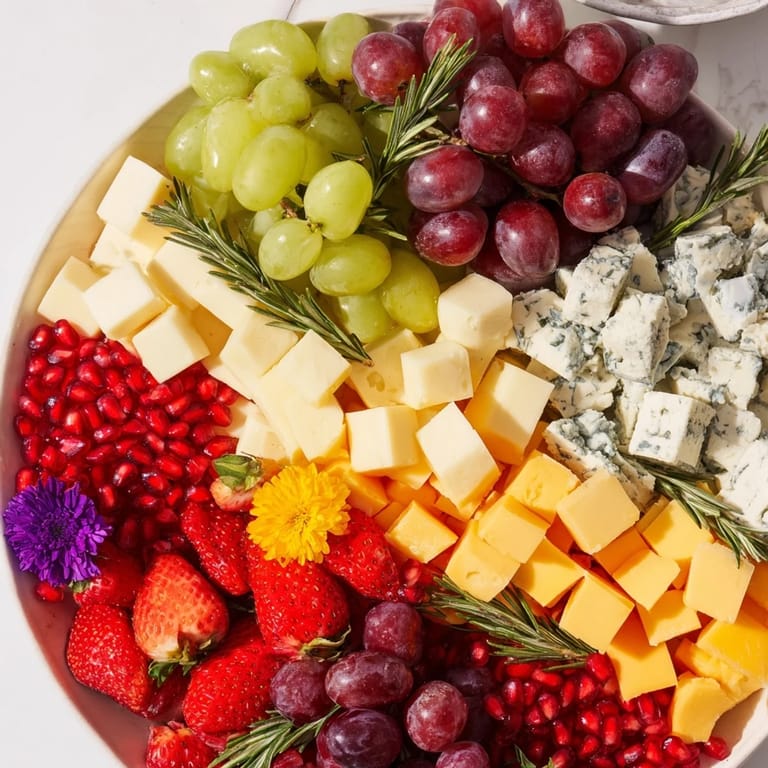
- Now comes the satisfying part. Organize each cheese into its distinct block. Cut some pieces into wedges or small cubes to show off the color within. A wheel of brie looks beautiful as is, but that aged cheddar deserves some cut pieces so people see the golden interior.
- Drape the charcuterie:
- This is where you create movement. Fold your prosciutto into loose waves next to the white block. Coil your salaami pieces or fold them in half like little fans. They should look relaxed and elegant, not stiff.
- Fill with fruits strategically:
- Grapes should cluster in groups of their color. Scatter pomegranate seeds where they catch light. Layer strawberries point-up so you see their ruby shine. Dried apricots go in the warm-toned sections. Think of this like painting—each fruit adds pigment and dimension.
- Distribute nuts, olives, and sweets:
- Place nuts in small mounds or arrange them in patterns. Olives can go in a small bowl or scattered directly on the board if you're confident in your design. Chocolate pieces and macarons should be spaced so they're discovered as people explore, not all visible at once.
- Garnish with intention:
- Tuck rosemary sprigs between color blocks like green exclamation points. Scatter edible flowers where color seems needed. Step back and look. If it feels balanced, you're done. If one section needs emphasis, add another flower or small cluster of berries.
- Final check and serve:
- Make sure every tier is stable and nothing is going to shift. Place cheese knives strategically. Serve at room temperature so cheeses have time to express their full flavor and texture.
 Save
Save I remember assembling one of these boards for my mother's book club, and one of her friends—a woman in her seventies who claimed she didn't really eat much food at gatherings—filled a small plate and kept coming back for more. She spent the entire evening talking to me about the cheeses, asking about flavor combinations. That board became a conversation starter, and I realized this isn't just about feeding people. It's about creating a moment where people feel seen, where effort translates into joy.
The Power of Presentation
There's a reason theatrical presentations matter. When you see something beautiful, you taste it differently. The colors prepare your palate psychologically. A bite of blueberry after aged cheddar isn't random—it's a composed experience. This board works because it tells a story visually before anyone takes a bite. The color-blocking isn't decorative; it's edible visual music.
Making It Your Own
The framework of this board is flexible while remaining structured. You can substitute cheeses based on what's available at your market. A sharp Parmigiano-Reggiano works beautifully in place of aged cheddar. Manchego brings Spanish sophistication to the orange block. Burrata adds luxury to any section. The key is maintaining your color story. Every substitution should either deepen an existing color or create intentional contrast.
Timing and Presentation Secrets
The most important realization I've had about boards like this is that they're meant to be interactive. Don't obsess over keeping items in perfect formation. Instead, design thoughtfully at the beginning so that even as people eat, the board maintains some visual integrity. This means being generous with quantities and strategic about spacing. When the board is half-eaten, it should still look intentional and beautiful.
- Assemble the board no more than two hours before serving so everything stays fresh and hasn't oxidized or dried out
- Use your tallest elements in the center and shorter items toward the edges so people can actually see and reach everything
- Leave some empty spaces intentionally—a board that looks completely full is actually harder to eat from than one with breathing room
 Save
Save Creating one of these boards is an act of love and theater combined. Your guests will remember not just the flavors, but the moment they walked up to something beautiful and felt invited to experience it. That's the real magic.
Recipe FAQ
- → How do I create distinct color blocks on the board?
Arrange ingredients by color into grouped sections, such as white brie, orange gouda, and red salami, to create clear visual blocks.
- → What are some vegetarian-friendly substitutions?
Omit charcuterie and add more cheeses, marinated vegetables, or roasted nuts to maintain variety and color.
- → How can I add height to the grazing board presentation?
Use cake stands, pedestals, or overturned bowls beneath platters to build multiple tiers and varying elevations.
- → What garnishes work best for a festive board?
Fresh rosemary sprigs and edible flowers add natural color pops and seasonal flair without overpowering flavors.
- → How should I store leftovers from the board?
Wrap cheeses separately and refrigerate, while keeping fruits and charcuterie in airtight containers to maintain freshness.
- → Can this board accommodate different dietary needs?
Yes, by adjusting components such as offering vegetarian blocks or gluten-free crackers to suit guests’ preferences.