 Save
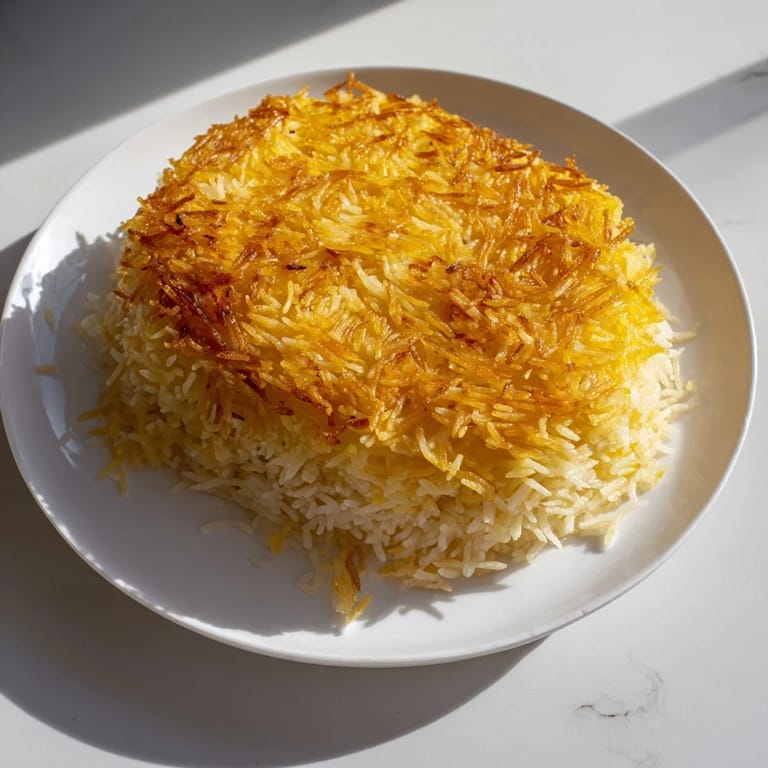
Save The first time I watched my grandmother make tahdig, she treated it like a high-wire act—every step calculated, every moment deliberate. The sound of that golden crust crackling as she inverted the pot onto the platter still echoes in my kitchen. It took me three disasters before I understood that tahdig isn't just rice; it's theater, technique, and a little bit of kitchen magic wrapped into one showstopping dish.
I made this for a potluck once and watched people go silent when I inverted the pot—the golden crust caught the kitchen light like it had been polished. One guest asked if I'd hired a caterer, and I realized in that moment that tahdig is one of those dishes that makes people feel special just for being fed it.
Ingredients
- Basmati rice (2 cups): The long grains stay separate and elegant; this is the foundation of fluffy, not mushy, rice.
- Salt (1 tablespoon for soaking): Don't skip the soak—it seasons the grains and helps them stay intact during cooking.
- Saffron threads (1/4 teaspoon): Grind and steep these for golden color and that unmistakable floral note that makes people ask what smells so good.
- Plain Greek yogurt (4 tablespoons): This is your secret weapon for the tahdig crust; the protein helps it crisp and golden.
- Vegetable oil and unsalted butter (2 tablespoons each, plus extra for the pan): The combination gives you heat and flavor, and a bit of extra oil helps prevent sticking.
- Ground turmeric (1/2 teaspoon optional): A whisper of warm spice that echoes through the rice without overpowering.
- Ground black pepper (1/2 teaspoon): Freshly cracked is worth the extra step here.
Tired of Takeout? 🥡
Get 10 meals you can make faster than delivery arrives. Seriously.
One email. No spam. Unsubscribe anytime.
Instructions
- Rinse and soak the rice:
- Cold water over the rice until it runs clear, then soak with salt for at least 30 minutes. This removes starch and seasons every grain from the inside out.
- Parboil until just tender:
- Boil the drained rice for 5–6 minutes—it should still have a tiny bit of firmness when you bite it. Drain and set aside; you're not cooking it all the way yet.
- Prepare the saffron liquid:
- Grind the threads with your fingers and steep in hot water for 10 minutes until it's liquid gold and smells like ancient spice markets.
- Make the tahdig paste:
- Yogurt, 1 tablespoon saffron water, turmeric, and 1 cup of the parboiled rice go into a bowl and become your golden crust layer. Mix until it's the texture of thick, fluffy mud.
- Heat your pan and add the tahdig base:
- Oil and butter in a heavy-bottomed pot over medium heat until shimmering, then spread the yogurt-rice mixture evenly across the bottom. This becomes the crispy crust.
- Layer the remaining rice:
- Gently spoon the rest of the rice over the yogurt layer, mounding it slightly toward the center. Drizzle the rest of the saffron water over the top and poke a few steam holes with a wooden spoon handle.
- Cover and steam with intention:
- Wrap the lid in a clean kitchen towel—this traps moisture and helps create steam. Cook 10 minutes on medium, then 35–40 minutes on low, letting the bottom layer turn golden and crispy.
- The inversion (the moment of truth):
- Let the rice rest for 5 minutes after turning off the heat, then carefully invert the pot onto a serving platter so the tahdig crust faces up, golden and shatteringly crispy.
 Save
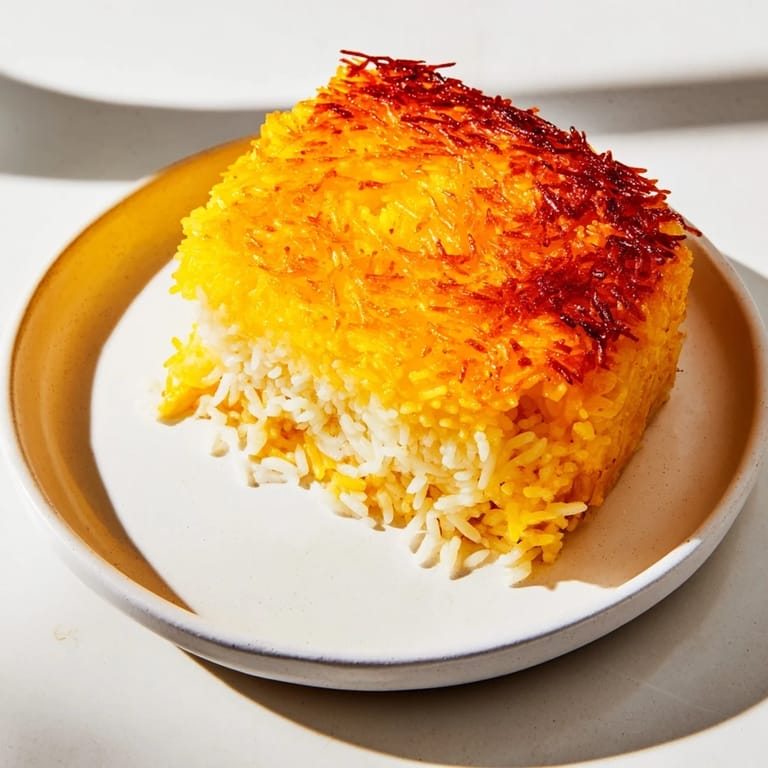
Save My neighbor brought over a pot of her tahdig once, and we ate it standing at the kitchen counter, the whole thing disappearing in minutes. That's when I understood that some dishes aren't really food—they're an excuse to gather and feel like we belong to something bigger than ourselves.
The Magic of the Crust
Tahdig isn't an accident or a mistake; it's the whole point. The yogurt in that bottom layer isn't just a binding agent—it's insurance. The protein in the yogurt helps the rice brown and crisp without burning, creating a layer that's golden and shattering when you tap it. The longer you let it cook on low heat, the more complex and caramelized that crust becomes, almost like a rice pancake made of pure umami.
Timing and Temperature
The two-stage cooking is what separates amateur tahdig from the kind that makes people lean back and close their eyes. Medium heat for 10 minutes gets everything hot and starts the crust forming; then low heat for the long stretch lets the rice steam gently while the bottom deepens in color and crunch. Rush it and you get pale, soft rice. Be patient and you get poetry on a plate.
Beyond the Basic
Once you master the yogurt-rice tahdig, you can experiment without guilt. Some cooks add ground pistachios or toasted nuts to the yogurt layer for crunch and richness, while others use thinly sliced potatoes or torn flatbread for different textures entirely. The saffron water poured over the rice is your chance to be generous with aroma—let it settle into every grain.
- For extra flavor, toss a cinnamon stick or a few crushed cardamom pods into the boiling water before adding the rice.
- Garnish with barberries or fresh herbs like dill, cilantro, or parsley to brighten each bite.
- Tahdig is best served immediately while the crust is still warm and crispy, but the rice keeps well in the refrigerator and reheats gently covered with a damp towel.
 Save
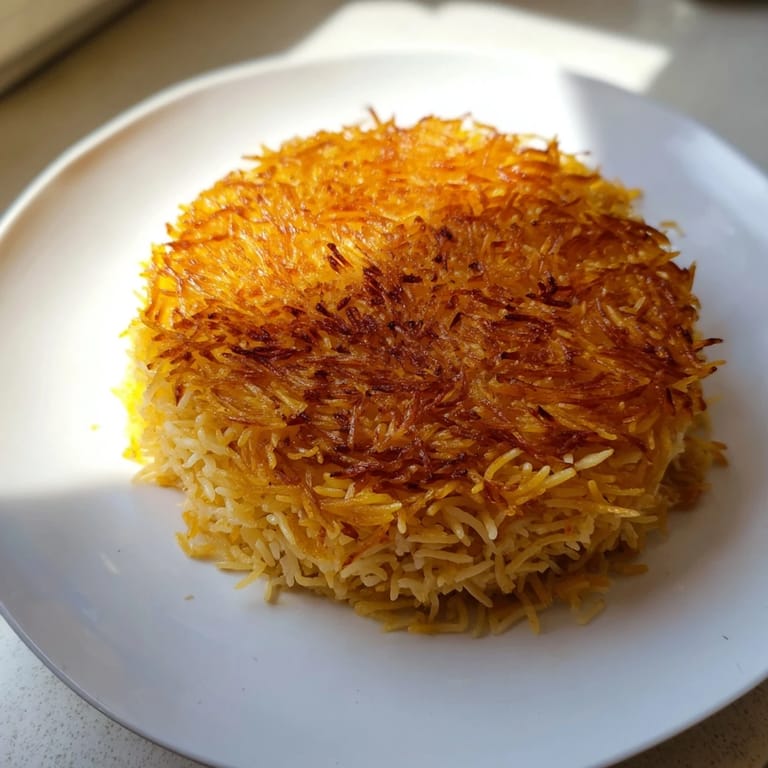
Save Tahdig is the kind of dish that reminds you why cooking matters. It transforms simple rice and yogurt into something that tastes like celebration, and that's the best kind of magic.
Recipe FAQ
- → What is tahdig in Persian cooking?
Tahdig refers to the flavorful, golden crispy crust formed at the bottom of the pot when cooking rice, often enhanced by yogurt and saffron for a distinct texture and aroma.
- → How do I achieve a crispy tahdig crust?
Use a nonstick or heavy-bottomed pot, spread a yogurt and saffron mixture on the bottom before layering parboiled rice, and cook over low heat with a tight lid to slowly caramelize the base without burning.
- → Can I add extra spices to the rice cooking water?
Yes, adding whole spices like cinnamon sticks or cardamom pods to the boiling water enhances aroma without overpowering the delicate saffron and turmeric flavors.
- → What type of rice is best for this dish?
Long-grain basmati rice is preferred for its fragrance and ability to remain fluffy and separated after soaking, parboiling, and steaming.
- → Is it necessary to soak and parboil the rice?
Soaking helps even cooking and removes excess starch, while parboiling until just tender ensures the final texture is fluffy without being mushy.