 Save
Save The first time I truly understood what roasted garlic could be, it wasn't about a recipe at all—it was about a mistake. I'd left a bulb in the oven far too long while distracted by a friend's story, and when I finally remembered, the kitchen smelled like caramelized sweetness instead of sharp, pungent garlic. Rather than toss it, I squeezed out those golden cloves and stirred them into cream, and something clicked. That's when I realized roasted garlic isn't just softer than raw—it becomes almost buttery, almost candied, something entirely new.
I made this for my partner on a Thursday night when neither of us could be bothered with takeout, and somehow it became the meal they still ask for. There's something about serving a pasta dish that smells this good and watching someone's expression shift on the first bite—that moment when they realize homemade doesn't always mean complicated.
Ingredients
- Garlic bulbs (3 large whole): These become your sauce's soul—roasting them for 35-40 minutes turns their bite into buttery sweetness that you'd never get raw.
- Yellow onion (1 medium, finely chopped): It dissolves into the sauce as a gentle sweetness that grounds everything, providing depth without announcing itself.
- Diced tomatoes (1 can, 400 g): Canned tomatoes are your reliable friend here—their acidity balances the richness and keeps the sauce from feeling one-note.
- Fresh basil (2 tbsp, chopped): Add this at the end mostly so it stays bright; cooking basil too long turns it dark and muted.
- Heavy cream (60 ml or 1/4 cup): The cream is what makes this sauce drape over the pasta like a blanket, and yes, a little goes a long way.
- Unsalted butter (30 g or 2 tbsp): It rounds out the flavors and gives the sauce a subtle shine that catches the light as you plate it.
- Parmesan cheese (30 g or 1/4 cup, grated): Freshly grated tastes leagues better than pre-grated, and you'll notice the difference the moment it hits your tongue.
- Dried pasta (350 g): Spaghetti, linguine, or fettuccine all work beautifully—choose whatever you find satisfying to twirl.
- Olive oil (2 tbsp, plus extra): Good olive oil matters here; you taste it in every bite, especially in the roasting and drizzling.
- Salt and black pepper: Taste as you build the sauce—you're the only one who knows how much you like.
- Red pepper flakes (1/2 tsp, optional): This is for people who like their comfort with a gentle nudge of heat.
Tired of Takeout? 🥡
Get 10 meals you can make faster than delivery arrives. Seriously.
One email. No spam. Unsubscribe anytime.
Instructions
- Roast the garlic into golden submission:
- Preheat your oven to 200°C (400°F). Slice the tops off each garlic bulb to expose the cloves, place them on foil, drizzle generously with olive oil, and wrap everything up like little presents. The foil keeps them steaming gently, which is what makes them collapse into softness instead of crisping up.
- Wait (the hardest step):
- Roast for 35–40 minutes until the bulbs are golden and feel tender when you squeeze the outside. You'll know it's done when your kitchen smells like something between roasted vegetables and caramel, and you're fighting the urge to eat garlic cloves with a spoon.
- Extract the sweet gold:
- Let the bulbs cool just enough to handle, then squeeze the roasted cloves out of their skins into a bowl. They should slip out like soft butter; if they resist, they probably need another few minutes of cooling.
- Cook the pasta while everything else happens:
- In a large pot of salted boiling water, cook your pasta according to package instructions. Before you drain it, scoop out about 120 ml (1/2 cup) of the starchy pasta water—this liquid is your secret weapon for making the sauce cling to the pasta instead of pooling at the bottom of the bowl.
- Build flavor in the skillet:
- Heat 2 tbsp olive oil over medium heat in a large skillet. Add your finely chopped onion and let it soften for about 5 minutes, stirring occasionally until it's translucent and sweet-smelling.
- Introduce the garlic:
- Stir in your mashed roasted garlic and cook for just 1 minute until the aroma fills your kitchen. This brief cooking blooms the flavor without letting it fade.
- Add the tomatoes and seasonings:
- Pour in your canned tomatoes along with the basil, salt, pepper, and red pepper flakes if you're using them. Let this simmer for 8–10 minutes so everything melds into something cohesive and delicious.
- Finish with richness:
- Stir in the butter and cream, let it all warm through for about 2 minutes, then add your grated Parmesan. The residual heat will melt it perfectly without making it grainy.
- Bring it all together:
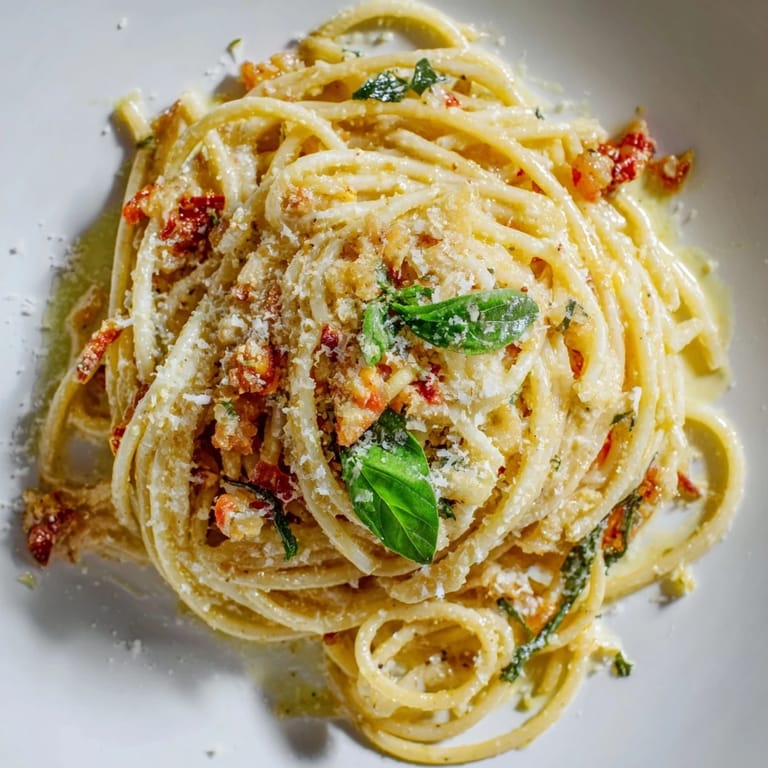
- Toss your drained pasta into the sauce, adding splashes of that reserved pasta water until the sauce coats every strand and moves like a gentle wave instead of clinging heavily. This is where everything that came before suddenly becomes a complete thought.
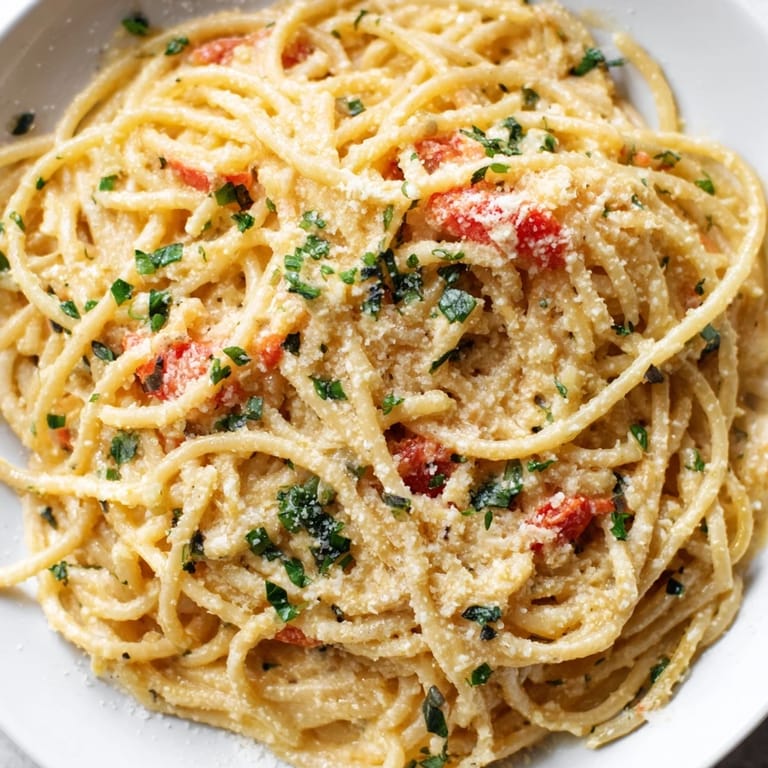 Save
Save There's a moment in cooking this sauce when you stop tending it and just breathe in the smell—that's when you know it's going to be good. It's the kind of dish that turns a regular evening into something you'll remember not because it was special, but because it felt unhurried and kind.
Why Roasting Changes Everything
Raw garlic tastes like a shout; roasted garlic tastes like a long exhale. The heat transforms its sulfurous compounds into natural sugars, which is why roasted bulbs taste almost candy-sweet even though nothing sweet went into them. This is also why you can't just use raw garlic and cream here—the acid and astringency would fight the creaminess instead of folding into it. Roasting isn't a complicated step, but it's the entire point.
The Sauce Without Flour
This sauce has no roux, no cornstarch, no thickening agents at all—just cream, the natural starch from pasta water, and fat from butter and cheese. That means the texture comes from how much pasta water you add, which is why you get to decide whether your sauce is silky or substantial. Some nights I make it loose enough to almost be a soup; other times I build it thicker, depending on what I'm hungry for. There's no wrong answer, only your preference.
Serving and Keeping
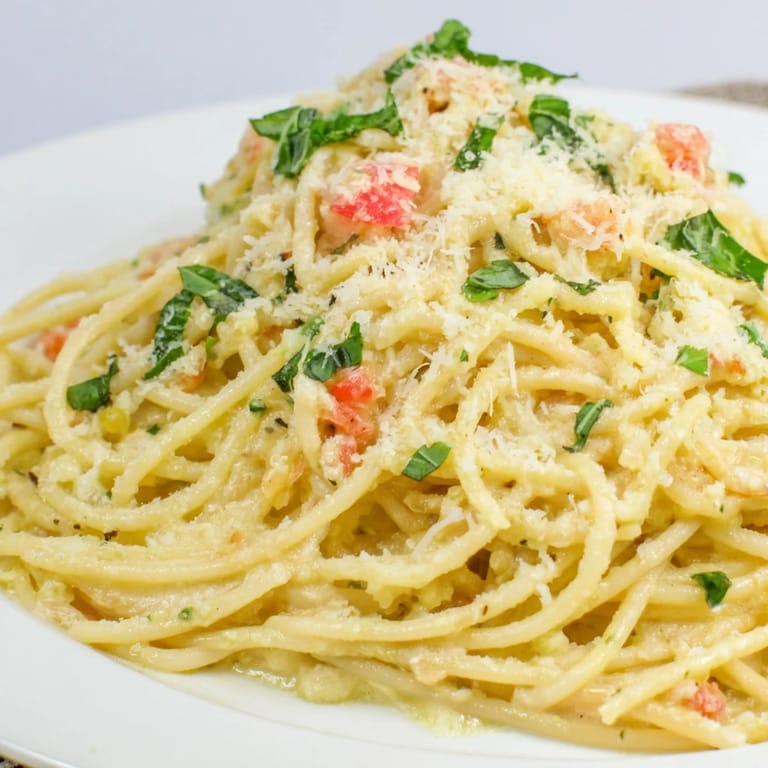
Serve this immediately in warmed bowls so it stays as creamy as possible—pasta sauce tends to thicken as it cools. A drizzle of fresh olive oil and extra basil before serving remind you that this meal is meant to taste alive, not just full.
- Leftover sauce keeps in the fridge for three or four days, though it thickens considerably as it sits, so thin it with cream or milk when reheating.
- Roasted garlic bulbs can be made three or four days ahead and stored in an airtight container, which means you can skip the longest part of this recipe if you're planning ahead.
- This pairs beautifully with something crisp like a Pinot Grigio or Sauvignon Blanc, or simply with crusty bread for catching every last bit of sauce.
 Save
Save This sauce proves that the most impressive meals often come from understanding a few ingredients deeply rather than juggling many. It's comfort in its simplest, truest form.
Recipe FAQ
- → How long should I roast the garlic bulbs?
Roast the garlic bulbs at 200°C (400°F) for 35–40 minutes until the cloves are soft and golden, which brings out their sweet, mellow flavor.
- → Can I use different types of pasta with this sauce?
Yes, this sauce pairs well with various pasta shapes like spaghetti, linguine, or fettuccine to hold the creamy texture and rich flavors.
- → What is the purpose of reserving pasta water?
Reserved pasta water helps adjust the sauce’s consistency, adding starchy liquid to make it silkier and better cling to the pasta.
- → Is it possible to make this sauce vegan?
Substitute the cream and Parmesan with plant-based alternatives to create a vegan-friendly version without compromising creaminess.
- → How can I store leftover sauce?
Store leftover sauce in an airtight container in the refrigerator for up to a week. Reheat gently before serving.
- → What herbs complement the roasted garlic flavor?
Fresh basil adds bright, aromatic notes that balance the rich savoriness of the roasted garlic perfectly.