 Save
Save There's something magical about the moment sun-dried tomatoes hit hot oil in a food processor—that concentrated sweetness and earthiness filling your kitchen in waves. I stumbled onto this pesto version while cleaning out my pantry one weeknight, realizing I had a jar of sun-dried tomatoes languishing in the back, some basil that needed rescuing, and exactly enough pasta for dinner. What started as a scramble to use things up became the dish I now make whenever I want something that tastes like it took hours but somehow comes together in thirty minutes.
I made this for my neighbor last summer when she came over with homemade focaccia, and we ended up eating on the back step as the light turned golden, talking until the pasta got cold and we didn't care. She asked for the recipe three times that evening, which told me everything—it's the kind of dish that surprises people with how good it is, how it doesn't apologize for being simple.
Ingredients
- Dried pasta (400 g): Penne, fusilli, or spaghetti all work beautifully; choose whatever shape you have on hand or love most—the ridges and curves catch the pesto differently and that matters more than you'd think.
- Sun-dried tomatoes in oil (120 g, drained): Don't skip draining them or rinse away their oil unless you want to; that reserved oil becomes part of your flavor foundation and you'll notice its absence immediately.
- Parmesan cheese (50 g, freshly grated): Pre-grated cheese works in a pinch, but freshly grated melts into the pesto more smoothly and tastes sharper, cleaner—worth the thirty seconds it takes.
- Toasted pine nuts (40 g): They give the pesto its creamy texture and subtle butter-like depth; if your budget says no, walnuts do the job and add an earthier note that's actually quite nice.
- Garlic cloves (2): Raw garlic will be sharp and assertive, which is exactly what this pesto needs to balance the sweetness of the tomatoes.
- Fresh basil leaves (30 g): Use the tender young leaves if you can find them; they bruise less and taste brighter than the big mature ones.
- Sun-dried tomato oil (2 tbsp reserved): This is the secret that makes people ask what's different—it carries flavor that plain olive oil never could.
- Extra-virgin olive oil (2 tbsp): Good olive oil makes a difference here because it's not being cooked, just blended and tossed, so its flavor shines.
- Lemon juice (1/2 lemon): This cuts through the richness and keeps everything tasting bright instead of heavy.
- Salt and black pepper: Taste as you blend and adjust; you'll need more than you think because the pesto needs to taste slightly over-seasoned on its own before it meets the pasta.
Tired of Takeout? 🥡
Get 10 meals you can make faster than delivery arrives. Seriously.
One email. No spam. Unsubscribe anytime.
Instructions
- Start your water and get organized:
- Fill a large pot with salted water and bring it to a rolling boil while you gather your ingredients—this gives you a moment to feel ready instead of rushed. Salt the water until it tastes like sea; the pasta itself should get its seasoning from the water, not just from the pesto.
- Cook the pasta:
- Add your pasta and stir it immediately so nothing sticks together. Set a timer for one minute before the package says it's done, then start tasting—al dente means you should feel a tiny bit of resistance when you bite it, not a chalky center. Before you drain it, scoop out about half a cup of that starchy water and set it aside; you'll need it to loosen the pesto.
- Build your pesto while the pasta cooks:
- Combine the sun-dried tomatoes, Parmesan, pine nuts, garlic, and basil in your food processor and pulse until everything is finely chopped but not yet smooth—you're looking for texture, not paste. Listen to the sound change as the nuts break down; that's your cue that you're ready for the next step.
- Make it silky:
- Pour in the reserved sun-dried tomato oil, the olive oil, lemon juice, salt, and pepper, then blend until you have something smooth and glossy. If it's too thick and refuses to move, add a tablespoon of that pasta water at a time and blend again until it reaches the consistency of chunky peanut butter.
- Marry the pasta and pesto:
- Drain your pasta and put it right into the large bowl with your pesto, then toss with a wooden spoon or your hands, adding more pasta water a splash at a time until the sauce coats every strand and looks silky rather than clumpy. Taste it, adjust salt and lemon if needed, and don't be shy—this is your moment to make it exactly how you want it.
- Finish and serve:
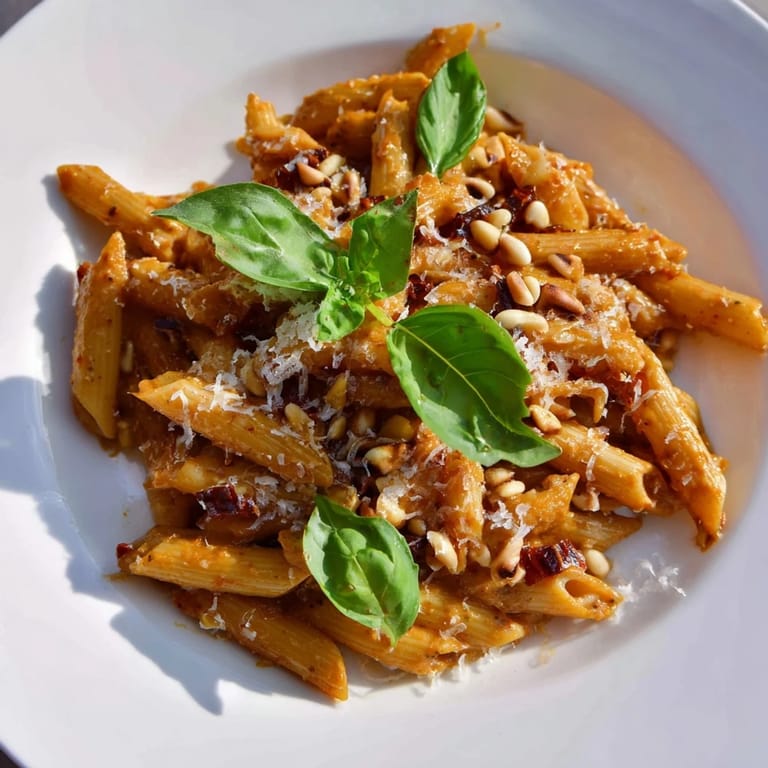
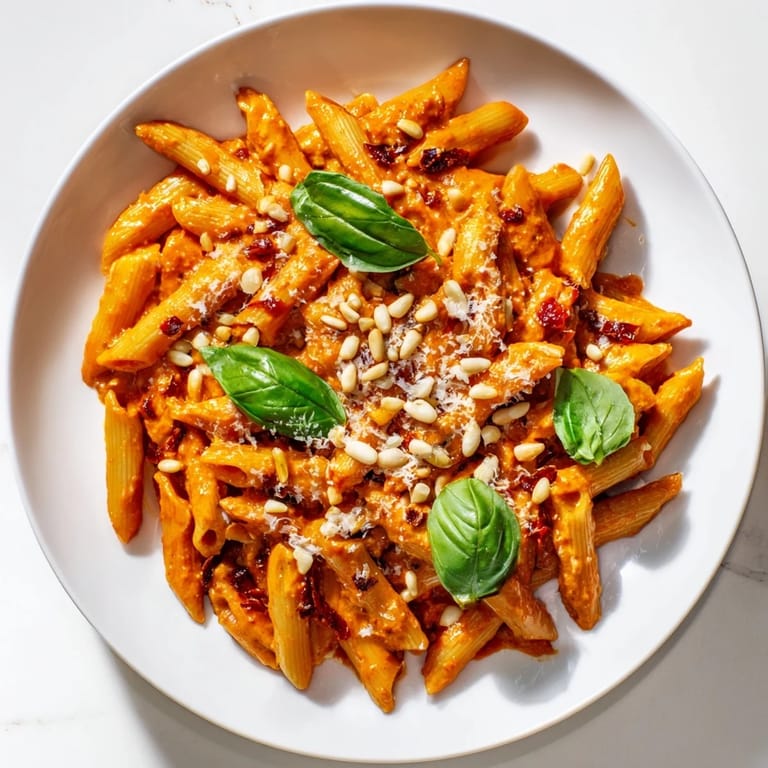
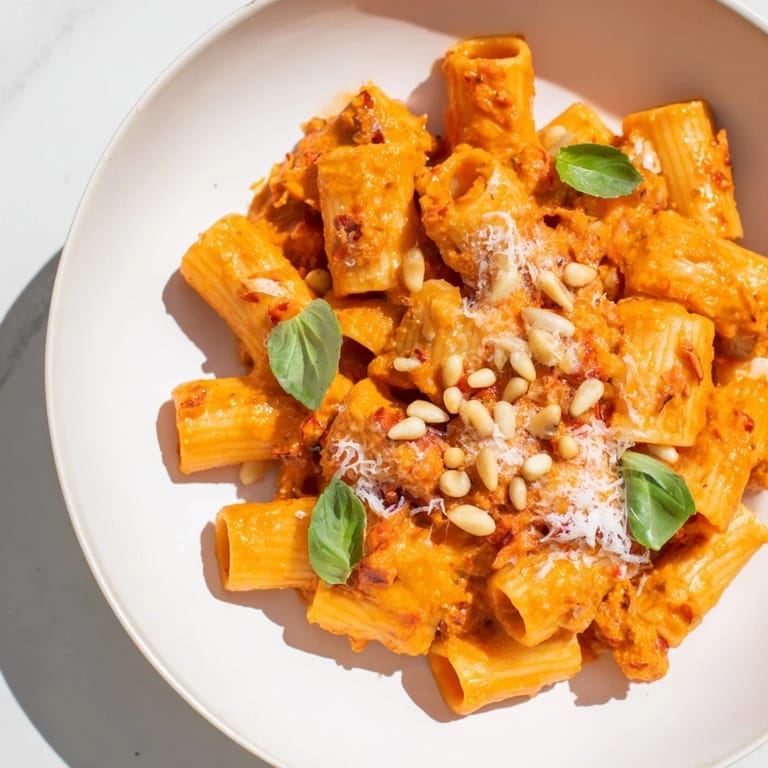
- Divide into bowls, tear some fresh basil leaves over the top, shower it with extra Parmesan, and serve immediately while it's still warm and the basil is still aromatic.
 Save
Save My daughter tasted this for the first time and asked if it was fancy, which made me laugh because it's one of the least fancy things I make, and yet somehow it tastes like the kind of thing you'd get at a place with white tablecloths. That's the magic of Mediterranean food—it doesn't try too hard, and that's precisely why it works.
Why Sun-Dried Tomatoes Deserve More Love
I used to buy sun-dried tomatoes only for special occasions, thinking they were a luxury ingredient, until I realized they're actually the opposite—they're tomatoes at their most intensely flavored, their most useful form. One jar lives in my pantry year-round now because they transform everything from pasta to salads to grain bowls into something that tastes like summer, no matter what season it actually is. They're also patient; unlike fresh tomatoes, they won't go soft or brown, so you can use them whenever you want without racing against time.
The Pesto Texture Question
Some people like their pesto perfectly smooth, almost sauce-like, while others want to feel the individual ingredients and taste each one separately. I've learned to ask myself how I'm feeling before I blend—if I want comfort and creaminess, I go smooth and add extra oil; if I want texture and brightness, I pulse just enough to break things down but leave them recognizable. Neither way is wrong; it's just about knowing what you're hungry for that day.
Ways to Make This Your Own
This recipe is a foundation, not a rulebook, so treat it like one. I've made it with walnuts when pine nuts were expensive, added a handful of spinach to stretch it further, included a anchovy fillet for salt and depth, and even blended in roasted red peppers when I had them on hand. The beauty is that it still tastes like itself, just wearing a different outfit.
- For a vegan version, swap the Parmesan for nutritional yeast and use olive oil instead of the sun-dried tomato oil if you need to stay completely plant-based.
- Add grilled chicken, roasted vegetables, or even a fried egg on top if you want to turn this into something more substantial for dinner.
- Make a double batch of the pesto and freeze it in ice cube trays, then pop out cubes whenever you need a fast, excellent meal.
 Save
Save This dish has become my go-to when I need to feed people something delicious without spending hours in the kitchen or feeling like I've settled for anything less than what they deserve. It's proof that simple, honest food is often the most memorable.
Recipe FAQ
- → What pasta types work best with sun-dried tomato pesto?
Penne, fusilli, or spaghetti hold the sauce well and complement the pesto's texture and flavor.
- → How can I adjust the pesto consistency?
Add reserved pasta water a tablespoon at a time to thin the pesto until it coats the pasta smoothly.
- → Can I substitute pine nuts in the pesto?
Yes, toasted walnuts are a budget-friendly alternative that adds a rich, nutty flavor.
- → How do I make a dairy-free version?
Replace Parmesan with nutritional yeast to maintain a cheesy flavor without dairy.
- → What are good serving suggestions for this dish?
Garnish with fresh basil and extra Parmesan; pair it with crisp Italian white wines like Pinot Grigio for a complete meal.