 Save
Save There's something about the smell of garlic hitting hot olive oil that makes you stop and pay attention. I discovered this tapenade pasta on a Tuesday afternoon when my fridge held nothing but a jar of olives, some capers, and dried pasta—the kind of moment that forces creativity. What started as necessity became my go-to dinner, the one I make when I want something that tastes like the Mediterranean without leaving my kitchen.
I made this for a friend who'd just moved to the neighborhood, and she sat at my kitchen counter while I worked, asking why I wasn't stirring constantly like she'd been taught. When I explained how the pasta water does the work for you, how you let it all come together gently, she watched the whole pot with genuine curiosity. That's when I realized this dish has a kind of quiet confidence to it.
Ingredients
- Mixed pitted olives, 1 cup (Kalamata and green): The backbone of the whole thing—their brininess is what makes this sing, so don't skip the quality here.
- Capers, 2 tablespoons drained: These little bursts of sharp flavor are non-negotiable; they cut through the richness and keep everything bright.
- Garlic, 2 cloves peeled: Fresh and raw in the food processor so it stays punchy and doesn't get lost.
- Fresh parsley, 2 tablespoons chopped: Adds a whisper of green and prevents the tapenade from tasting too heavy.
- Fresh lemon juice, 1 teaspoon: Just enough acid to wake everything up without making it taste citrusy.
- Extra-virgin olive oil, 1/4 cup: This is where the silky texture comes from, so use something you'd actually taste on its own.
- Freshly ground black pepper, to taste: Coarse pepper adds little bursts of heat that whole peppercorns just don't.
- Dried spaghetti or linguine, 12 oz: The shape doesn't matter as much as cooking it to actual al dente—not soft, not crunchy, but with a slight bite.
- Salt for pasta water, 1 tablespoon: This is your only chance to season the pasta itself, so don't be shy.
- Reserved pasta cooking water, 1/4 cup: This starchy water is your secret weapon for creating a sauce that clings instead of slides off.
Tired of Takeout? 🥡
Get 10 meals you can make faster than delivery arrives. Seriously.
One email. No spam. Unsubscribe anytime.
Instructions
- Boil and reserve:
- Fill a large pot with water, salt it generously so it tastes like the sea, and get it to a rolling boil. This takes longer than you think, so start it first. Add your pasta and cook according to the box, but taste it a minute before the timer goes off—you want it tender but still with a little resistance when you bite it.
- Build the tapenade:
- While the pasta cooks, pulse your olives, capers, garlic, parsley, and lemon juice in the food processor until it looks broken down but still has texture. Turn it on and drizzle the olive oil in slowly while it runs—this is how you get that creamy paste instead of an oily mess. Taste it, grind in some black pepper, taste again.
- Bring it together:
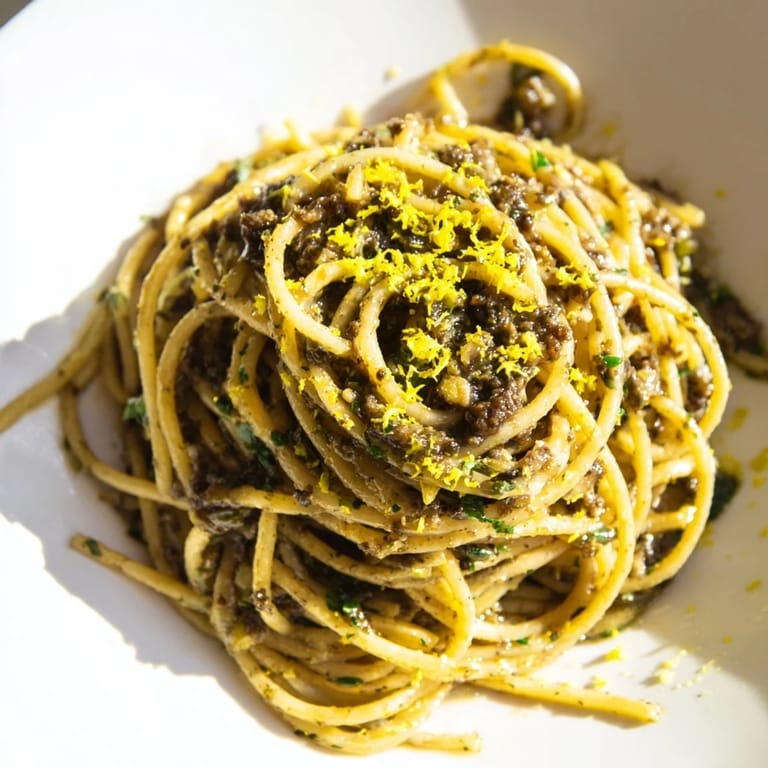
- Drain the pasta but save that cooking water first. Return the warm pasta to the pot, add the tapenade, and toss everything together gently but thoroughly. Add pasta water a splash at a time until the whole thing looks silky and coats every strand.
- Finish and serve:
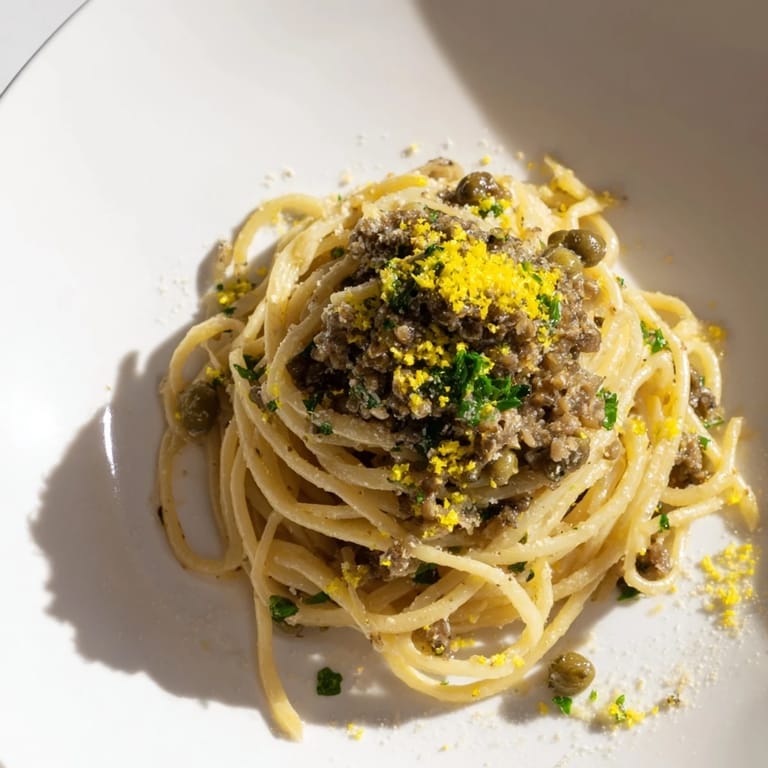
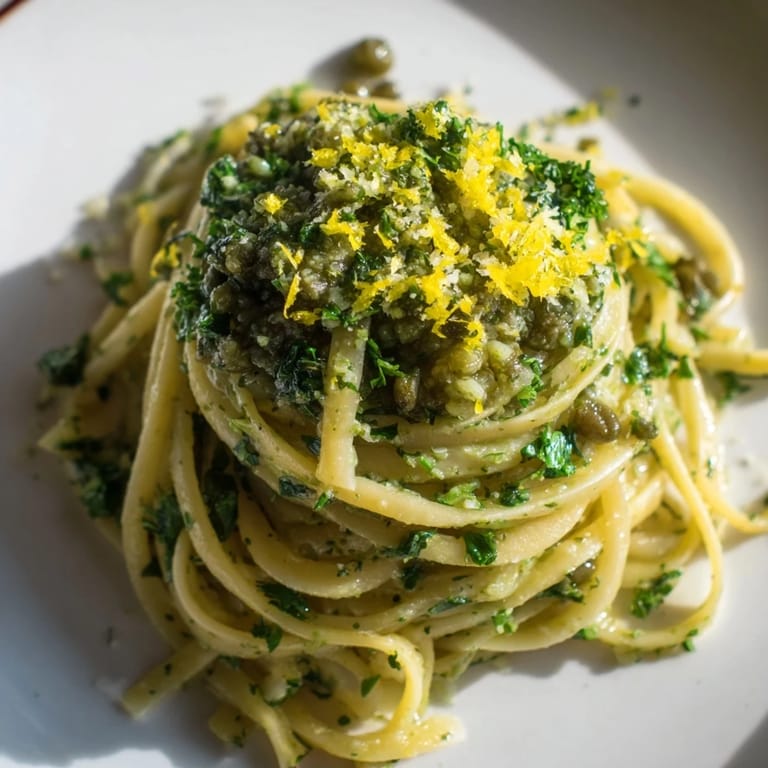
- Plate it up right away while it's still warm. If you want to garnish, a scatter of fresh parsley, some lemon zest, and maybe a little Parmesan if you're not keeping it vegan makes it feel finished.
 Save
Save There was one evening when someone asked if I'd added cream to this, and I remember feeling a little proud telling them it was just olives and olive oil. That's the moment I understood why this dish stuck around in my rotation—it proves you don't need anything fancy or complicated to make something that tastes like you spent all afternoon thinking about dinner.
The Flavor You're After
This is a salty, briny, punchy pasta that tastes alive on your tongue. It's not meant to be creamy or soft—it's bold and a little aggressive in the way Mediterranean food can be. The olives are the main event, the capers are there to make sure you don't get bored, and the garlic reminds you why you're eating this in the first place. When you taste it, you should think of something you'd order at a restaurant on a sunny afternoon, not something that took you 25 minutes to make.
The Olive Question
I've made this with just Kalamata olives, just green ones, and every mix in between. Kalamata tends to be richer and more purple-toned, while green olives are sharper and slightly more grassy. I prefer the mix because you get both personalities happening at once, but honestly use what you have or what you like. If your olives are stored in a brine that tastes good, you can use a tablespoon of that instead of the lemon juice—let your olives guide you instead of sticking rigidly to the recipe.
Ways to Make It Your Own
Once you understand how this works, it's easy to play with it. Some mornings I add a pinch of red pepper flakes if I want heat, or a handful of sun-dried tomatoes if I want richness, or even some chopped fresh anchovies if I'm feeling that way. The structure stays the same—olives, something salty and small, garlic, oil, pasta—and the outcome still works.
- A small spoon of red pepper flakes stirred in makes this sing if you like a little heat.
- Whole wheat or gluten-free pasta works just as well; just watch the cooking time since it varies by brand.
- Make the tapenade ahead and store it in the fridge—it actually gets better after a day as the flavors meld.
 Save
Save This is the kind of dinner that reminds you why cooking for yourself matters. It's simple, it tastes alive, and it never pretends to be more than what it is.
Recipe FAQ
- → What types of olives work best for tapenade?
Kalamata and green olives offer a balanced flavor and firm texture, ideal for a vibrant tapenade.
- → Can I use gluten-free pasta for this dish?
Yes, gluten-free pasta works well and maintains the dish’s texture and taste when cooked al dente.
- → How can I make the sauce silky and well-coated on the pasta?
Adding reserved pasta cooking water while tossing the tapenade and pasta creates a creamy, silky consistency.
- → Is it possible to add heat or spice to this dish?
A pinch of red pepper flakes mixed into the tapenade adds a pleasant spicy kick without overpowering flavors.
- → What are good garnish options to enhance the flavors?
Fresh parsley, lemon zest, and grated Parmesan or vegan alternatives add brightness and depth to the finished dish.
- → Can anchovies be included for more richness?
Yes, finely chopped anchovies lend umami richness, but omit them if following vegetarian or vegan preferences.