 Save
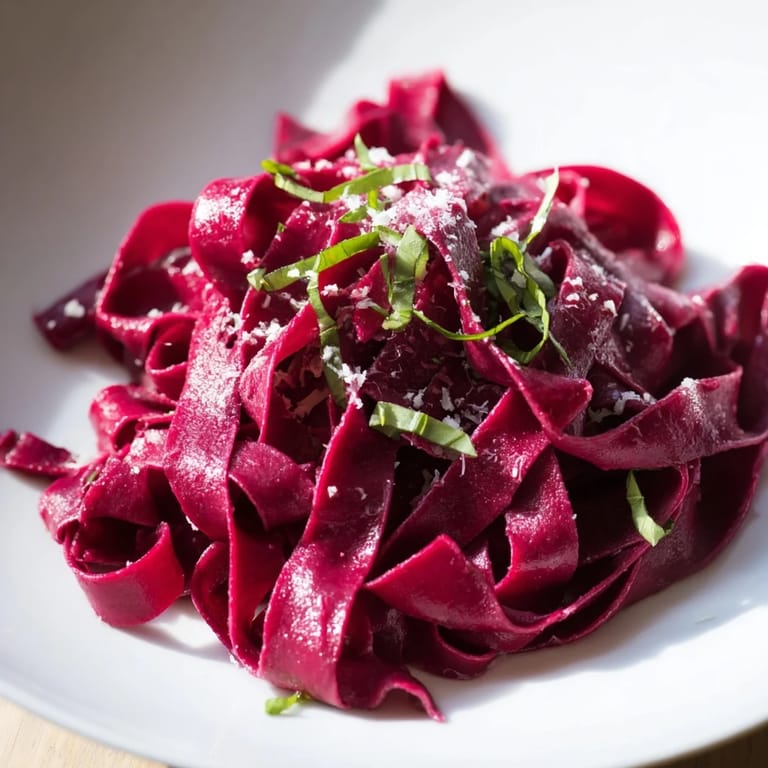
Save The first time I decided to make pasta from scratch, I wanted it to be memorable. I'd just returned from a farmer's market with a bunch of impossibly vibrant beets, and standing there in my kitchen, I realized I could turn them into something unexpected. That afternoon, my hands turned a deep pink as I worked the dough, and by the time I'd rolled out those first magenta strands, I knew I'd stumbled onto something special. Now, every time someone twirls these noodles onto their fork and sees that jewel-toned color, their eyes light up before they even taste it.
I made this for my sister's birthday dinner last spring, and I'll never forget how quiet the table went when I brought out the bowls. Everyone was expecting regular pasta, and instead they got something that looked like it belonged in a fancy restaurant. She took one bite, tasted that gentle sweetness from the beets, and asked if I'd somehow bottled the color of sunset. That meal turned into the kind of evening where people lingered at the table longer than planned, asking questions and sharing stories.
Ingredients
- Medium beet (about 180 g): Choose one that feels heavy for its size, which means it's packed with moisture and will roast into a smooth puree that colors the dough evenly.
- Olive oil for the beet: A tablespoon mixed into the foil helps the beet steam and caramelize slightly, deepening its flavor beyond just earthy.
- All-purpose flour (2 cups or 250 g): Measure by weight if you can because scooping can pack too much flour in, which makes the dough thick and hard to work with.
- Large eggs: Room temperature eggs mix more smoothly into the dough and create a silkier texture than cold ones straight from the fridge.
- Roasted beet puree (1/4 cup or 60 g): This is your magic ingredient, turning ordinary pasta into something that stops people mid-conversation when it arrives at the table.
- Fresh herbs and cheese for serving: Basil is classic, but parsley works too if that's what you have, and shaved Parmesan adds a salty contrast that brings out the beet's sweetness.
Tired of Takeout? 🥡
Get 10 meals you can make faster than delivery arrives. Seriously.
One email. No spam. Unsubscribe anytime.
Instructions
- Roast the beet until it's surrender-soft:
- Wrap it tightly in foil with that tablespoon of olive oil and salt, then slide it into a 400°F oven for 45 to 60 minutes. You'll know it's ready when a fork slides through with no resistance. Let it cool just enough to handle, then the skin slides off under cool running water like it's shedding a coat.
- Make your puree smooth and vibrant:
- Pulse the roasted beet in a food processor until it's completely smooth with no grainy bits. Measure out 1/4 cup for your dough and taste a tiny bit while you're at it, because that's when you realize how sweet roasted beets become.
- Create your dough well:
- Mound your flour on a clean counter and use your fingers to make a well in the very center, like you're building a flour volcano. Pour the eggs, salt, and beet puree into that well and let them sit for a moment.
- Bring it all together with patience:
- Using a fork, gently push flour from the walls into the wet center, working in circles. When it gets too shaggy to fork, use your hands and knead for 8 to 10 minutes until the dough becomes smooth and elastic and stops sticking to your fingers. If it's still tacky, dust in a bit more flour, one pinch at a time.
- Let the dough rest and relax:
- Wrap it tightly in plastic wrap and leave it at room temperature for 30 minutes. This resting time lets the gluten relax, which makes rolling it out infinitely easier.
- Roll and cut with intention:
- Divide the dough into 4 pieces so each one is manageable. Roll each piece thin using a pasta machine set to the thinnest setting, or use a rolling pin to get it to about 1 to 2 millimeters thick. Cut into whatever shape calls to you—wide fettuccine, delicate tagliatelle, or even lasagna sheets if you're feeling that way.
- Cook it fresh and fast:
- Drop your noodles into a large pot of salted boiling water and they'll be done in just 2 to 3 minutes, much faster than dried pasta. Taste one to make sure it's tender but still has a slight bite, then drain and toss immediately with butter or olive oil.
 Save
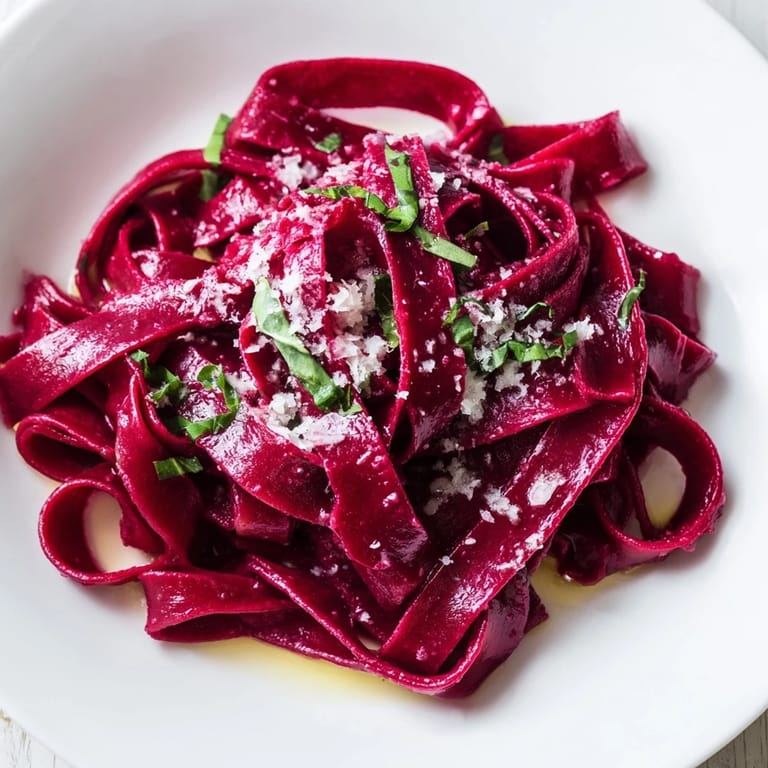
Save There's a moment, right after you've twisted those first fettuccine onto a fork and the magenta ribbons catch the light, when you understand why people love making pasta from scratch. It's not just about the taste, though the subtle beet sweetness against salted butter and fresh herbs is genuinely delicious. It's that feeling of transforming something humble like flour and a vegetable into something that looks like edible art.
Making Fresh Pasta Without a Machine
If you don't have a pasta machine, a heavy rolling pin and patience are your best friends. Work on a lightly floured surface and roll each piece of dough in different directions, rotating it a quarter turn every few minutes. The dough will resist at first, then gradually become thinner and more cooperative. It takes maybe 15 minutes per piece, and honestly, the rhythm of rolling becomes almost meditative once you stop fighting the dough and start working with it.
What to Serve Alongside This Pasta
The beauty of beet noodles is their delicate flavor, so you want a sauce that whispers rather than shouts. Brown butter with crispy sage is nearly perfect because the nutty butter lets the beet's earthy sweetness shine through. A light lemon cream also works beautifully, the acidity cutting through the richness while fresh herbs scattered on top complete the picture. Some of my favorite evenings have ended with just these noodles, melted butter, shaved Parmesan, and whatever fresh herbs I had growing on my windowsill.
Customizing Your Beet Pasta
Once you nail the basic ratio, this dough becomes a canvas for experimentation. I've made it with spinach by using thawed frozen spinach instead of beet puree, and it created a soft green that felt springlike on the plate. The vegan version, using water and olive oil instead of eggs, actually has a slightly more tender texture, so don't think of it as settling for less. The one thing I'd caution is that if you want deeper beet color, you can increase the puree to 1/3 cup, but then reduce the flour slightly to keep the dough from becoming dry.
- For a spinach version, squeeze thawed spinach very dry and measure out the same amount as you would beet puree.
- Add a tiny pinch of nutmeg to the dough if you're using spinach—it whispers in the background and somehow makes green pasta taste more like itself.
- Any leftover beet puree freezes beautifully for weeks, so you can make this pasta again without another roasting session.
 Save
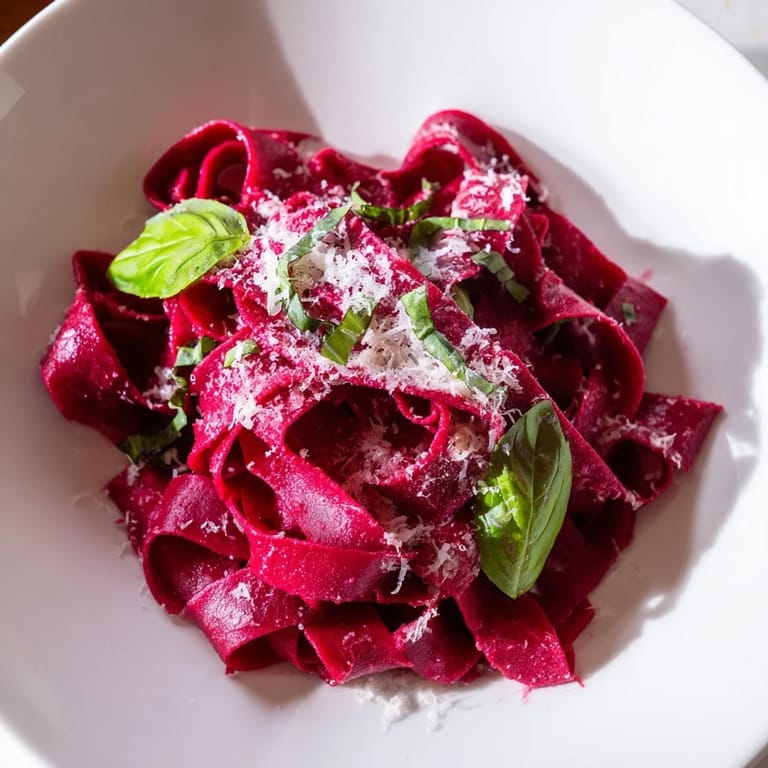
Save The next time you're standing in the kitchen wondering what to cook, remember that something as simple as roasted beets and flour can become a dish that people remember and ask you to make again. That's the quiet magic of cooking from scratch.
Recipe FAQ
- → How do I prepare the beet puree for the pasta dough?
Roast trimmed beets wrapped in foil with olive oil and salt at 400°F for 45–60 minutes until tender. Peel and puree until smooth before measuring out 1/4 cup for dough incorporation.
- → Can I substitute eggs in the dough for a vegan option?
Yes, replace each egg with 1/4 cup water and 1 tablespoon olive oil to maintain dough texture and moisture.
- → What pasta shapes work best with this dough?
The dough can be rolled and cut into tagliatelle, fettuccine, or other noodle shapes depending on preference and equipment availability.
- → How long should the fresh pasta be cooked?
Cook fresh noodles in salted boiling water for 2–3 minutes or until tender yet firm to the bite (al dente).
- → What sauces complement beet-infused noodles?
Simple sauces like browned butter with sage, olive oil with fresh herbs, or light lemon cream enhance the subtle earthiness without overwhelming the color or flavor.