 Save
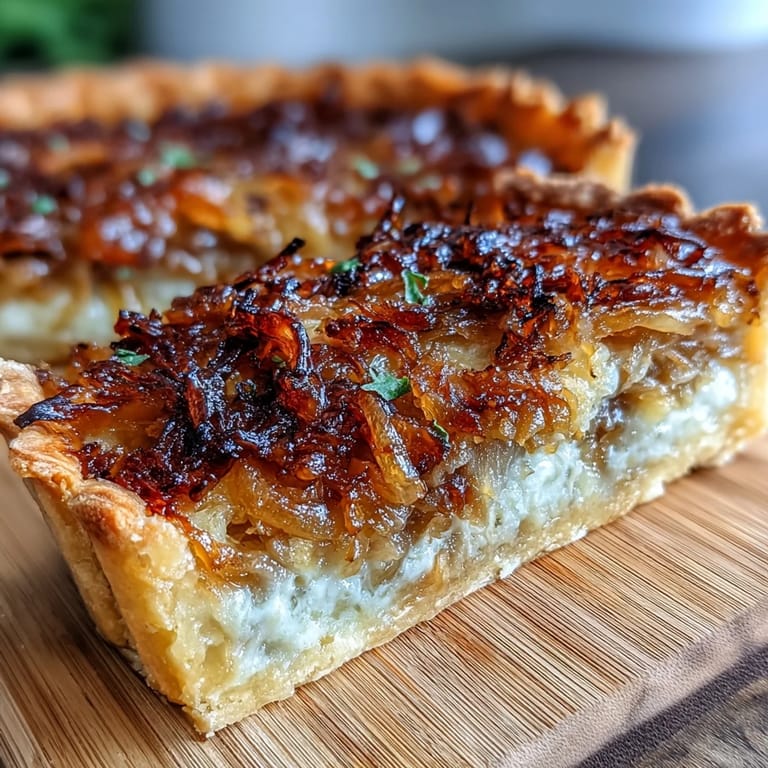
Save There's something almost meditative about watching onions transform over a low flame, their sharp bite mellowing into honeyed sweetness over the course of half an hour. I discovered this tart on a gray Sunday afternoon when a friend mentioned she'd been craving something elegant but not fussy, and I remembered a market visit where golden Gruyere caught my eye. That's when it clicked—what if I built something around that patient, golden magic that happens when time and butter do their work on humble onions?
My sister came over one autumn afternoon when the kitchen was cool and smelled like butter and thyme, and I'd just pulled this tart from the oven. She stood there with that look people get when they taste something that surprises them, and asked for the recipe before she'd even finished her first slice. Since then it's become the thing I make when I want to feel like I've got my life together, even if my actual life is a bit of a mess.
Ingredients
- 1 9-inch (23 cm) round sheet of puff pastry, thawed if frozen: Thaw at room temperature for about 30 minutes before using—this makes it infinitely easier to work with than fighting a cold, brittle sheet.
- 2 tablespoons unsalted butter and 2 tablespoons olive oil: Using both gives you the richness of butter with the higher smoke point of oil, a combination that actually prevents browning too fast.
- 4 large yellow onions, thinly sliced: Don't skip the thinness; it's what allows them to actually collapse into sweetness rather than just soften.
- 1 teaspoon salt, 1/2 teaspoon freshly ground black pepper, 1 teaspoon sugar: The sugar isn't about making it dessert—it's the catalyst that helps the caramelization process move along.
- 2 teaspoons fresh thyme leaves (or 1 teaspoon dried thyme): Add this near the end so it doesn't lose all its fragrance to the long cook.
- 3 large eggs, 1 cup (240 ml) heavy cream, 1/2 cup (120 ml) whole milk: This ratio creates a custard that sets without becoming rubbery, something I learned by overshooting the eggs once.
- 1/4 teaspoon ground nutmeg: Just a whisper—enough to add complexity but not enough that anyone can name it.
- 1/2 teaspoon salt and 1/4 teaspoon freshly ground black pepper: Season the custard generously since it needs to stand up to the sweet onions and sharp cheese.
- 1 1/2 cups (150 g) Gruyere cheese, grated: The nuttiness of aged Gruyere is non-negotiable here; don't substitute with something mild or it disappears.
- 1 tablespoon Dijon mustard: This is the secret handshake—a thin layer on the pastry keeps it from getting soggy while adding a quiet, sophisticated edge.
Tired of Takeout? 🥡
Get 10 meals you can make faster than delivery arrives. Seriously.
One email. No spam. Unsubscribe anytime.
Instructions
- Prepare your oven and pastry shell:
- Preheat to 375°F (190°C) and fit your thawed pastry into the tart pan, letting it settle naturally into the corners before trimming the edges with a knife. Prick the base gently with a fork and chill while you work on everything else—this cold rest keeps it flaky instead of puffing up unevenly.
- Begin the patient caramelization:
- Melt butter and oil together over medium-low heat, then add your thin onion slices with salt, pepper, and sugar. Stir every few minutes and resist the urge to raise the heat—30 to 35 minutes seems long until you taste what happens when you actually wait.
- Finish the onions:
- When they've turned a deep golden brown and smell almost sweet, stir in your thyme and let everything cool for a few minutes on the counter. This cooling moment prevents the hot onions from cooking the custard before it even gets in the oven.
- Make the custard:
- Whisk eggs, heavy cream, milk, nutmeg, salt, and pepper in a bowl until completely smooth with no streaks. This is the base that holds everything together, so don't rush it.
- Build your tart:
- Brush that cold pastry shell with Dijon mustard, then spread the cooled caramelized onions in an even layer. Scatter the grated Gruyere over top, then pour the custard mixture carefully over everything, letting it settle into the gaps.
- Bake until golden:
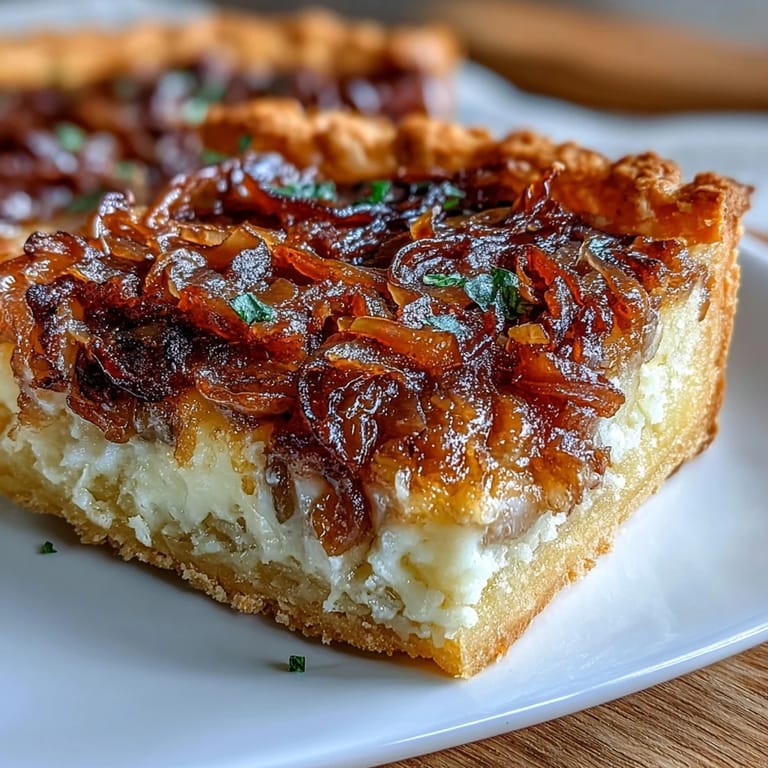
- Bake for 35 to 40 minutes until the custard is just set in the center (it should jiggle slightly when you move the pan, not slosh) and the top is golden. You'll know it's done when the kitchen smells like nutmeg and caramelized cheese.
- Rest before serving:
- Let the tart cool for 10 minutes in the pan before running a knife around the edge and releasing it onto your serving plate. This resting time lets everything settle into its final texture.
 Save
Save What strikes me most about this tart is how it transforms simple ingredients into something that feels like you've been cooking all day. The first time someone takes a bite and their face changes—that's when I remember why I bother with the slow work.
Why This Tart Works as the Perfect Brunch
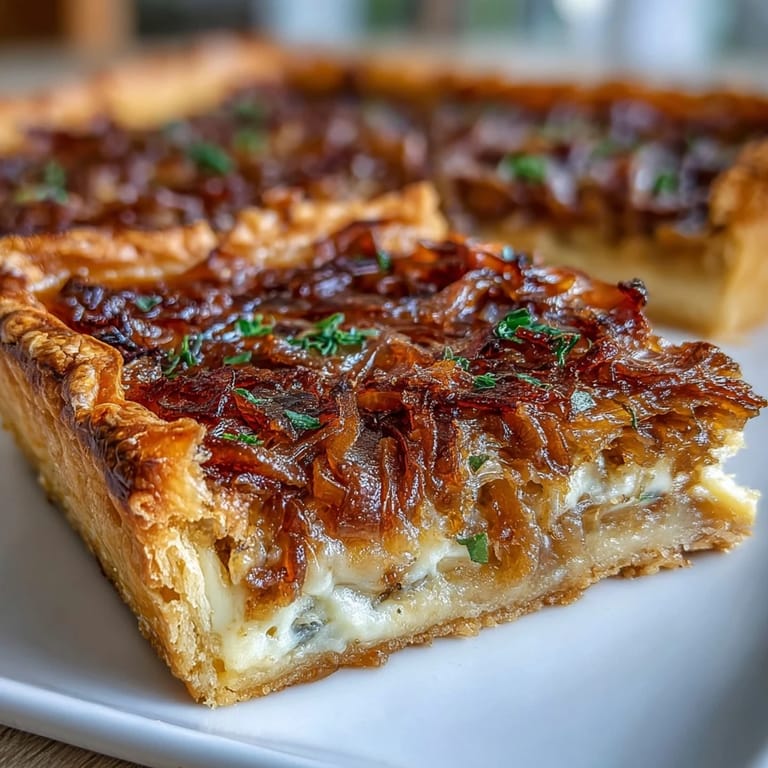
There's a reason French bistros keep versions of this on their menus year-round: it's substantial enough to satisfy without being heavy, and it sits somewhere between savory and elegant that makes everyone feel a bit special. You can serve it warm from the oven with a simple green salad and good bread, or let it cool slightly and it's just as good. It also gives you breathing room—you can make the onions the day before, chill the pastry overnight, and simply assemble and bake when you're ready.
The Secret of Slow Caramelized Onions
I used to think caramelized onions were a myth—surely that recipe that said 35 minutes was exaggerating. Then I actually committed to the time and realized the difference between softened onions and truly caramelized ones is the difference between good and unforgettable. The Maillard reaction requires patience and moderate heat; rushing it with high temperature just burns them. Once you've done this right once, you'll never go back to the canned kind or the microwave version.
Cheese Selection and Other Variations
Gruyere has this particular nuttiness that feels made for caramelized onions, but I've experimented with Emmental when Gruyere was unavailable and it works beautifully—slightly milder and a touch more delicate. Swiss cheese is another solid choice if you want something a bit less assertive. The custard base is forgiving enough that you could even add sautéed mushrooms, crispy bacon, or fresh herbs like chives without throwing off the balance. One variation I particularly love is adding a splash of white wine to the onions during the last five minutes of caramelization—it deepens everything mysteriously without tasting explicitly of wine.
- Don't use pre-shredded cheese from a bag if you can avoid it; whole cheese grated fresh melts more smoothly and blends into the custard rather than creating little pockets.
- If your pastry shell starts browning too quickly on top while the custard is still cooking, loosely cover it with foil for the last 15 minutes.
- This tart is genuinely better made a few hours ahead and served at room temperature than piping hot, if you're looking for less stress when guests arrive.
 Save
Save This tart has become my answer to the question of what to make when I want to feel capable and fed at the same time. Make it once when you have the time to pay attention, and you'll have a recipe you return to again and again.
Recipe FAQ
- → How do you achieve perfectly caramelized onions?
Cook thinly sliced onions slowly over medium-low heat with butter and olive oil, stirring frequently until they turn rich golden brown. Adding a pinch of sugar helps enhance sweetness.
- → What cheese works well in this tart?
Gruyere cheese is ideal for its nutty, slightly sweet flavor and excellent melting qualities. Emmental or Swiss varieties are good alternatives.
- → Can I prepare the pastry ahead of time?
Yes, the puff pastry can be chilled after fitting into the tart pan, which helps maintain its flakiness during baking.
- → What flavor does Dijon mustard add to the tart?
Dijon mustard adds a subtle tang and depth that complements the sweetness of the onions and richness of the cheese.
- → How should the tart be served for best taste?
Let it cool slightly before slicing. Serving with a fresh green salad and a crisp white wine enhances the overall experience.