 Save
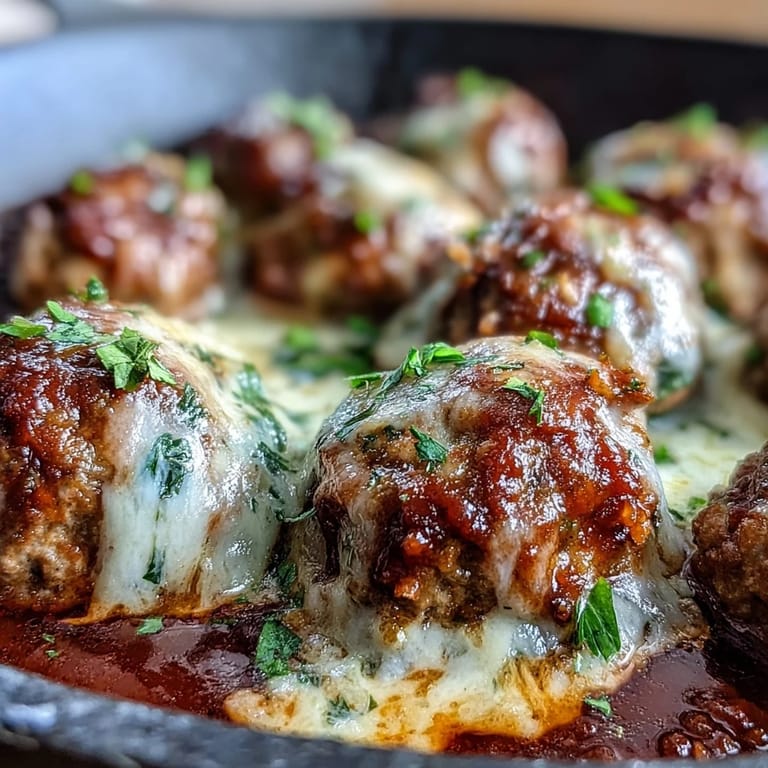
Save My neighbor Marco stopped by one evening with a jar of his grandmother's marinara and a challenge: make meatballs that could hold their own against it. What started as friendly competition became an obsession with finding the perfect balance of beef and pork, enough garlic to make your kitchen smell like an Italian grandmother's dream, and cheese that melts into every tender bite. These meatballs have since become my answer to almost everything—weeknight dinners, potlucks, spontaneous gatherings—because they're simultaneously impressive and genuinely effortless.
I'll never forget the first time I served these to my partner's extended family during a casual Sunday dinner. His aunt, who'd grown up in Naples, took one bite and actually paused mid-chew. She didn't say much, just nodded and asked for seconds, then thirds. That silence meant more than any compliment could have—these meatballs had passed the real test.
Ingredients
- Ground beef and pork (500g and 250g): The two-meat approach gives you richness from the beef and a subtle sweetness from the pork that keeps things interesting; don't use all beef alone or they'll feel dense.
- Fresh breadcrumbs (100g): These act like a sponge for the milk and eggs, keeping meatballs moist and tender rather than compact; day-old bread torn into pieces works better than store-bought crumbs.
- Parmesan and mozzarella (80g and 120g): Parmesan brings sharp umami while mozzarella adds stretch and creaminess; grate fresh if you can since pre-shredded often contains anti-caking agents that affect texture.
- Eggs (2 large): These bind everything together while adding richness; don't skip them or your meatballs will fall apart during cooking.
- Garlic (5 cloves total): Three minced into the meat mixture and two more in the sauce build layers of garlicky warmth without one dominant moment.
- Onion (1 small, finely chopped): It adds sweetness and moisture that disperses as it cooks into the meat.
- Fresh parsley and dried oregano: Parsley keeps things bright and herbaceous while oregano anchors everything in that Italian comfort-food direction.
- Whole milk (60ml): This is your secret weapon for tenderness—it soaks into the breadcrumbs and keeps meatballs from becoming tough or grainy.
- Olive oil (4 tbsp total): Use a decent quality oil here; you'll taste it both in the browning and in the finished sauce.
Tired of Takeout? 🥡
Get 10 meals you can make faster than delivery arrives. Seriously.
One email. No spam. Unsubscribe anytime.
Instructions
- Combine your mixture gently:
- In a large bowl, add beef, pork, breadcrumbs, both cheeses, eggs, garlic, onion, parsley, oregano, salt, pepper, and milk. Use your hands and mix just until everything is evenly distributed—you'll feel when the milk has been absorbed and the mixture holds together, usually about a minute of light mixing. Overworking develops gluten in the breadcrumbs and makes meatballs tough and dense, which is the opposite of what we're after.
- Shape into meatballs:
- Roll the mixture into about 24 golf ball-sized orbs (roughly 2 tablespoons each). If the mixture feels too wet, refrigerate it for 15 minutes before shaping. If it's too dry, add a splash more milk.
- Brown them with care:
- Get your pan hot and ready:
- Heat 2 tablespoons of olive oil in a large skillet over medium heat until it shimmers but isn't smoking. Working in batches so you don't overcrowd the pan, place meatballs in and let them sit undisturbed for 2–3 minutes before turning. This develops a golden crust that locks in moisture and flavor.
- Build your sauce base:
- Once all meatballs are browned and set aside, add another 2 tablespoons of olive oil to the same skillet. The browned bits on the bottom (called fond) are liquid gold. Sauté the minced garlic for about 1 minute until it turns fragrant and barely golden—this is the moment before it starts to burn, so watch closely.
- Add the tomatoes and simmer:
- Pour in the crushed tomatoes, dried basil, dried oregano, red pepper flakes if you like heat, sugar to balance the acidity, and a pinch of salt and pepper. Stir well, then let it come to a gentle simmer. The sauce should smell rich and inviting, not sharp or metallic.
- Nestle meatballs into the sauce:
- Gently place each browned meatball into the simmering sauce, making sure they're mostly submerged. Cover the skillet and reduce heat to low. They'll continue cooking gently in the residual heat and steam, staying tender while the flavors meld.
- Let time do the work:
- Simmer for 20–25 minutes until meatballs are completely cooked through (an instant-read thermometer should read 160°F / 71°C at the center if you want to check). Resist the urge to stir constantly; gentle movement now and then is enough.
- Finish and serve:
- Taste the sauce and adjust seasoning with salt and pepper. Tear fresh basil over the top just before serving. Serve over pasta, polenta, or with crusty bread to soak up every drop of sauce.
 Save
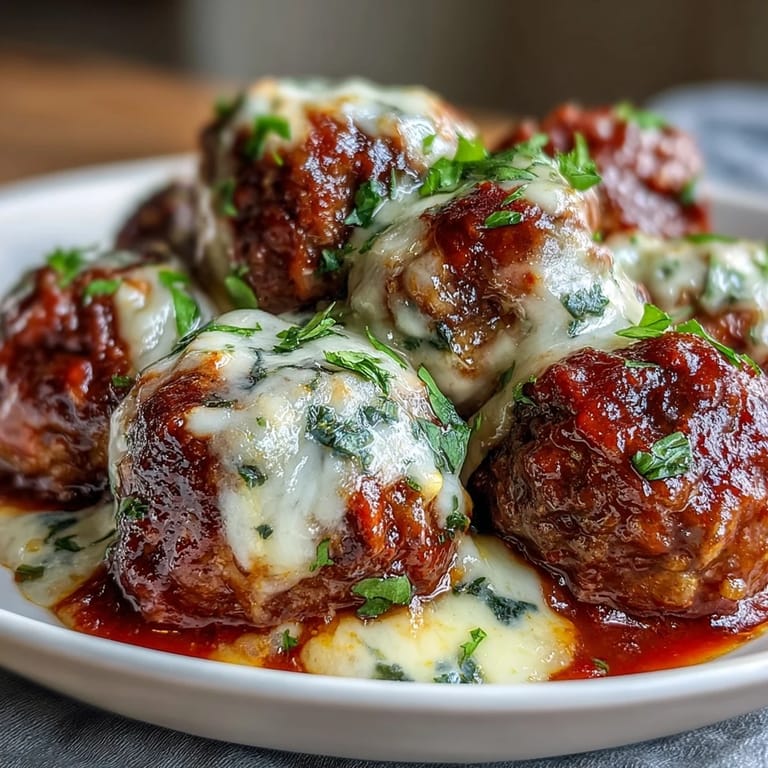
Save There's something quietly magical about the moment when you lift that lid after 25 minutes and steam rises carrying the aroma of garlic, tomato, and cheese. It's not just dinner—it's an invitation, a moment that makes everyone at the table slow down and actually taste what's in front of them.
Why This Two-Meat Approach Works
Pure beef meatballs can sometimes feel one-note, heavy, and prone to being tough if you're not paying close attention. Pork brings a natural sweetness and moisture that balances beef's richness, and together they create something more complex and forgiving. The ratio of two parts beef to one part pork is deliberate—you still get beef's savory foundation, but pork softens the edges and adds tenderness that feels almost luxurious.
The Cheese Factor
Mixing cheese directly into the meat mixture rather than just sprinkling it on top means every bite has that savory, umami punch without any gritty texture. Parmesan contributes sharpness and funk while mozzarella melts smoothly and adds a subtle sweetness—they're better together than either one alone. The heat of the meat mixture slightly melts them as you combine everything, creating tiny pockets of flavor throughout instead of distinct cheese pieces.
Sauce Building and Variations
The marinara isn't meant to be complicated; it's built on the principle that a few good ingredients treated gently outshine a crowded ingredient list every time. That pinch of sugar isn't about sweetness—it's about balancing the acidity of the tomatoes so the sauce tastes round and complete rather than sharp or one-dimensional. If you prefer spice, crushed red pepper flakes add heat without overwhelming; if you're sensitive to acidity, add a tiny pinch more sugar or a splash of heavy cream to mellow things out.
- For a richer sauce: Stir in a splash of heavy cream or a dollop of ricotta just before serving for a silkier mouthfeel.
- Make it your own: A handful of fresh spinach added to the sauce in the final minutes brings earthiness and nutrition without changing the fundamental character.
- Batch freezing tip: These freeze beautifully for up to three months; let them cool completely before transferring to airtight containers, and thaw in the refrigerator overnight before reheating gently on the stovetop.
 Save
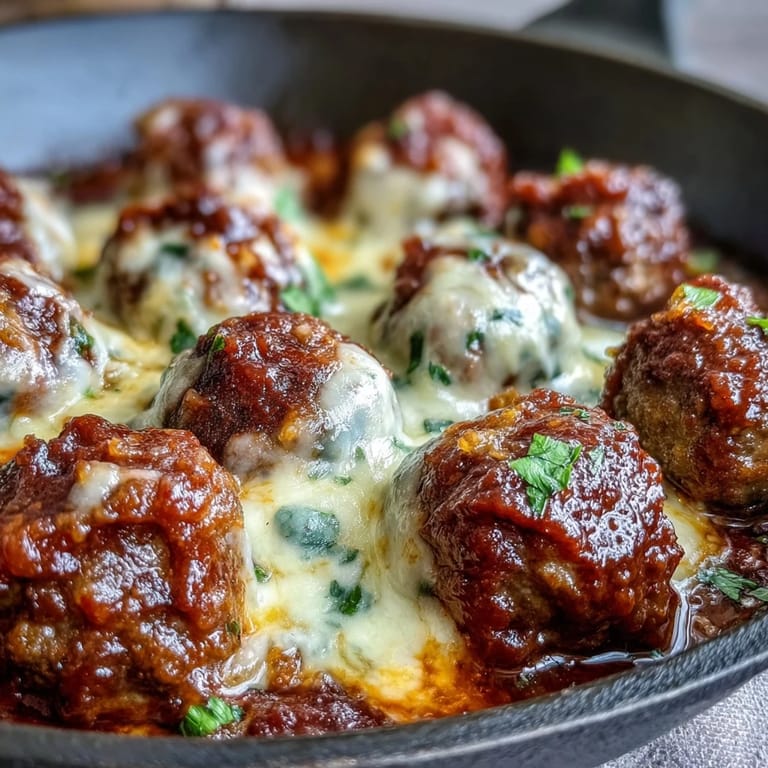
Save These meatballs have become my default answer to the question "What should we make?" because they feel special without demanding special circumstances. They're proof that the simplest pleasures—good meat, good cheese, good sauce—are often the ones worth repeating.
Recipe FAQ
- → Can I make these meatballs ahead of time?
Absolutely. You can shape the raw meatballs and refrigerate them for up to 24 hours before cooking. Alternatively, cook them completely and store in the sauce for 3-4 days. The flavors actually improve after resting in the marinara.
- → What's the best way to prevent meatballs from falling apart?
Don't overwork the mixture when combining ingredients—mix just until everything is incorporated. The breadcrumbs and milk help bind everything together. Letting the mixture rest for 15-30 minutes in the refrigerator before shaping also helps them hold their shape.
- → Can I bake these instead of frying?
Yes, arrange them on a parchment-lined baking sheet and bake at 400°F (200°C) for 18-22 minutes, turning halfway through. You'll miss the crispy exterior from pan-searing, but they'll still be delicious and tender.
- → How do I know when the meatballs are fully cooked?
Use an instant-read thermometer inserted into the center of a meatball—it should read 160°F (71°C). Cutting one open should show no pink, and the juices should run clear. Simmering in sauce usually takes 20-25 minutes after the initial browning.
- → Can I freeze these meatballs?
Definitely. Freeze shaped raw meatballs on a baking sheet, then transfer to a freezer bag for up to 3 months. Cook from frozen, adding a few extra minutes. Alternatively, freeze cooked meatballs in sauce for easy reheating.