 Save
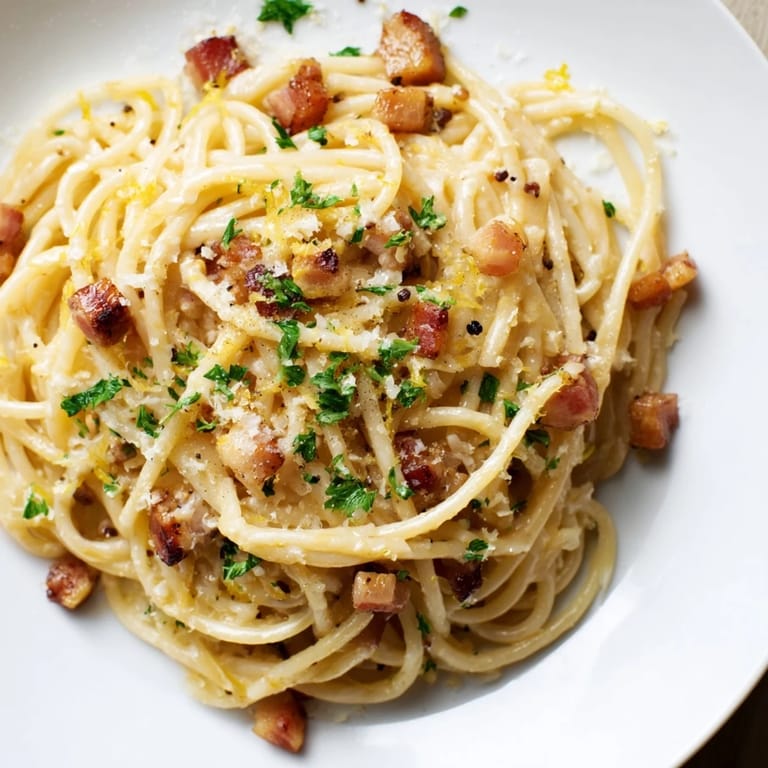
Save There's something about the smell of bacon hitting hot oil that makes you stop whatever you're doing and just breathe it in. I stumbled onto this linguine one weeknight when I had bacon, pasta, and exactly twenty minutes before dinner needed to be on the table. No cream in the pantry, no fancy ingredients—just the realization that pasta water itself could do all the heavy lifting, turning something simple into something silky and satisfying.
I made this for friends who showed up unexpectedly one October evening, and watching them taste it, then look at me confused about whether there was cream in it, felt like winning an invisible cooking game. Someone asked for the recipe, someone else asked for seconds, and the kitchen smelled incredible. That's the moment I knew this wasn't just a weeknight shortcut—it was actually something worth remembering.
Ingredients
- 400 g linguine: Use good pasta, the kind that has some texture to it. Thin strands work best here because they'll coat evenly and catch all that bacony goodness.
- Bacon, 200 g diced: This is the star, so don't skimp or use the sad thin stuff. Thick-cut bacon gets crispier and more flavorful, and you want those crispy bits throughout.
- Olive oil, 2 tbsp: Good enough to taste matters here—this isn't the place for extra-virgin pretension, just honest, clean oil.
- Garlic, 3 cloves finely chopped: Size matters more than you'd think. Finely chopped means it distributes evenly and won't scorch.
- Freshly ground black pepper, 1/2 tsp: Fresh grinding makes a real difference in how it tastes—pre-ground tastes like dust in comparison.
- Red pepper flakes, 1/4 tsp optional: A whisper of heat if you want it, but it's truly optional and depends on your mood.
- Reserved pasta cooking water, 1/2 cup: This is your secret weapon—starchy and essential for building a silky sauce without cream.
- Parmesan cheese, 40 g grated: Freshly grated tastes incomparably better than pre-shredded, and it melts into the sauce instead of clumping.
- Fresh parsley, 2 tbsp chopped: A brightness at the end that lifts everything, though it's not strictly essential if you don't have it.
- Lemon zest, from 1/2 lemon optional: A tiny bit of citrus zest adds a subtle complexity that makes people wonder what the secret ingredient is.
Tired of Takeout? 🥡
Get 10 meals you can make faster than delivery arrives. Seriously.
One email. No spam. Unsubscribe anytime.
Instructions
- Get your water going:
- Fill a large pot with water and salt it like you're seasoning soup—generously. Bring it to a rolling boil before the pasta goes in, because you need that heat to start the cooking properly.
- Cook the linguine:
- Add the pasta and stir it once or twice in the first minute so it doesn't clump. Follow the package timing but taste it a minute or two before the box says, aiming for al dente—tender but with a slight chew. Before you drain it, scoop out about 1/2 cup of that starchy cooking water into a mug or small bowl.
- Start the bacon:
- While the pasta cooks, pour the olive oil into a large skillet over medium heat. Add the diced bacon and let it sizzle and pop, stirring occasionally, until the edges are crispy and the fat has rendered into golden pools. This should take about 6 to 8 minutes, depending on thickness.
- Add the garlic gently:
- Drop the heat to low and scatter in the chopped garlic and black pepper. Stir for about a minute, just until fragrant—you're looking for that warm, toasted smell, not the acrid smell of burnt garlic. Add the red pepper flakes now if you're using them.
- Bring it all together:
- Drain the linguine and transfer it directly into the skillet with the bacon. Pour in about 1/4 cup of your reserved pasta water and toss everything together gently but thoroughly, making sure every strand gets coated. The mixture should look wet and glossy, not dry.
- Make it silky:
- Pull the skillet off the heat and sprinkle in the grated Parmesan. Toss continuously for a minute or so, letting the heat from the pasta and bacon melt it into a creamy sauce. If it looks a bit thick, splash in another tablespoon or two of pasta water until you get a silky, light coating on every strand.
- Finish and serve:
- Stir in the fresh parsley and lemon zest if you're using it. Taste once and adjust the pepper and salt if needed. Plate it immediately while it's hot, and top each serving with extra Parmesan and a crack of black pepper.
 Save
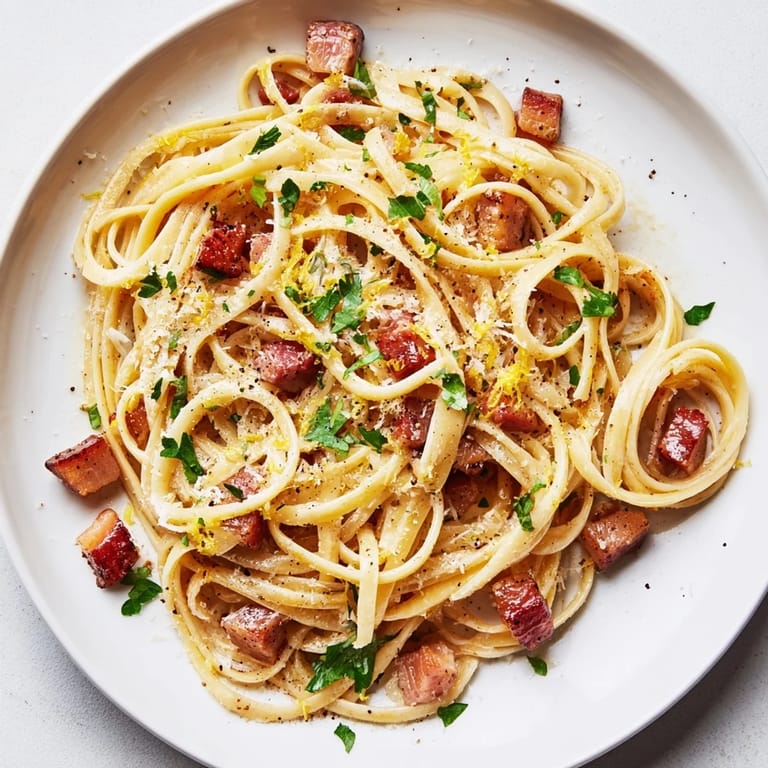
Save What strikes me most about this dish is how it proves that you don't need a list of fancy ingredients to make something memorable. The simplicity is the whole point, and yet it tastes like you spent hours thinking about it.
Why This Works So Well
The magic here is that you're building an emulsion using the starch from your pasta water instead of cream or eggs, which is actually how some of the best Italian pasta sauces work. When you toss the hot pasta with the bacon fat and gradually add that starchy water while stirring, you create something that coats every strand without weighing anything down. It sounds technical, but it's just physics working in your favor—and once you see it happen, you'll start thinking about all the other quick sauces you can make this way.
Timing and Flow
The reason this comes together so quickly is because everything happens at almost the same time, which means you need to stay present and not get distracted. Start your water, get your bacon going while the pasta cooks, and have your pasta water scooped before you drain. If you're organized about that, the whole assembly takes maybe two minutes, and you're eating.
Room to Improvise
This recipe is a starting point, not a rule. Some nights I add a handful of fresh peas or sautéed mushrooms for more texture and vegetable matter, other times I'll throw in some red pepper flakes if I'm in the mood for a little heat. I've even stirred in fresh spinach at the end when I had it on hand—it wilts right into the warmth of the pasta.
- A glass of crisp white wine like Pinot Grigio alongside this makes everything taste better and helps with digestion.
- If pork isn't your thing, turkey bacon works fine, though it won't render as much fat so you might want to add an extra tablespoon of olive oil.
- Leftovers reheat gently in a skillet with a splash of water, and while they're never quite as silky as fresh, they're still completely delicious for lunch the next day.
 Save
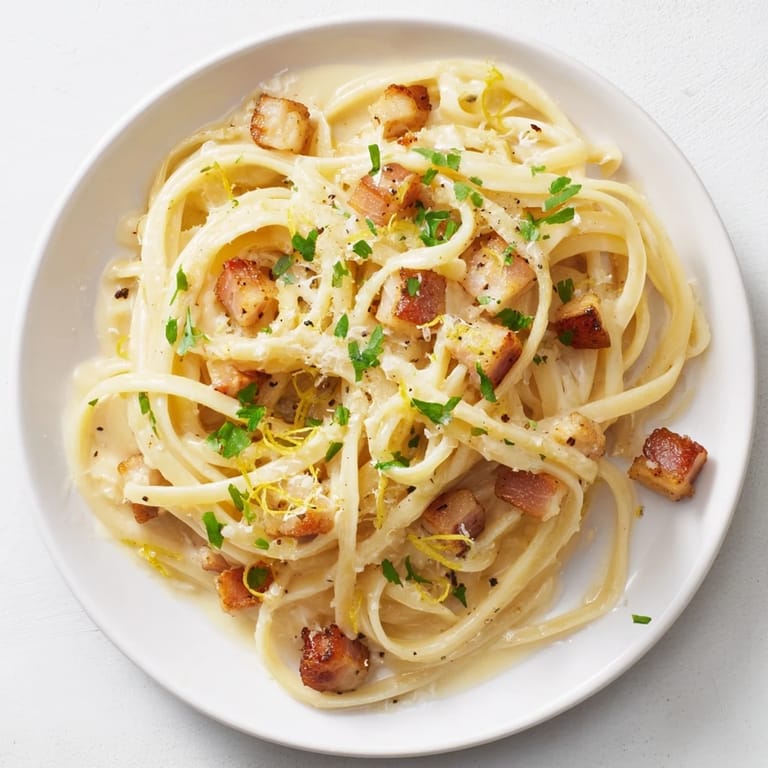
Save This is the kind of dish that reminds you why cooking doesn't have to be complicated to be wonderful. Twenty-five minutes from start to finish, and you've made something that tastes like it came from a proper kitchen.
Recipe FAQ
- → How do I achieve crispy bacon for this dish?
Cook diced bacon over medium heat without overcrowding the pan, stirring occasionally until it turns golden and crisp, about 6–8 minutes.
- → Why use reserved pasta water in the sauce?
Starchy pasta water helps bind and thicken the sauce, creating a creamy texture without adding cream.
- → Can I substitute bacon with another ingredient?
Turkey bacon works well for a lighter option, or try smoked pancetta for a different smoky flavor.
- → What is the purpose of lemon zest in the dish?
Lemon zest adds a bright, fresh note that balances the richness of the bacon and cheese.
- → How can I add more vegetables to this meal?
Stir in peas or sautéed mushrooms during the final tossing step for extra color and nutrients.