 Save
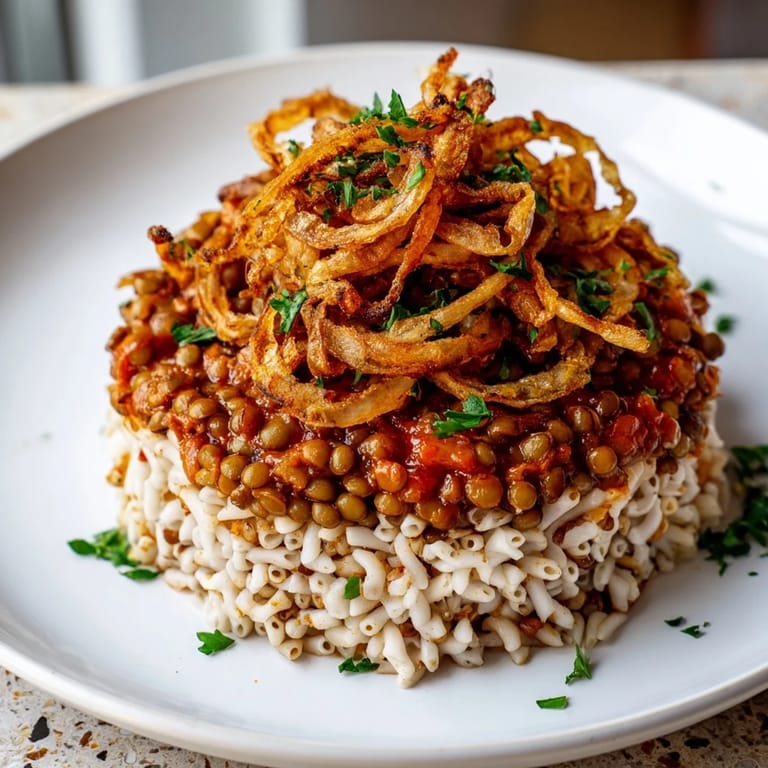
Save The first time I tasted koshari, I was standing at a cramped counter in Cairo, watching a vendor with practiced hands layer rice, lentils, and pasta into a paper cone with the speed of someone who'd done it ten thousand times. The smell of spiced tomato sauce and golden fried onions hit me all at once, and I realized this humble street food was actually a perfect equation of flavors and textures. Years later, I make it at home whenever I want that same sense of controlled chaos on a plate, where everything tastes better because it's not quite what you expected.
I remember my friend Sarah sitting at my kitchen table, skeptical about this "weird rice and lentil thing," and then suddenly going quiet halfway through her first bite. That moment when someone's expectations shift and they realize they're eating something genuinely delicious—that's when I knew koshari had earned a permanent spot in my rotation.
Ingredients
- Medium-grain rice: It holds its shape without turning mushy, and 1 cup gives you that starchy base that won't fall apart when you layer everything together.
- Brown or green lentils: They keep their structure during cooking, unlike red lentils which turn into mush, and they add a nutty depth that makes the whole dish feel substantial.
- Small elbow macaroni or ditalini pasta: The small shape catches the sauce better than larger pasta, and it mixes evenly throughout each spoonful.
- Crushed tomatoes: Use canned—fresh tomatoes won't give you the concentrated flavor you need, and the sauce needs time to develop richness.
- Ground cumin and coriander: These are non-negotiable; they're what make it taste authentically Egyptian rather than like plain tomato sauce.
- Olive oil: For the sauce base, where it builds flavor with the onions and garlic.
- Vegetable oil: For frying the onions—use neutral oil that can handle high heat without smoking.
Tired of Takeout? 🥡
Get 10 meals you can make faster than delivery arrives. Seriously.
One email. No spam. Unsubscribe anytime.
Instructions
- Boil the lentils until just tender:
- Cover them with water, bring to a rolling boil, then drop the heat low and let them simmer quietly for 20 to 25 minutes. You want them cooked through but still holding their shape—overcooked lentils turn grainy and fall apart when you stir.
- Cook rice until fluffy:
- The ratio is simple: 1 cup rice to 2 cups water. Once it comes to a boil, cover it, turn the heat low, and don't peek for 15 to 18 minutes. When you fluff it with a fork, each grain should be distinct and light.
- Boil pasta until al dente:
- Use salted water and taste it a minute before you think it's done, because it keeps cooking slightly even after draining. You want just enough bite left that it won't turn soft when the hot sauce hits it.
- Build the tomato sauce slowly:
- Heat oil, let onions soften and turn golden, then add garlic just for a breath before it burns. Stir in your tomatoes and spices, then let it bubble away uncovered for 15 to 20 minutes so the flavors marry and the sauce thickens into something glossy and deep.
- Fry onions until they're shatteringly crisp:
- Toss them in flour and salt first—the flour helps them brown evenly and get crunchy. Fry them in batches so they have room to turn golden rather than steam, and drain them on paper towels so they stay crispy instead of getting soggy.
- Optional garlic vinegar for brightness:
- Mix vinegar, minced garlic, and chili flakes, then let it sit for 10 minutes so the garlic flavor blooms. This condiment is the secret weapon that cuts through the richness and makes everything taste cleaner.
- Layer everything in bowls:
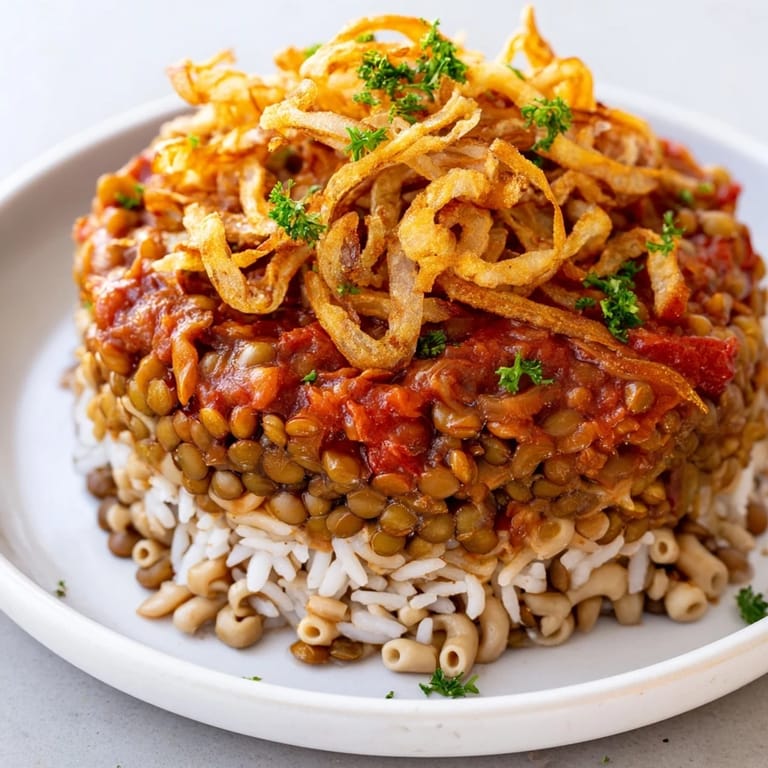
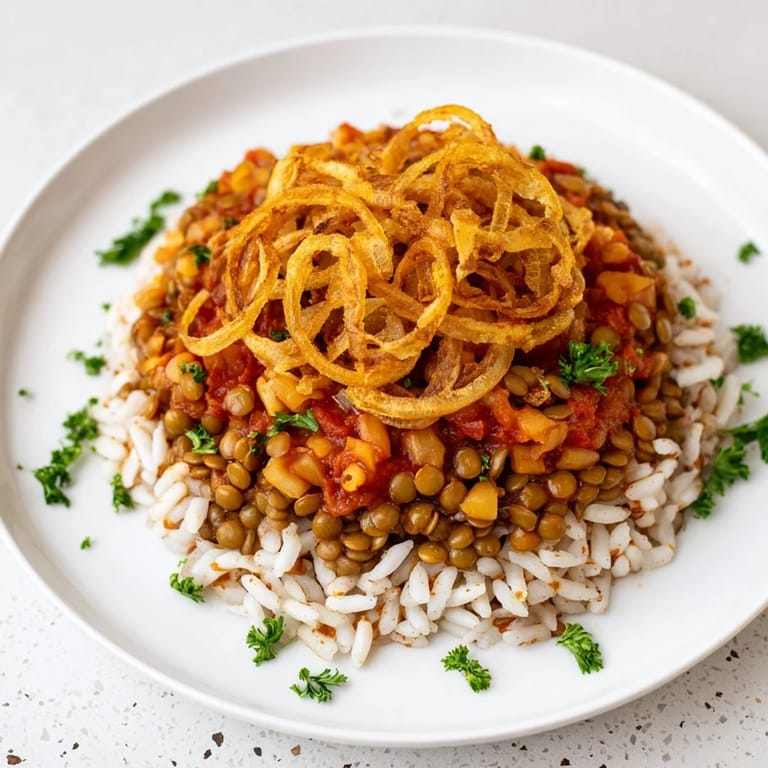
- Start with rice as your base, then lentils, then pasta, so each spoonful has a little of everything. Top with warm sauce, a handful of crispy onions, a drizzle of garlic vinegar, and fresh parsley if you have it.
 Save
Save What strikes me most about koshari is how it proves that food doesn't need to be complicated to matter. It became a fixture on Egyptian streets because it solved a real problem: feeding people quickly, affordably, and deliciously. When I serve it now, I'm not just serving dinner—I'm serving a piece of something bigger than myself.
Why This Dish Works
Every component does its job: the rice and lentils anchor the plate with protein and fiber, the pasta adds a chewy familiarity, the sauce binds everything into one warm embrace, and the crispy onions remind you that sometimes the best contrast is the crispiest contrast. It's a lesson in balance that goes beyond cooking—nothing dominates, everything supports. You can taste why street vendors in Cairo can pile these into paper cones all day and still have a line of hungry people waiting for their turn.
Making It Your Own
The beauty of koshari is that it's endlessly adjustable without losing its soul. If you want it spicier, add more chili flakes or use hot sauce instead of garlic vinegar. If you prefer softer textures, cook everything a few minutes longer. Some people swap in orzo or vermicelli for the macaroni, some use vegetable broth instead of water for extra depth, and some load theirs with extra sauce because they love the wet, saucy version rather than the drier type.
The Right Way to Serve It
Koshari is best eaten while everything is still warm—the rice and lentils steaming, the sauce coating everything in glossy richness, the onions still snapping between your teeth. Serve it in individual bowls where people can see the layers, or pile it on a platter and let everyone build their own ratio of rice to sauce to onions. Set out extra sauce and vinegar on the side because people always want more than you think, and that's the whole point of eating something this good.
- Have everything cooked and ready before you start assembling, so nothing cools down while you're prepping the bowls.
- If you're making this ahead, store the components separately and assemble just before eating so the textures stay distinct.
- Leftover koshari reheats beautifully in a pot with a splash of water to refresh it, though the onions won't be as crispy the next day.
 Save
Save This is the kind of dish that reminds you why cooking matters—not because it's fancy or difficult, but because it brings people together with something warm and honest. Make it once, and you'll understand why it became an institution on the streets of Cairo.
Recipe FAQ
- → What types of lentils work best for this dish?
Brown or green lentils are ideal as they hold their shape well during cooking and provide a hearty texture.
- → Can I use different pasta shapes?
Small elbow macaroni or ditalini pasta are traditional, but orzo or vermicelli can be substituted for a similar texture.
- → How do I achieve crispy fried onions?
Coat thinly sliced onions with flour and salt, then fry in hot vegetable oil until golden and crisp, draining well on paper towels.
- → Is there a way to add extra flavor to the grains?
Cooking rice or lentils in vegetable broth instead of water enhances the depth of flavor in the dish.
- → How can the spiced tomato sauce be adjusted?
Adjust the amount of chili flakes for heat, and balance spices like cumin and coriander to suit preferred tastes.
- → What is garlic vinegar and how is it used?
Garlic vinegar is a mix of vinegar, minced garlic, and chili flakes left to infuse; it's drizzled on top to add a tangy brightness.