 Save
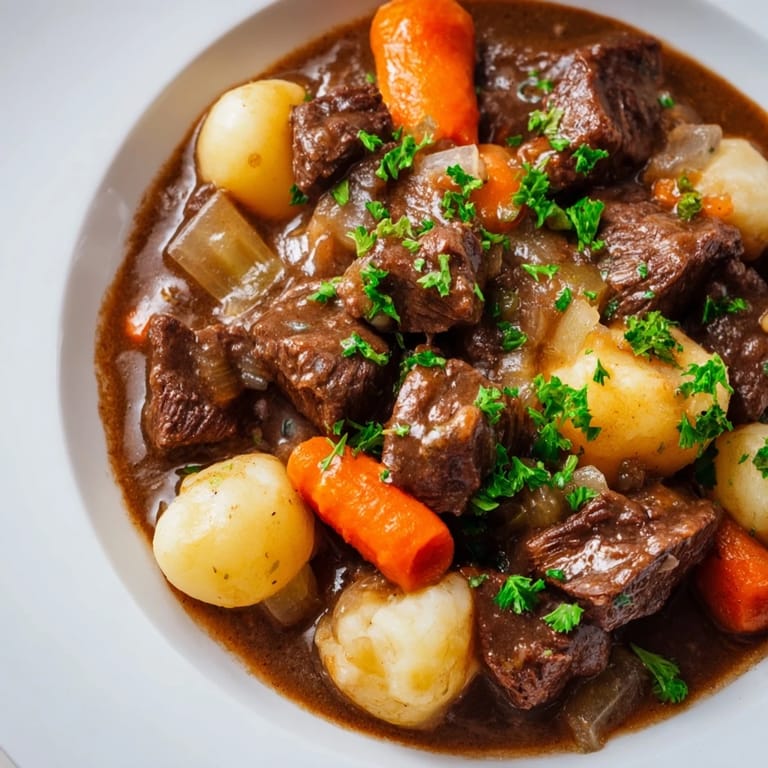
Save My uncle's kitchen in Dublin always smelled like this stew on cold Sundays—that deep, beef-and-Guinness aroma that pulled everyone inside no matter what we were doing. I'd watch him brown the meat in a massive pot, listening to that sizzle and pop, and somehow I knew this wasn't just dinner; it was a ritual. Years later, I finally asked him for the recipe, and what struck me wasn't the fancy techniques—it was how simple it all was, how the long, slow cooking did all the real work while we sat around talking.
I made this for my partner during the first real cold snap of winter, and I remember him coming home, kicking off his boots by the door, and just stopping in the kitchen with this look on his face. He didn't say anything at first—just breathed in deeply. That's when I knew the stew was already doing its job before he even picked up a spoon.
Ingredients
- Beef chuck (1.5 kg): This cut has just enough marbling and connective tissue to become incredibly tender and flavorful after slow cooking—avoid lean cuts that dry out.
- Potatoes (4 large): Cut them into chunks, not too small or they'll dissolve; they thicken the broth naturally as they cook.
- Carrots (4 large): Slice them thick enough to hold their shape through two hours of simmering.
- Onions and celery (2 large onions, 2 stalks): These are your flavor foundation—the onions caramelize slightly and add sweetness while celery brings subtle depth.
- Garlic (3 cloves): Mince it fine so it distributes evenly and softens into the broth.
- Beef stock (1.2 liters): Use good quality stock; it's the backbone of this stew and worth seeking out.
- Guinness (330 ml, optional): The beer adds a subtle bitterness and richness—don't skip it if you can, but use gluten-free if needed.
- Tomato paste (2 tbsp): This concentrated umami deepens the savory notes without adding liquid.
- Worcestershire sauce (2 tbsp): Essential for that complex, slightly tangy edge; check labels for gluten-free versions.
- Bay leaves, thyme, and rosemary: Bay leaves add formality, thyme brings earthiness, and rosemary connects it all—don't skip the dried herbs.
- Vegetable oil (3 tbsp): Use neutral oil with a high smoke point for searing the meat properly.
- Fresh parsley: The bright green garnish isn't just decoration; it cuts through the richness at the very end.
Tired of Takeout? 🥡
Get 10 meals you can make faster than delivery arrives. Seriously.
One email. No spam. Unsubscribe anytime.
Instructions
- Dry and season the beef:
- Pat each cube completely dry with paper towels—moisture prevents browning. Season generously with salt and pepper; this is your only chance to season the meat directly.
- Sear the beef in batches:
- Heat oil until it shimmers, then add beef without crowding the pot; you want a dark brown crust on each side, about 3 minutes per batch. Transfer to a plate and don't worry about cooking it through—the stew will finish that job.
- Build your aromatic base:
- In the same pot with all those brown crusty bits, add onions and celery and let them soften for about 5 minutes, stirring occasionally. Add garlic and cook just until fragrant, about a minute—garlic burns easily, so don't walk away.
- Add tomato paste:
- Stir it in and let it cook for a minute; this caramelizes it slightly and mellows any sharpness.
- Deglaze with Guinness:
- Pour in the beer (if using) and scrape up all those browned bits stuck to the bottom—that's pure flavor. Let it bubble gently for about 2 minutes.
- Combine everything:
- Return beef to the pot, add carrots, potatoes, bay leaves, thyme, rosemary, beef stock, and Worcestershire sauce. Stir everything together so the vegetables are mostly submerged.
- Simmer low and slow:
- Bring to a gentle boil, then reduce heat to low, cover, and let it bubble softly for 2 to 2.5 hours. Stir occasionally so nothing sticks to the bottom. The beef is ready when a fork slides through it easily.
- Finish and taste:
- Fish out the bay leaves, then taste carefully. Adjust salt, pepper, or Worcestershire to your preference—the flavors should feel balanced and deep, not one-note.
- Serve with warmth:
- Ladle into bowls, finish with a sprinkle of fresh parsley, and serve hot with crusty bread or over creamy mashed potatoes.
 Save
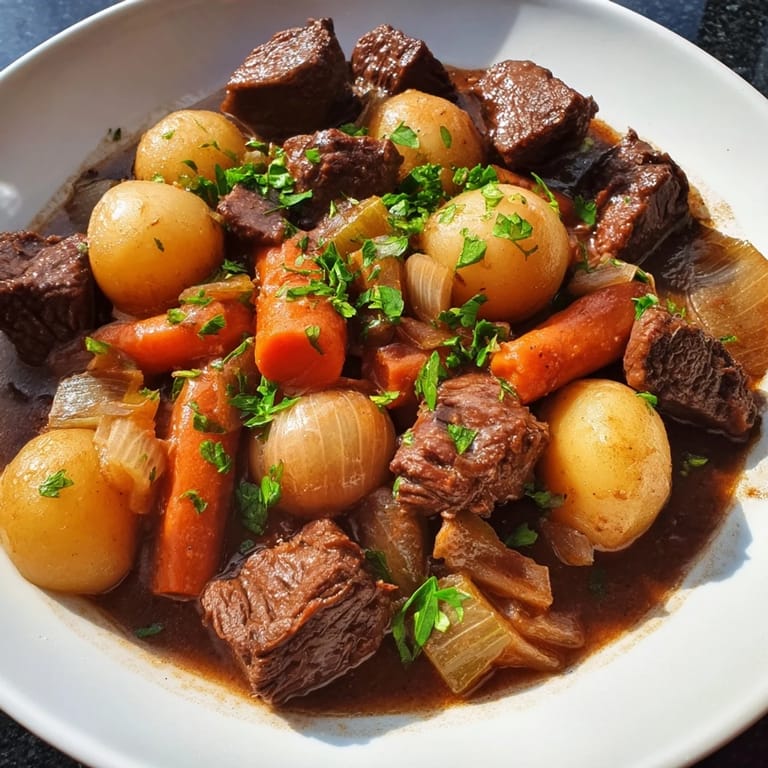
Save I'll never forget my nephew, who usually picks at everything, asking for seconds of this stew and then thirds. His mom looked at me in disbelief across the table. That's when I realized this dish does something most food doesn't—it brings people together without apology, without trying too hard.
How to Make It Your Own
This stew is forgiving enough to adapt based on what's in your kitchen. I've made it with lamb instead of beef on autumn evenings, and it tastes like a completely different (but equally wonderful) dish. Root vegetables like parsnips or rutabaga work beautifully alongside or instead of carrots. Some friends skip the Guinness entirely and use red wine, which shifts the flavor toward earthier notes. The structure stays the same—the slow cooking and deep browning are what matter most.
Storage and Reheating
This stew improves after a day or two in the fridge as the flavors deepen and marry together. Store it in an airtight container for up to four days, or freeze it for up to three months—it thaws beautifully. Reheat gently on the stovetop over medium-low heat, stirring occasionally and adding a splash of water or stock if it's gotten too thick.
Pairing and Serving Ideas
Crusty bread is the obvious choice—use it to soak up the broth left in your bowl. Creamy mashed potatoes turn this into a completely different kind of comfort. Some evenings I'll serve it over egg noodles for a richer, almost beef-stroganoff feeling. A simple green salad on the side cuts through the richness perfectly, and a cold glass of something light makes the whole meal feel balanced.
- Don't forget fresh parsley on top—it adds a brightness that surprises you.
- Leftover stew makes an incredible pie filling with pastry on top.
- A spoonful of sour cream or Irish cream stirred in at the end adds unexpected richness.
 Save
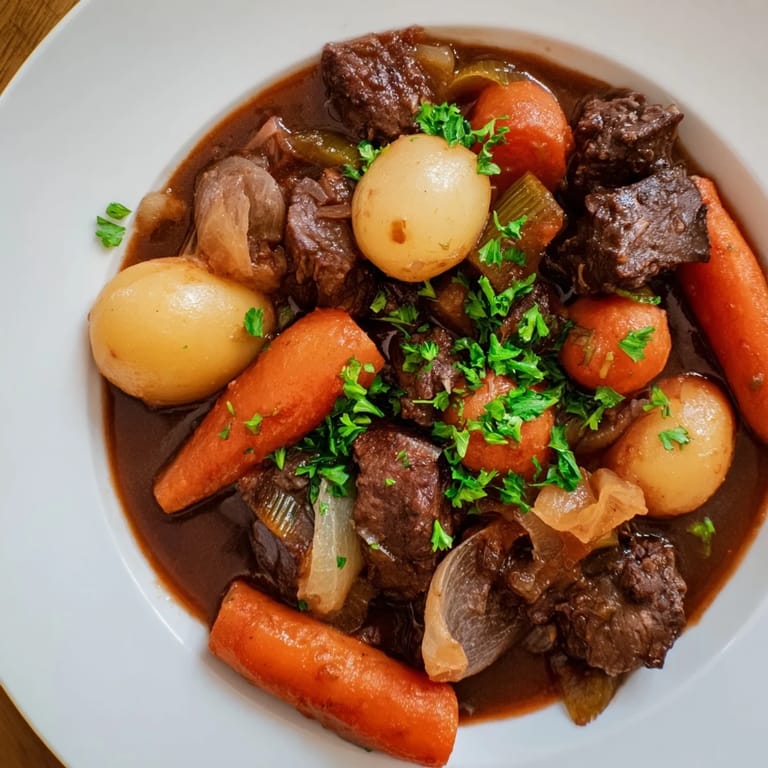
Save This stew is proof that the best cooking doesn't require fancy techniques or complicated steps. It just requires time, good ingredients, and the willingness to let something simmer while you sit down and rest.
Recipe FAQ
- → What cut of beef works best for this dish?
Beef chuck cut into cubes is ideal as it becomes tender during slow cooking and adds rich flavor.
- → Can the Guinness be omitted?
Yes, you can omit Guinness for a gluten-free option or substitute it with a gluten-free dark beer or additional beef stock.
- → How long should the stew simmer?
Simmer the stew covered for 2 to 2.5 hours until the beef is fork-tender and the vegetables are soft.
- → Can I use lamb instead of beef?
Replacing beef with lamb offers a traditional Irish variation with a distinct and rich flavor.
- → What sides pair well with this dish?
Serve alongside crusty bread, mashed potatoes, or simple green vegetables for a complete meal.
- → How do I thicken the stew broth?
Mash a few cooked potato pieces into the broth for a naturally thicker consistency without additional thickeners.