 Save
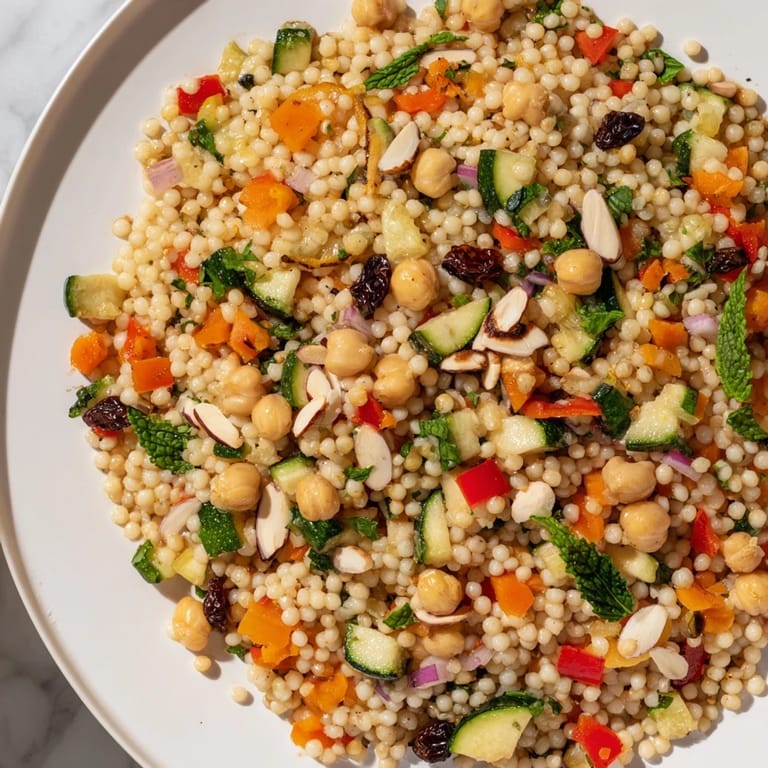
Save My neighbor brought this to a summer potluck, and I watched people circle back for thirds without hesitation. She caught me sneaking another spoonful straight from the bowl and laughed, saying it was just couscous with roasted vegetables, but something about the way the lemon brightness cut through the warm spices made it impossible to stop. I pestered her for the recipe that evening, scribbling notes on the back of a grocery receipt while she described how she'd learned to roast vegetables until their edges turned golden and sweet. That night, I made it for myself, and by the time it cooled to room temperature, I understood why it had disappeared so quickly from her table.
I made this for a picnic last spring, packing it in a glass container alongside some crumbly feta I'd picked up from the market. My friend opened it on a blanket under a tree, and the smell of toasted cumin and fresh mint rising up made the whole moment feel a bit more special than a casual lunch had any right to. We ate it with our fingers, and she mentioned how rarely she finds salads that feel substantial without being heavy—this one sat just right.
Ingredients
- Couscous: One cup of this tiny pasta-like grain swells into fluffy clouds when steamed in broth, absorbing every bit of flavor around it.
- Vegetable broth: Use something with real depth; the couscous will taste like whatever liquid you choose, so it's worth the small effort to pick a good one.
- Olive oil: You'll use it three times here—to roast vegetables, to fluff the couscous, and in the dressing—so grab something you actually enjoy.
- Zucchini, red bell pepper, carrot, and red onion: These four vegetables roast into something entirely different from their raw selves, developing sweetness and color that transform the whole salad.
- Cumin and coriander: These two spices are the reason people ask for the recipe; they create that warm, slightly earthy undertone that makes this feel Moroccan.
- Smoked paprika: Just a quarter teaspoon adds a whisper of smoke and depth without overwhelming anything.
- Chickpeas: Canned is fine here; they add protein and a creamy texture that makes this feel more like a complete meal.
- Raisins: The sweetness plays off the lemon and herbs in a way that feels inevitable once you taste it.
- Fresh parsley and mint: These must be fresh; dried herbs won't give you that bright, almost shocking green flavor that wakes everything up.
- Almonds: Toast them yourself if you can, and slivered works better than sliced because they distribute throughout instead of sinking.
- Lemon juice: Use a real lemon, squeeze it yourself, and taste as you go because acidity varies and you want yours just right.
- Garlic: One small clove is enough; the dressing shouldn't taste garlicky, just kissed by it.
- Honey or maple syrup: A small drizzle rounds out the dressing, balancing the lemon's punch with something warm and sweet.
Tired of Takeout? 🥡
Get 10 meals you can make faster than delivery arrives. Seriously.
One email. No spam. Unsubscribe anytime.
Instructions
- Heat your oven and prep:
- Crank the oven to 425°F and line a baking sheet with parchment so your vegetables won't stick. You want it hot enough that things will actually caramelize, not just soften.
- Dress the vegetables:
- Toss your diced zucchini, pepper, carrot, and onion with olive oil and those warm spices—cumin, coriander, paprika. The smell alone tells you something good is about to happen. Spread everything in a single layer so each piece gets room to brown.
- Let them roast:
- Twenty to twenty-five minutes, stirring halfway through, until the edges turn golden and some pieces are almost caramelized. Don't skip the stirring; it makes the difference between cooked and transformed.
- Start the couscous:
- While vegetables roast, put dry couscous in a bowl with a tablespoon of olive oil and pour over the boiling broth. Cover it with a plate and walk away for exactly five minutes—this matters more than it sounds. The steam does all the work.
- Fluff with intention:
- Use a fork to separate the grains gently, breaking up any clumps. You want fluffy, distinct grains, not a paste.
- Build the dressing:
- Whisk together lemon juice, olive oil, minced garlic, and a tiny bit of honey in a small bowl. Taste it before it meets the salad; it should be bright and balanced, with no single flavor dominating.
- Bring it all together:
- Once vegetables have cooled slightly, combine them with the couscous along with chickpeas, raisins, fresh herbs, and almonds. Pour the dressing over everything and toss gently—rough handling makes the couscous gummy. Taste and adjust salt and pepper to your preference.
- Chill or serve warm:
- This salad is forgiving; it's delicious at room temperature, and it's even better after spending time in the refrigerator, though it never tastes the same twice because the flavors keep settling and shifting.
 Save
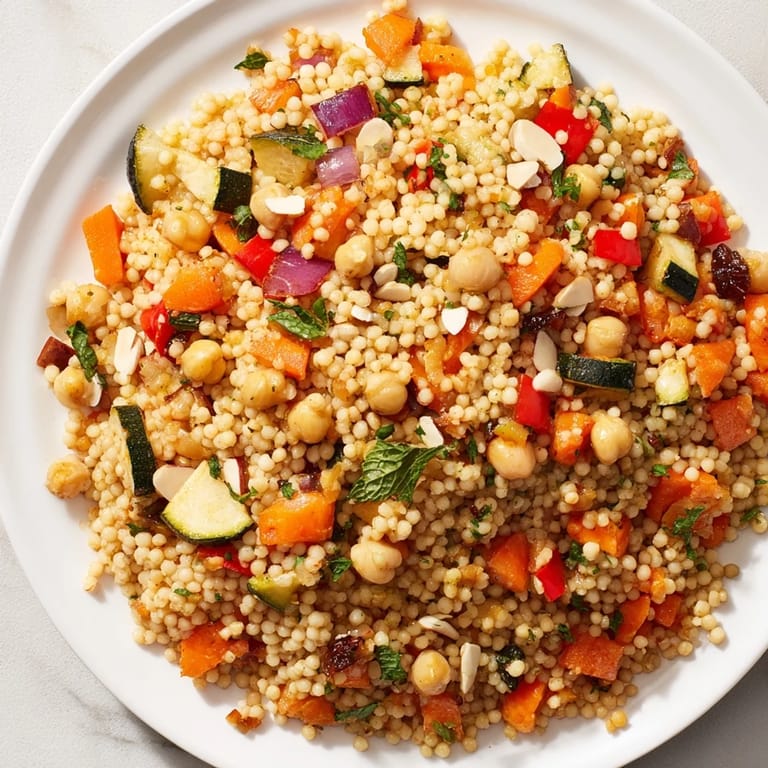
Save I brought this to a dinner party once, and someone who claims to hate couscous came back to the kitchen asking if there was more. She said it didn't taste like the dry, unfamiliar stuff she'd tried before—it tasted alive, like someone had actually cooked it with thought. That's when I realized this recipe works because nothing is phoned in; every ingredient is there for a reason, and every step matters.
How to Make It Your Own
The skeleton of this salad is solid, but the beauty is how easy it is to shift based on what's in your kitchen or what you're craving. I've swapped the red pepper for yellow, used Brussels sprouts instead of zucchini when the seasons changed, and once threw in pomegranate arils instead of raisins because they were on sale. The spice blend can be adjusted too—if you like heat, add a pinch of cayenne; if you want earthiness, bump up the coriander. The dressing is where you can really play; some days I add a touch of Dijon mustard, other times a squeeze of orange juice instead of some of the lemon. The point is that couscous salad is flexible enough to eat what's in your fridge while staying true to itself.
Storage and Keeping It Fresh
This salad actually improves after a day in the refrigerator because the couscous keeps absorbing the dressing, becoming more flavorful as it sits. Store it in an airtight container, and it'll keep for about three days without getting weird. If you're making it ahead for an event, I'd suggest holding off on the fresh herbs and almonds until right before serving—they stay brighter that way, and the almonds won't get soggy. If you do end up with leftovers that have softened herbs, just toss in some fresh ones and it tastes like a brand new salad.
Serving Ideas and Pairings
On its own, this is a complete, satisfying lunch, but I've learned it works even better as part of a larger spread. Serve it alongside grilled chicken or lamb if you want protein, or nestle it into a mezze platter with hummus, olives, and warm flatbread. It's equally at home at a summer picnic, a potluck, or a weeknight dinner when you want something that feels special without requiring much effort. I've even spooned it into hollowed-out tomatoes for a fun presentation, though the traditional bowl approach is usually the winner.
- Pair it with grilled lamb kebabs for a more substantial meal that still feels light.
- Crumble feta or goat cheese on top if you want richness without overthinking it.
- This salad makes fantastic leftovers, so making extra on Sunday means stress-free lunches all week.
 Save
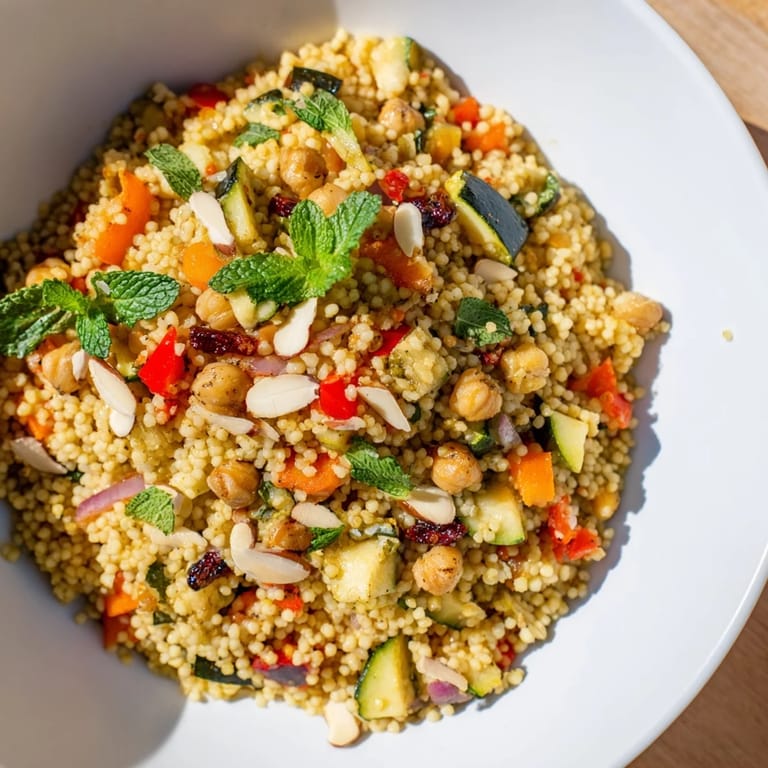
Save This salad has become my answer to the question of what to bring to gatherings where the menu is uncertain—it works with almost anything, it's hard to mess up, and it has a way of disappearing faster than you'd expect. Every time I make it, I remember that neighbor and her potluck, and how a simple combination of roasted vegetables and fluffy couscous turned into something people still ask me about.
Recipe FAQ
- → Can I prepare the couscous without vegetable broth?
Yes, water can be used instead but vegetable broth enhances flavor and adds depth to the couscous.
- → What are good substitutes for raisins in this dish?
Dried apricots or cranberries work well, adding a similar sweet and chewy texture.
- → How do I ensure the roasted vegetables are perfectly tender?
Roast them at 425°F (220°C) for 20-25 minutes, stirring halfway to achieve golden, tender pieces.
- → Is it possible to make this dish vegan-friendly?
Simply swap honey for maple syrup in the dressing to keep it fully plant-based.
- → Can toasted almonds be omitted or replaced?
Yes, almonds are optional and can be omitted or replaced with other nuts like pistachios or walnuts for crunch.