 Save
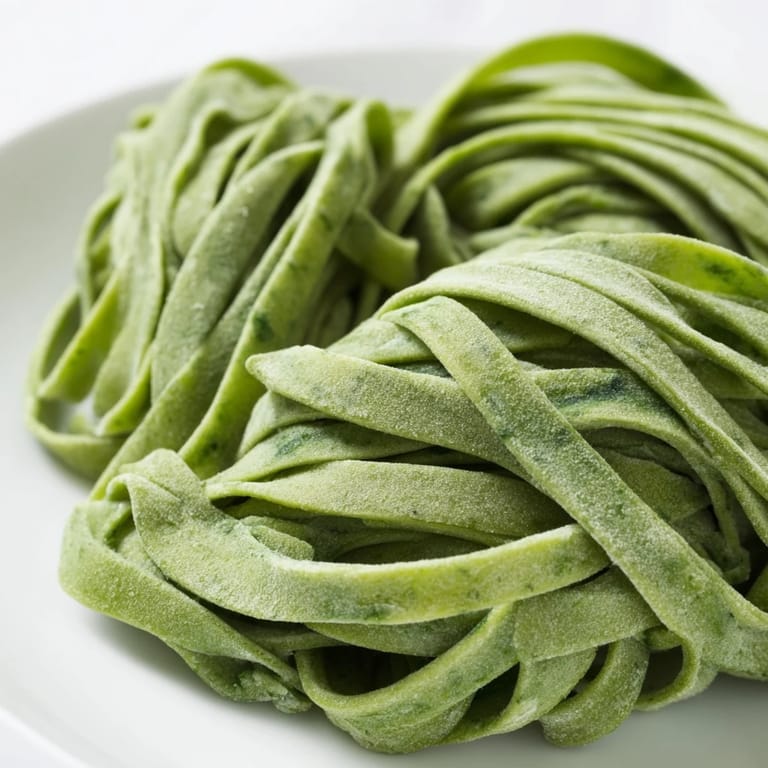
Save The kitchen was a mess of flour clouds and green streaks when I finally got the spinach ratio right. I'd been trying to recreate the emerald ribbons I saw tumbling from a hand-crank machine in a tiny Tuscan kitchen, but my first three attempts came out gray and gummy. Then I learned to squeeze the spinach like my life depended on it, wringing every last drop of water into the sink until my knuckles ached. That's when the dough turned silky, bright, and exactly what I'd been chasing.
I made this the first time my sister visited after moving across the country. We stood shoulder to shoulder at the counter, kneading in silence, and she said the smell of flour and green reminded her of something she couldn't name. Later, twirling fettuccine onto her fork, she admitted it felt like home even though we'd never made pasta growing up. Some recipes do that.
Ingredients
- Fresh baby spinach: Choose tender leaves with no bruising, they blanch faster and puree smoother than mature bunches, and the flavor stays mild and sweet.
- Large eggs: They bind everything and add richness, but make sure they're at room temperature so the dough comes together without fighting you.
- Italian 00 flour: This fine, soft flour creates the silky texture that makes fresh pasta worth the effort, though all-purpose works in a pinch if you knead a bit longer.
- Semolina flour: A small handful adds bite and helps the dough hold its shape during rolling, plus it gives you that satisfying chew.
- Fine sea salt: Just enough to wake up the flavor without competing with whatever sauce you plan to use.
Tired of Takeout? 🥡
Get 10 meals you can make faster than delivery arrives. Seriously.
One email. No spam. Unsubscribe anytime.
Instructions
- Blanch and Drain the Spinach:
- Drop the spinach into boiling water and count to thirty while it collapses into a dark tangle. Shock it under cold water immediately, then squeeze it in your fists over the sink until you think you're done, then squeeze twice more.
- Puree Until Smooth:
- Chop the spinach fine with a knife or blitz it in a food processor until it looks like thick green paint. Any chunks will show up as streaks in your dough, which some people love and some don't.
- Form the Flour Well:
- Pile your flours and salt on a clean counter and use your fingers to carve out a wide crater in the center. Make the walls thick enough that they won't collapse when you add the wet ingredients.
- Combine Wet and Dry:
- Crack the eggs into the well, add the spinach puree, and start whisking with a fork in small circles, pulling in flour from the edges. It feels chaotic at first, but trust the process and keep your other hand ready to catch any breakout.
- Knead the Dough:
- Once it's shaggy, use your palms to push, fold, and turn the dough for eight to ten minutes until it feels like a yoga mat, smooth and springy. If it sticks, dust with flour; if it cracks, wet your hands and keep going.
- Rest and Relax:
- Wrap the dough tightly in plastic and let it sit on the counter for thirty minutes. This is when the gluten relaxes and rolling becomes possible instead of a wrestling match.
- Roll and Shape:
- Feed the dough through a pasta machine starting at the widest setting, folding and repeating until it's smooth, then work down to your preferred thickness. Or use a rolling pin and all the arm strength you have.
- Cook Immediately or Store:
- Fresh pasta needs only one to two minutes in boiling salted water, just until it floats and loses the raw flour taste. Pull it fast or it turns to mush.
 Save
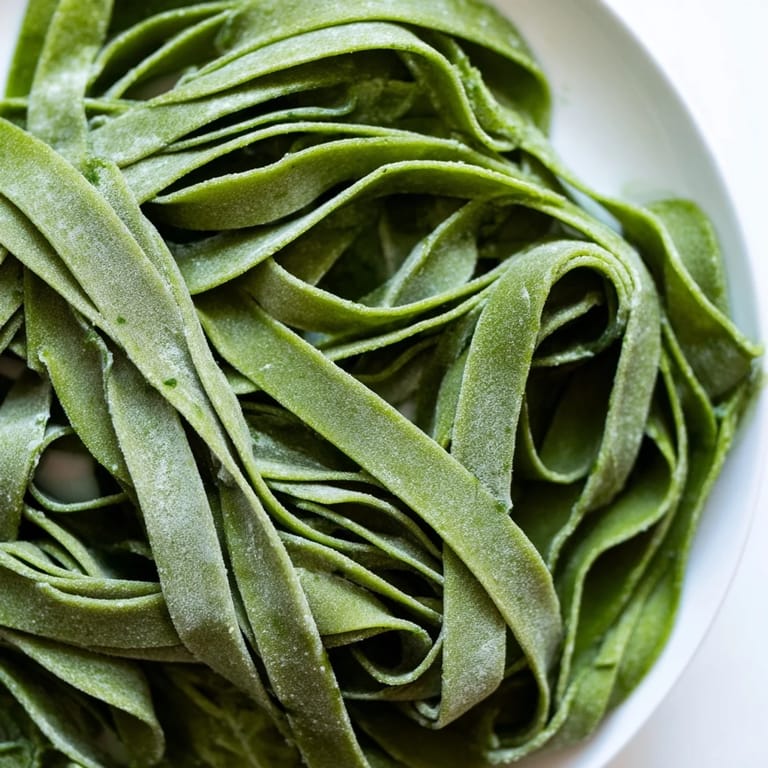
Save The first time I served this to someone who said they didn't like spinach, they asked for seconds before I could confess what made it green. It wasn't about hiding vegetables, it was about the way the color caught the light on the plate and made something ordinary feel worth celebrating.
How to Store and Freeze
If you're not cooking right away, dust the rolled sheets with semolina and layer them between parchment paper, then slide the stack into a freezer bag. They'll keep for two months, and you can drop them straight into boiling water from frozen. Unrolled dough wrapped tight in plastic holds in the fridge for a day, but any longer and the spinach starts to oxidize and dull the color.
Shaping Ideas and Variations
I've used this dough for wide pappardelle with brown butter, tiny agnolotti stuffed with ricotta, and even lasagna sheets that didn't need par-boiling. One night I cut it into messy squares and called it maltagliati, which is just a fancy word for scraps, and it was perfect in broth. If you want deeper flavor, try adding a pinch of nutmeg to the flour or swapping in whole wheat for half the 00.
Troubleshooting and Adjustments
Dough too sticky means wet spinach or humid weather, so add flour a tablespoon at a time while kneading. Dough cracking and dry means you squeezed too hard or your eggs were small, fix it with a few drops of water on your hands. If the color looks gray instead of green, your spinach might have been old or you didn't blanch it fast enough.
- Use a kitchen scale for the most consistent results, especially with flour.
- Keep a small bowl of water nearby while kneading so you can adjust hydration without overthinking it.
- Don't skip the semolina dusting when storing, it prevents sticking better than regular flour.
 Save
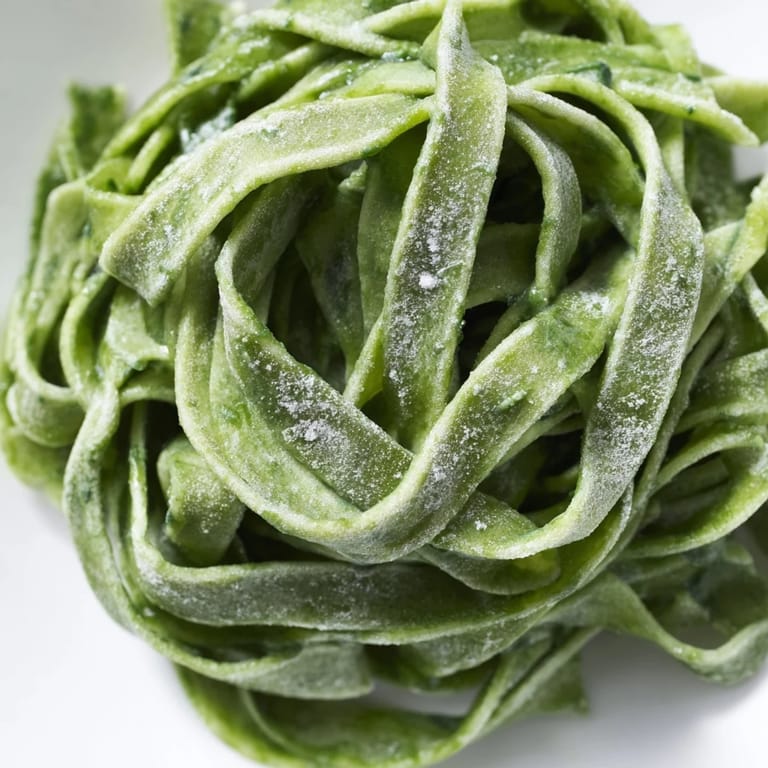
Save There's something about making pasta from scratch that turns cooking into conversation, even when you're alone. This dough has become my excuse to slow down, to remember that some things are worth the mess.
Recipe FAQ
- → How does spinach affect the dough?
Spinach adds a vibrant green hue and subtle flavor, enhancing the dough’s nutrition without overpowering its texture.
- → Can I use whole wheat flour instead of 00 flour?
Yes, substituting part of the 00 flour with whole wheat offers a nuttier flavor and denser texture, though dough elasticity may vary.
- → What’s the best way to prepare spinach for the dough?
Blanch spinach briefly, drain well, then puree or finely chop to evenly distribute moisture and color throughout the dough.
- → How long should the dough rest before rolling?
Resting for about 30 minutes at room temperature allows gluten to relax, making rolling smoother and preventing shrinkage.
- → How do I know when the fresh pasta is cooked?
Boil fresh pasta in salted water for 1–2 minutes until tender but firm to the bite (al dente).
- → Can I prepare the dough in advance?
Yes, wrap the dough tightly and refrigerate for up to 24 hours to develop flavor and texture before rolling out.