 Save
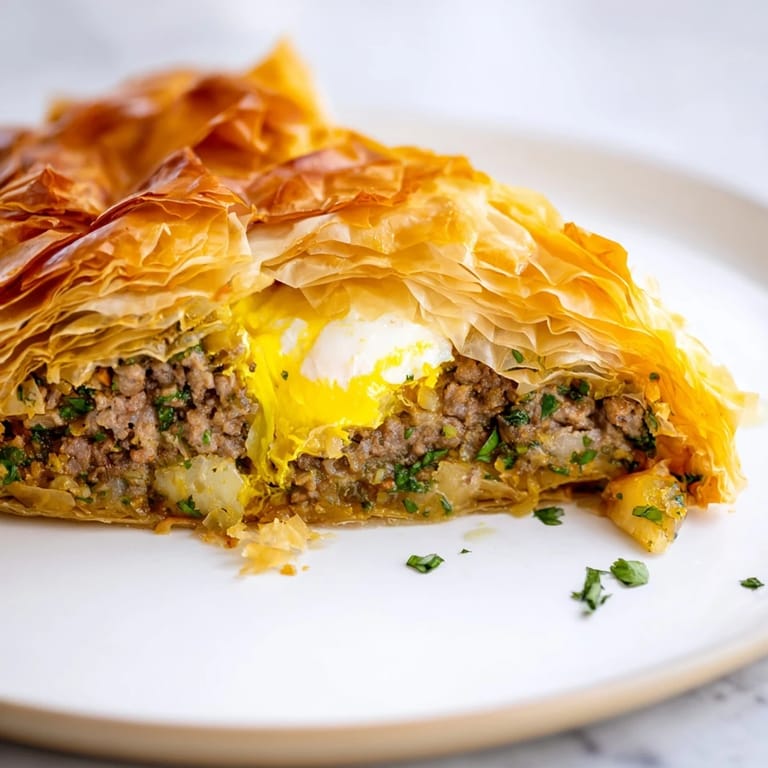
Save The first time I bit into a brik, I was standing at a small stall in the Medina of Tunis, my fingers already sticky with oil, watching the vendor work with such practiced ease that the phyllo seemed to fold itself into perfect triangles. There's something almost magical about that moment when you crack an egg into hot, crispy pastry and feel it begin to set—a combination so simple it shouldn't work, yet it does, every single time. I kept going back to that vendor for weeks before I finally asked for the secret, only to discover it wasn't a secret at all, just patience and really good technique.
I made these for friends one evening without warning—just pulled out phyllo and ground lamb and started frying—and the smell alone brought everyone to the kitchen. Someone asked if this was from a restaurant order, and when I said I'd just made them, the disbelief on their faces was worth every greasy finger and tiny phyllo tear. That's when I knew this recipe had to be part of my regular rotation.
Ingredients
- Ground beef or lamb: Use lamb if you can find it—it carries the North African spices with more character, though beef works beautifully too and often costs less.
- Onion, finely chopped: This needs to be small enough to cook down completely and disappear into the filling, adding sweetness and depth without texture.
- Fresh parsley: Add it only at the end so it stays bright and herbaceous; cooked parsley turns dull and loses its edge.
- Ground cumin and coriander: Toast these if you have whole spices—it takes 30 seconds in a dry pan and changes everything.
- Phyllo pastry sheets: Handle these gently and keep them covered with a damp cloth while you work; they dry out in seconds and become impossible to fold.
- Eggs: Room temperature eggs are gentler when you crack them into the hot filling and less likely to crack from temperature shock.
- Gruyère or mozzarella cheese: Optional but worthwhile—it adds a salty, creamy moment that catches in the crispy layers.
- Oil for frying: Use something neutral with a high smoke point; sunflower oil is traditional and reliable.
Tired of Takeout? 🥡
Get 10 meals you can make faster than delivery arrives. Seriously.
One email. No spam. Unsubscribe anytime.
Instructions
- Build your flavor base:
- Sauté the onion in a skillet over medium heat until it's soft and starting to turn golden—this takes about 4 minutes and fills the kitchen with the most welcoming smell. Add the ground meat, breaking it into small pieces as it cooks, then sprinkle in the cumin, coriander, salt, and pepper, stirring until everything is well combined and the meat is cooked through (about 5–6 minutes total).
- Finish and cool the filling:
- Stir in the fresh parsley off heat, then set the skillet aside and let everything cool for a few minutes—you don't want the meat so hot it cooks the egg white before the pastry has a chance to crisp. This is also when you can taste and adjust the seasoning if needed.
- Layer and fill the pastry:
- Place one phyllo sheet on a clean work surface and, if it feels thin enough to tear easily, layer a second one on top (no oil needed between layers). Spoon 2–3 tablespoons of the meat filling into the center of the sheet, leaving space around the edges for folding.
- Cradle the egg:
- Make a shallow well in the meat filling with the back of a spoon, then carefully crack one egg into it—the yolk should sit mostly on top of the meat. Sprinkle 1 tablespoon of cheese over the egg if you're using it.
- Fold into a package:
- Fold the phyllo over the filling to create a triangle, rectangle, or however it naturally wants to fold, sealing the edges with a tiny brush of water (or just wet your fingertip and dab the edges). The shape doesn't matter as much as making sure the egg stays tucked inside.
- Fry until golden:
- Heat 3–4 centimeters of oil in a large frying pan over medium-high heat—it should shimmer and ripple but not smoke. Gently slide each pastry into the hot oil and fry for 2–3 minutes per side, turning once with a slotted spoon, until the phyllo is deep golden brown and crispy all over.
- Drain and serve:
- Lift each brik out with the slotted spoon and set it on paper towels to drain for just a minute. Serve immediately while the outside is still shatteringly crisp and the egg inside is warm and soft.
 Save
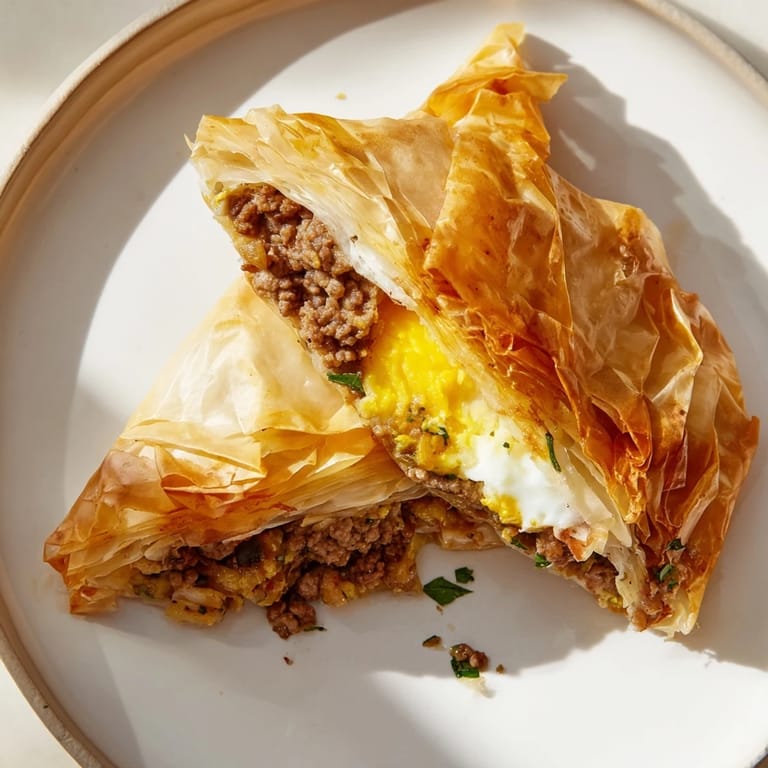
Save There's a particular kind of joy in biting through that shattered, crispy exterior and finding the egg yolk still warm and soft inside—it's the kind of simple satisfaction that makes you want to make them again immediately. I've served these to skeptics who thought phyllo-wrapped egg sounded odd, and watched their faces change with that first bite.
The Art of Working with Phyllo
Phyllo is honestly more forgiving than its reputation suggests, but it does ask for a light touch and a bit of attention. Keep your unused sheets covered with a damp kitchen towel—and I mean damp, not soaking—because even 30 seconds of air exposure can make them brittle and prone to cracking. If you do tear one, don't throw it away; phyllo tears are some of my best learning moments, and the patches disappear completely once everything is fried and golden.
Variations Worth Exploring
The beauty of brik is that it adapts to what you have on hand or what sounds good that day. I've made versions with tuna and capers for a lighter feel, and once tried a potato and harissa version that was unexpectedly satisfying. The structure stays the same—you're just swapping what goes inside—so once you've mastered the folding and frying, you can play endlessly.
Serving and Timing
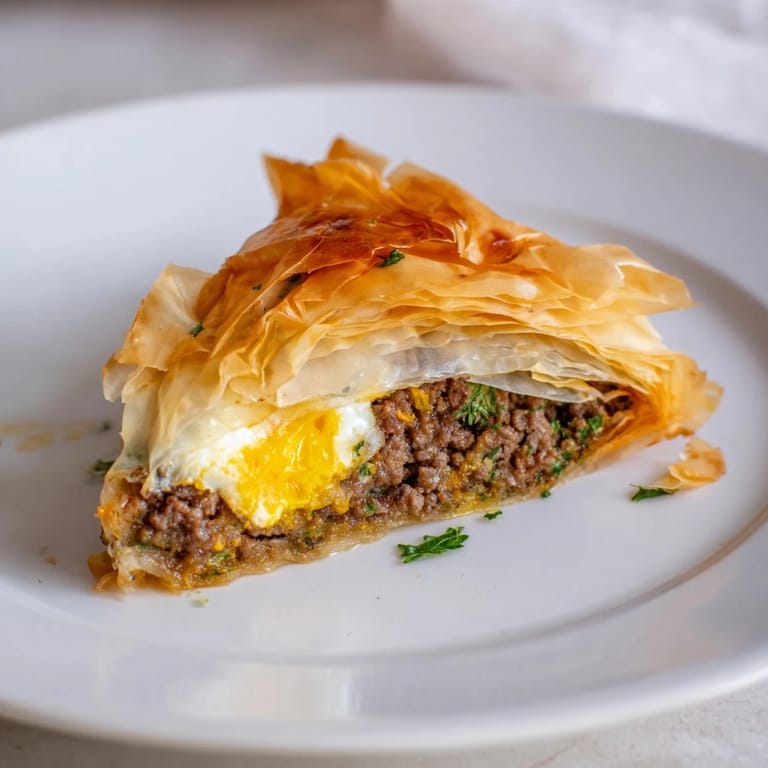
Brik is best eaten within minutes of frying, when the contrast between crispy pastry and warm filling is most dramatic. If you're making these for a group, fry them in batches and keep the finished ones loosely covered with foil in a warm oven while you finish the others.
- Serve with lemon wedges for squeezing over the top—the acidity cuts through the richness beautifully.
- A simple green salad on the side keeps things balanced and adds a cool, fresh counterpoint.
- If you want extra heat, mix a tiny pinch of harissa into the meat filling before cooking.
 Save
Save Once you've made brik, you'll find yourself reaching for it whenever you want something that feels both impressive and entirely doable. It's the kind of dish that reminds you why simple, good ingredients and technique matter so much.
Recipe FAQ
- → What type of meat is best for the filling?
Ground beef or lamb works well, offering a rich and savory flavor profile that complements the spices.
- → Can I substitute the egg for a different ingredient?
While the soft egg center is traditional, you may use alternatives like tuna or potatoes for variation.
- → How should the phyllo pastry be handled before cooking?
Phyllo sheets are fragile; stack two if very thin and handle gently to prevent tearing during assembly.
- → What oils are recommended for frying?
Sunflower or vegetable oil suits frying, providing a neutral taste and achieving crisp, golden pastry.
- → How long does it take to cook each pastry?
Fry each side for 2–3 minutes until the pastry is golden and crisp for the best texture.