 Save
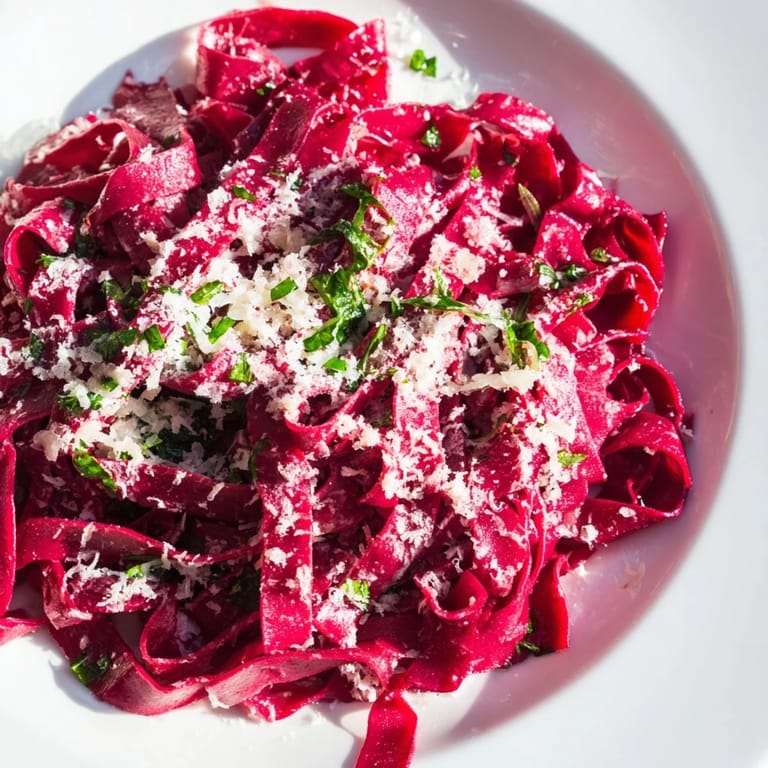
Save The first time I made beet noodles, I wasn't trying to be fancy—I just had a beautiful roasted beet sitting on my counter and wondered what would happen if I folded it into fresh pasta dough. My hands turned hot pink by the end, and my kitchen smelled like earthy sweetness mixed with flour dust. When the magenta strands hit boiling water, they held their color like magic, and I realized I'd stumbled onto something that felt both simple and special.
I made this for my sister's dinner party on a rainy October evening, nervous that the dough wouldn't cooperate or the color would fade during cooking. Instead, the pasta came out of the pot still vibrant, and watching her eyes light up as she twirled it onto her fork reminded me why I love cooking—it's those small moments when something homemade genuinely delights someone.
Ingredients
- 1 medium beet (about 180 g), trimmed and scrubbed: This is your color engine and natural sweetness—choose one with a thin skin so roasting and peeling feel effortless.
- 1 tablespoon olive oil (for roasting): A small amount prevents the beet from drying out and helps it caramelize slightly at the edges.
- Pinch of salt (for roasting): Brings out the beet's earthy notes without overpowering the delicate pasta flavor.
- 2 cups (250 g) all-purpose flour, plus extra for dusting: This is your foundation—the beet puree will add moisture, so you might need slightly less flour than usual.
- 2 large eggs: The binder that holds everything together and gives the dough its silky texture when kneaded properly.
- 1/2 teaspoon salt: Season the dough gently—taste as you go because the beet itself carries subtle flavor.
- 1/4 cup (60 g) roasted beet puree: This is where the magic lives—smooth, concentrated, and deeply colored puree transforms plain dough into something stunning.
- 2 tablespoons unsalted butter or olive oil (for serving): Let the pasta's earthiness shine by keeping the sauce minimal and clean.
- Fresh herbs like basil or parsley: Bright, green herbs create visual contrast and cut through the beet's sweetness with fresh notes.
- Grated Parmesan or pecorino cheese: A light dusting adds salt and umami without drowning out the delicate pasta flavor.
Tired of Takeout? 🥡
Get 10 meals you can make faster than delivery arrives. Seriously.
One email. No spam. Unsubscribe anytime.
Instructions
- Roast the beet until it yields:
- Wrap your trimmed beet in foil with a drizzle of olive oil and a pinch of salt, then slide it into a 400°F oven for 45 to 60 minutes. You'll know it's done when a fork slides through like butter—the beet should feel tender all the way to the center, not just soft on the outside.
- Cool and peel with patience:
- Let the beet rest until it's cool enough to handle, then rub the skin away under cool running water—it should slip off easily, and your fingers will turn pink in the process. If the skin clings stubbornly, the beet wasn't quite roasted long enough.
- Puree into silky smoothness:
- A food processor or blender transforms roasted beet into puree in seconds—push it through a fine sieve if you want it completely smooth, though a few tiny bits of beet fiber won't hurt the dough. Measure out 1/4 cup for your pasta and save any extra for soups or sauces.
- Create your flour well:
- Mound your flour on a clean counter and use your fingers to make a generous well in the center—this traditional method gives you control as you gradually incorporate flour without overworking the dough. Add your eggs, salt, and beet puree into the well like you're building a dam to hold the liquid ingredients.
- Coax the dough together:
- Using a fork, break the egg yolks and slowly drag flour from the inner walls of your well into the wet center, stirring gently so the mixture stays contained. Once everything is shaggy and loosely combined, use your hands to bring it all together into a rough ball.
- Knead until smooth and alive:
- For 8 to 10 minutes, push the dough away from you with the heel of your hand, fold it back over itself, rotate it, and repeat—the dough will transform from rough and sticky to smooth, elastic, and almost silky. If it's too wet, dust with flour a pinch at a time; if it's too dry, wet your hand and continue kneading.
- Let it rest and relax:
- Wrap your dough in plastic wrap and leave it on the counter for 30 minutes—this resting time lets the gluten relax and makes rolling out the dough infinitely easier. You'll feel the difference when you pick it up again; it will be less resistant and more cooperative.
- Roll, shape, and cut:
- Divide the dough into four pieces so each portion stays manageable, then roll each piece through a pasta machine from thickness setting 1 down to setting 6, or use a rolling pin to reach about 1 to 2 mm thick. Cut into your preferred shape—tagliatelle, fettuccine, pappardelle—and dust lightly with flour so the strands don't stick.
- Cook until it bends with a whisper:
- Bring a large pot of salted water to a rolling boil, then drop in your fresh pasta—it will sink, then float back to the surface within seconds. Cook for just 2 to 3 minutes total, testing a strand for doneness; fresh pasta cooks faster than dried, and you want it tender but still with a gentle resistance when you bite it.
- Finish with simplicity:
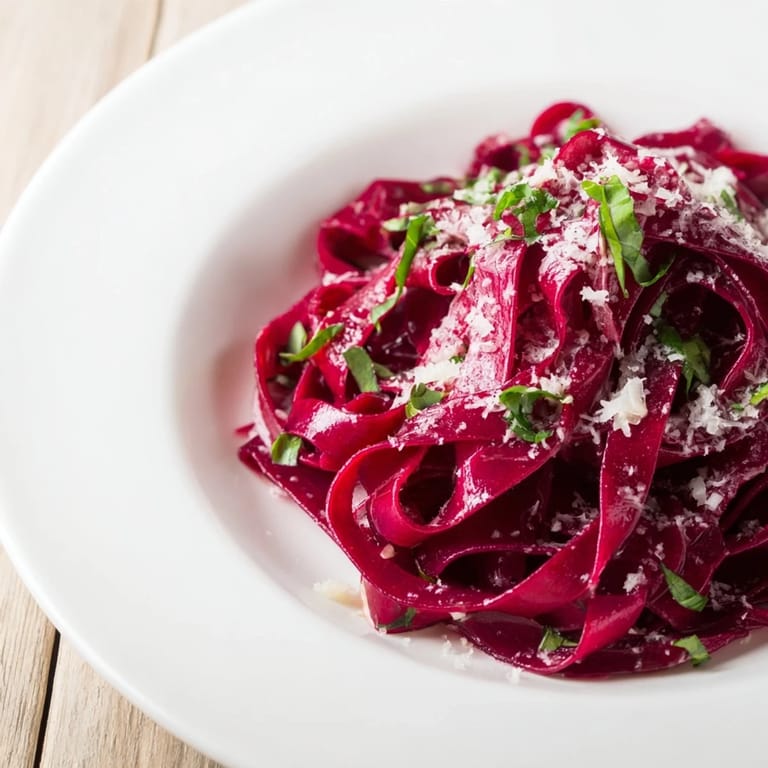
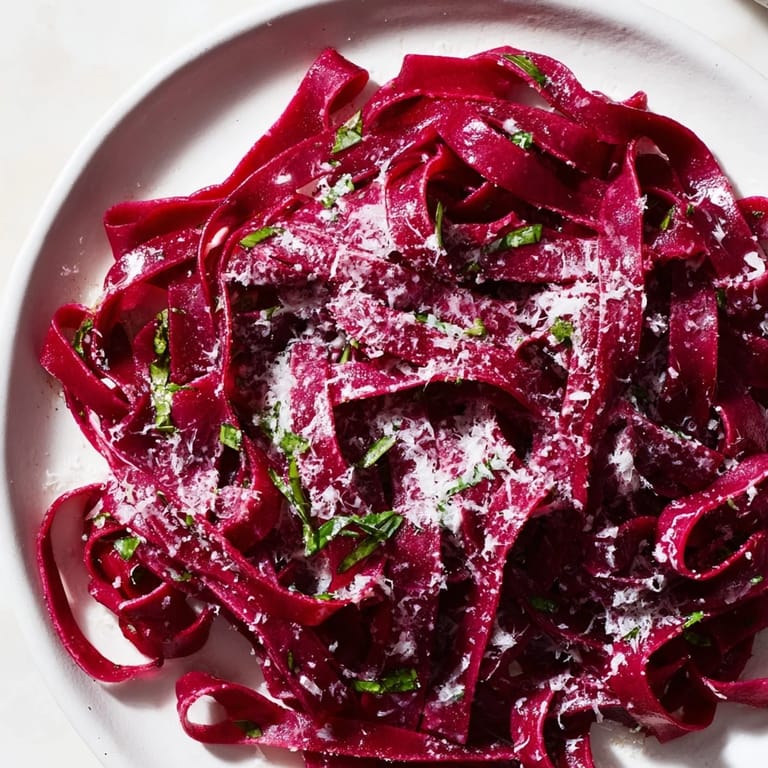
- Drain the pasta and toss immediately with butter or olive oil, fresh herbs, and a light shower of cheese—the warmth of the pasta will melt the butter and coat every strand with flavor. Serve right away while the pasta is still steaming and the colors are most vivid.
 Save
Save There's a quiet satisfaction in watching homemade pasta cook—the way the color blooms in the hot water, how quickly it rises to the surface, the steam rising up with that toasted flour aroma. That's when you know you've made something real with your own hands.
Why Beet Adds More Than Color
The beet isn't just there for looks—it brings a natural sweetness that balances the earthiness of whole grain undertones in the flour, and that subtle flavor complexity is why this pasta feels special even with the simplest toppings. I learned this the hard way by adding too much puree once and ending up with dough that tasted too strongly of beet; now I appreciate how the vegetable whispers rather than shouts.
Scaling and Storage
This recipe doubles easily if you're cooking for a crowd, and the dough stays forgiving at any scale as long as you keep the beet-to-flour ratio balanced. Fresh pasta is best eaten the day you make it, but if you need to store it, dust the cut noodles generously with flour, pile them loosely on a sheet pan, and refrigerate for up to two days before cooking.
Sauce Pairing Ideas That Respect the Pasta
Brown butter and fresh sage is the classic for a reason—the nutty brown butter echoes the beet's earthiness while the sage adds a subtle herbal edge. Alternatively, a light lemon cream sauce brightens the earthy sweetness without overwhelming it, or you can keep it even simpler with just good olive oil, a whisper of garlic, and plenty of fresh herbs.
- Brown butter with sage and toasted breadcrumbs adds texture and depth without competing with the pasta's natural flavor.
- A squeeze of fresh lemon juice over buttered pasta cuts through richness and makes the beet flavor pop unexpectedly.
- Serve it plain with just herbs and cheese if you want to celebrate what you made without distraction.
 Save
Save Making beet noodle pasta is a meditation in controlled transformation—raw ingredients becoming something that looks like it came from a restaurant kitchen. Once you've made it once, you'll find yourself reaching for this recipe whenever you want to cook something that feels both effortless and unforgettable.
Recipe FAQ
- → How does roasting beets affect the noodles?
Roasting beets deepens their natural sweetness and intensifies their vibrant color, resulting in noodles with enhanced flavor and a rich magenta hue.
- → Can I make these noodles without eggs?
Yes, substitute eggs with water and olive oil to create a vegan-friendly dough while maintaining texture and moisture.
- → What pasta shapes work best with beet dough?
Tagliatelle, fettuccine, or any thin noodle shapes highlight the dough’s color and texture beautifully.
- → How long should I cook the beet noodles?
Cook the pasta in boiling salted water for 2 to 3 minutes until al dente, ensuring a tender yet firm bite.
- → What are suitable toppings to serve with these noodles?
Butter or olive oil with fresh herbs and grated Parmesan or pecorino provide complementary flavors without overpowering the beet essence.