 Save
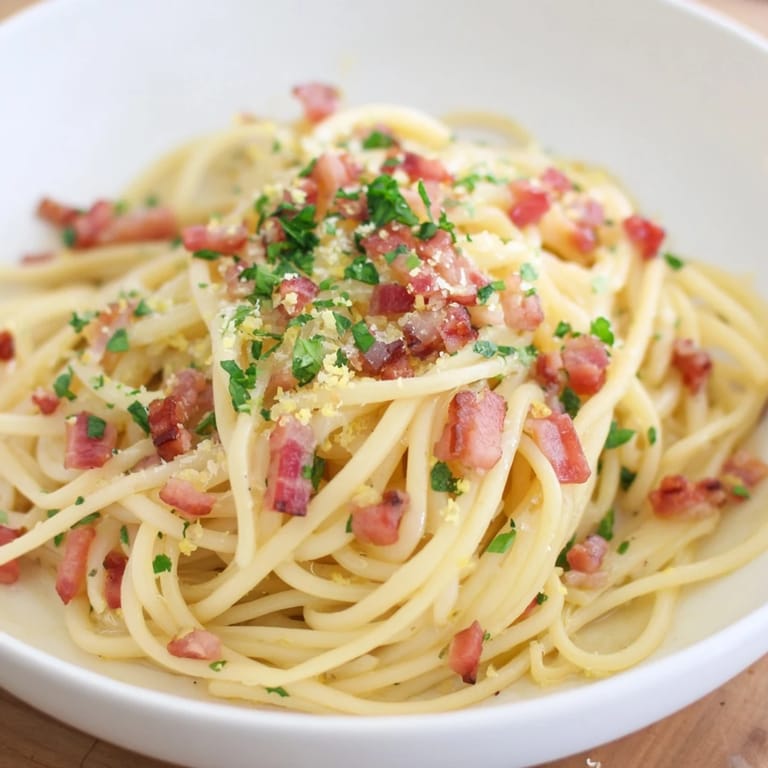
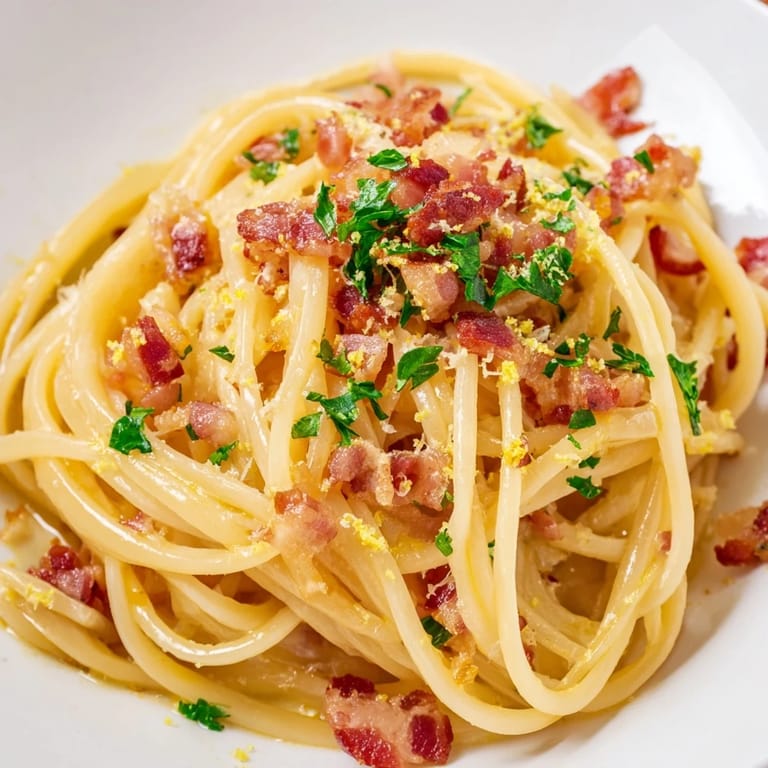
Save There's something about the smell of bacon hitting a hot pan that makes you stop whatever you're doing. I learned to make this linguine on a Tuesday night when I had exactly 25 minutes before friends arrived and an almost empty fridge—just pasta, bacon, and garlic staring back at me. It taught me that the best dishes aren't complicated, they're just honest, and that starchy pasta water is basically liquid gold in a pan.
I made this for my partner after a long day, and watching them twirl that first fork of linguine and just close their eyes for a second—that's when I knew this recipe was a keeper. The simplicity of it felt almost like a secret, like we'd figured out something restaurants charge too much for.
Ingredients
- Linguine, 400 g: Al dente is non-negotiable here; overcooked pasta absorbs too much sauce and loses its structure.
- Bacon, 200 g diced: The fat from good bacon is what makes this dish sing, so don't skip it or use the thin stuff from the back of the drawer.
- Olive oil, 2 tbsp: Use something you actually like tasting, not the cheapest bottle.
- Garlic, 3 cloves finely chopped: Fresh garlic matters; the pre-minced kind tastes dusty and thin by comparison.
- Black pepper, 1/2 tsp freshly ground: Freshly cracked makes a real difference in flavor and heat.
- Red pepper flakes, 1/4 tsp optional: For a gentle warmth that builds slowly, not a shock of heat.
- Reserved pasta water, 1/2 cup: This starchy liquid is what transforms bacon fat and garlic into an actual sauce.
- Parmesan cheese, 40 g grated: The salt and umami anchor that ties everything together; don't use the pre-grated stuff in the green tin.
- Fresh parsley, 2 tbsp chopped: A last-minute brightness that cuts through the richness and feels intentional.
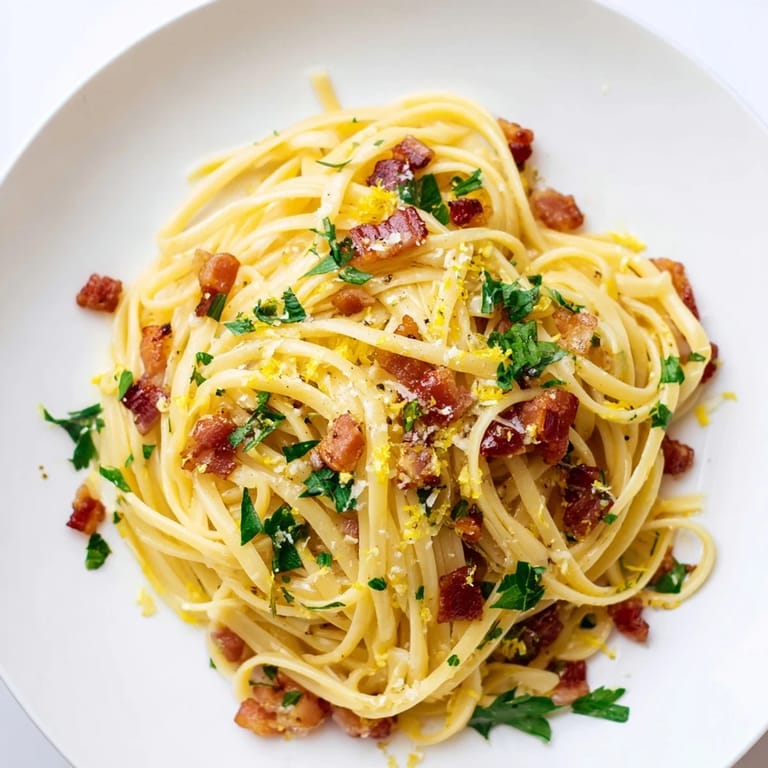
- Lemon zest, optional: A small amount wakes up all the flavors in a way that feels subtle but unmissable.
Tired of Takeout? 🥡
Get 10 meals you can make faster than delivery arrives. Seriously.
One email. No spam. Unsubscribe anytime.
Instructions
- Set up your pasta water:
- Fill a large pot with cold water, salt it generously (it should taste like the sea), and bring it to a rolling boil before adding linguine. Salting the water is your only real seasoning opportunity for the pasta itself.
- Cook the linguine to al dente:
- Follow the package timing but pull one piece out a minute early and taste it; you want it tender but with a tiny bit of resistance when you bite down. Before draining, measure out 1/2 cup of that starchy cooking water into a small bowl or measuring cup—this is essential.
- Start the bacon:
- While the pasta cooks, slice or dice your bacon into small pieces and place them in a cold large skillet. Turn the heat to medium and let them slowly render their fat, stirring occasionally. You'll hear them start to crisp after about 6 minutes; keep going until they're golden and crispy but not burnt, which takes about 8 minutes total.
- Add the aromatics gently:
- Once bacon is done, turn the heat down to low and add your finely chopped garlic and black pepper directly into the fat. Stir constantly for about 1 minute—you want the garlic to turn golden and fragrant, not brown or burnt, which happens faster than you'd think.
- Bring it together:
- Drain your linguine and add it directly to the skillet with the bacon and garlic. Pour in about 1/4 cup of your reserved pasta water and start tossing everything with tongs, watching the starch dissolve and create a light, silky coating. Add more pasta water bit by bit if it looks dry.
- Finish with cheese:
- Remove the pan from heat, add your grated Parmesan, and toss until the cheese melts into the sauce completely. Stir in the fresh parsley and a small pinch of lemon zest if you're using it, then taste and adjust salt and pepper to your liking.
- Plate and serve right away:
- Divide among bowls or plates and top each portion with extra Parmesan and a crack of fresh black pepper. Serve immediately while everything is still hot and the sauce is silky.
 Save
Save My favorite version of this came together one rainy Thursday when I added a handful of fresh peas at the last second, and suddenly the whole thing felt like spring even though it was October. That's when I realized this dish is a canvas—simple enough to respect, flexible enough to make your own.
Why This Works Without Cream
The starch in pasta water acts like a natural thickener and emulsifier, which is why Italian cooks have used it for centuries. When you toss hot pasta with fat, the starch granules burst and swell, creating a silky coating that feels indulgent without any cream. It's not laziness or a shortcut; it's actually more elegant because every flavor stays clean and bright.
The Crispy Bacon Question
One of the small magic tricks here is keeping the bacon crispy even after it's tossed with hot pasta and sauce. The key is not to add the bacon back into the hot pan at the very end; instead, pile it in when you add the linguine so the residual heat loosens it but the low temperature prevents it from softening. If you're worried, cook the bacon a minute longer than you think you should, and it'll hold its texture through the finish.
Variations and Additions
This recipe is sturdy enough to bend without breaking. You can add sautéed mushrooms or fresh peas for earthiness and color, a handful of cherry tomatoes for brightness, or even a small spoon of Dijon mustard for a subtle tang that makes everything taste more interesting. The base—pasta, bacon fat, garlic, starch, and cheese—is strong enough to support whatever you want to add, which is why this dish works as well for a quiet Tuesday as it does for feeding four people on short notice.
- Turkey bacon or pancetta works beautifully if you want to shift the flavor slightly or avoid pork.
- A squeeze of fresh lemon juice instead of zest adds brightness without adding texture.
- Finish with a tiny drizzle of good olive oil on top for richness that reads immediately.
 Save
Save This dish proves that some of the best meals come from constraints, not endless ingredients. Make it tonight.