 Save
Save My grandmother kept a gallon-sized zipper bag in her freezer, and I thought it was full of garbage until one snowy afternoon when she transformed those frozen vegetable scraps into the most incredible golden broth I'd ever tasted. Now I understand why she never threw away carrot peels, onion skins, or celery ends. This simple practice changed how I view cooking entirely.
Last winter, during a particularly tight month between paychecks, this broth became the foundation of nearly every meal in our house. My partner actually asked if I'd started buying expensive stock from the fancy grocery store, which still makes me laugh every time I think about it.
Ingredients
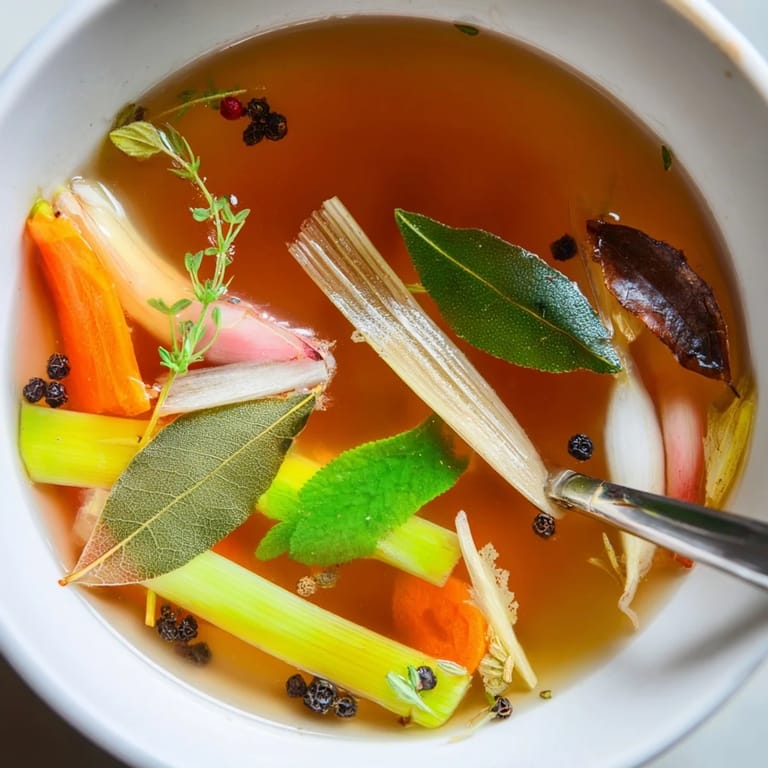
- Vegetable Scraps: 5–6 cups of carrot peels, onion skins, celery ends, leek tops, mushroom stems, garlic skins, and parsley stems make the perfect combination, but you can use whatever clean scraps you have on hand
- Bay Leaves: 2 whole leaves add a subtle earthy depth that rounds out all the vegetable flavors beautifully
- Black Peppercorns: 8–10 whole peppercorns provide gentle warmth without the harshness of ground pepper
- Garlic: 2 smashed cloves are optional but add a lovely aromatic background note
- Fresh Herbs: A small handful of parsley or thyme sprigs brightens everything and makes your kitchen smell amazing
- Salt: 1–2 teaspoons to taste, added at the end so you can control the seasoning perfectly
- Cold Water: 2 liters starting with cold water helps extract flavors more gradually and evenly
Tired of Takeout? 🥡
Get 10 meals you can make faster than delivery arrives. Seriously.
One email. No spam. Unsubscribe anytime.
Instructions
- Gather Your Scraps:
- Collect clean vegetable trimmings from your cooking throughout the week, avoiding bitter vegetables like broccoli, Brussels sprouts, or cabbage family members that can overpower the broth
- Combine Everything:
- Place your vegetable scraps, bay leaves, peppercorns, smashed garlic, and fresh herbs into a large stockpot, then pour in the cold water
- Bring to a Gentle Boil:
- Set the pot over medium-high heat and let it come to a boil, watching as the water transforms into a rich, aromatic liquid
- Simmer Slowly:
- Reduce heat to maintain a gentle simmer and let it cook uncovered for about 1 hour, skimming any foam that rises to the surface occasionally
- Season to Taste:
- Add salt gradually, tasting as you go, since the flavor intensity depends entirely on your vegetable combination
- Strain and Cool:
- Pour the broth through a fine-mesh sieve or cheesecloth into a clean container, discarding all the cooked vegetable pieces
 Save
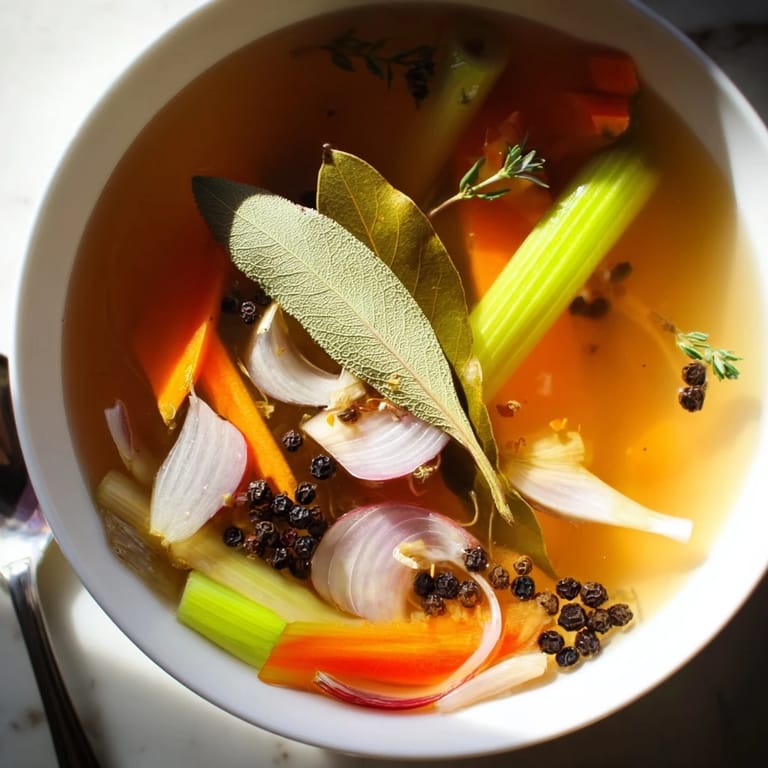
Save The first time I served this broth to my vegetarian friend, she swore there must be chicken in it because of the rich body and depth of flavor. Now she keeps her own scrap bag in the freezer and texts me pictures of her beautiful golden broth batches.
Building Your Scrap Bag
Keep a large resealable bag in your freezer and add clean vegetable trimmings as you cook throughout the week. This habit makes the process feel effortless rather than like a special project you have to plan for. The variety of vegetables naturally creates a complex, well-rounded flavor.
Storage and Freezing
Cool the broth completely before transferring to airtight containers or freezer bags. I like freezing in 2-cup portions since most recipes call for that amount, and it thaws overnight in the refrigerator for next-day cooking. Properly frozen, this broth keeps beautifully for up to 3 months.
Making It Your Own
Every batch will taste slightly different based on your scrap collection, which is part of the magic. You can intentionally add more onion skins for deeper color or extra mushroom stems for more umami richness. Don't be afraid to experiment.
- Roast your vegetable scraps before simmering for an even deeper, more complex flavor profile
- Add a splash of soy sauce or miso paste at the end for an instant flavor boost
- Save this broth for risotto, grain cooking, or simply sipping on its own when you need comfort
 Save
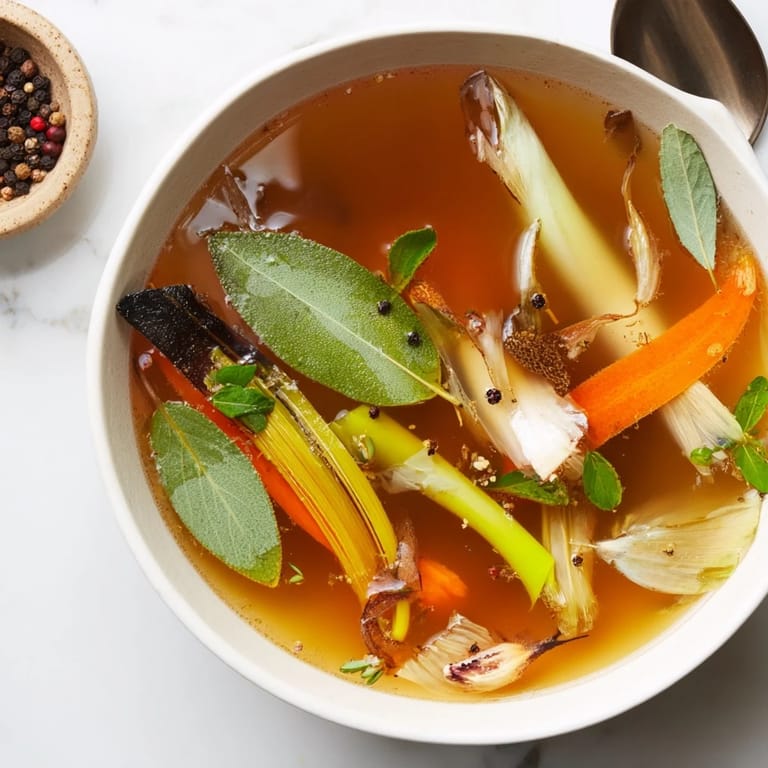
Save Theres something deeply satisfying about creating something so valuable from what most people throw away. This broth has become one of those simple practices that makes my kitchen feel more sustainable and thoughtful every single day.
Recipe FAQ
- → What vegetable scraps work best for homemade broth?
Carrot peels, onion skins, celery ends, leek tops, mushroom stems, garlic skins, and parsley stems create the most balanced flavor. These aromatic vegetables build a rich foundation without overpowering notes.
- → Which vegetables should I avoid adding to broth?
Skip cruciferous vegetables like broccoli, cauliflower, Brussels sprouts, and cabbage. These can develop bitter flavors when simmered for long periods. Starchy vegetables like potatoes can also make your broth cloudy.
- → How long can I store homemade vegetable broth?
Keep your strained broth in airtight containers in the refrigerator for up to 5 days. For longer storage, freeze portions for up to 3 months. Ice cube trays work perfectly for small portions, while larger freezer bags accommodate soup-sized quantities.
- → Can I enhance the flavor with additional ingredients?
Absolutely. Add kombu seaweed or dried shiitake mushrooms for deeper umami notes. Fresh thyme, rosemary, or sage sprigs introduce herb complexity. A splash of soy sauce or nutritional yeast can also boost savory depth.
- → Should I salt my broth during cooking?
Start with a small amount of salt to enhance flavor extraction, but taste before adding more. Since broth reduces as it simmers and often gets salted again in final dishes, lighter seasoning allows more flexibility in your cooking.
- → How do I collect enough scraps for broth?
Keep a large freezer bag designated for broth scraps. Add clean vegetable trimmings as you cook throughout the week. Once the bag is full, you're ready to simmer a batch. This method ensures you always have materials on hand while reducing kitchen waste.