 Save
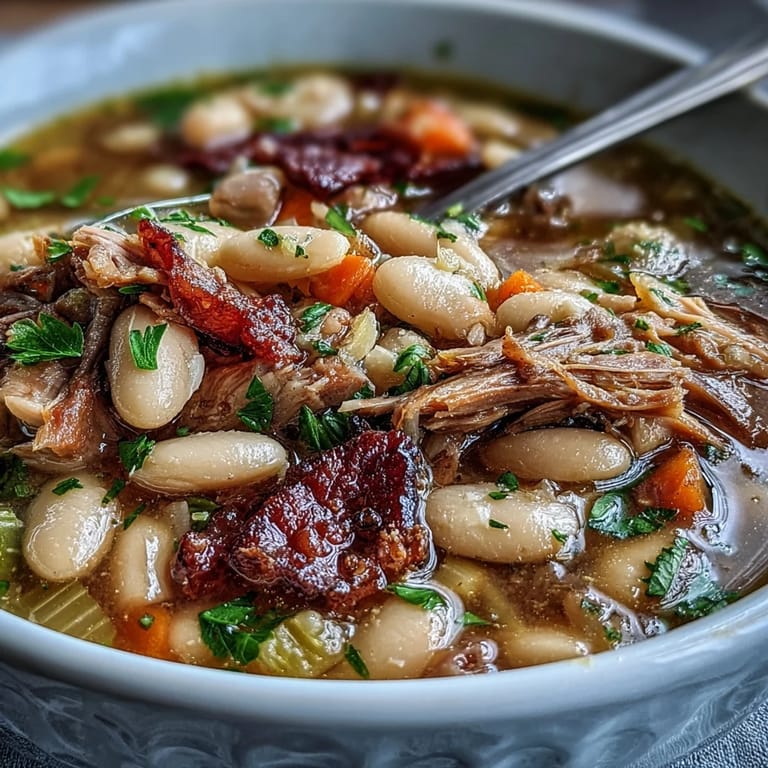
Save My grandmother used to make this soup on the coldest days, when the kitchen windows would fog up and stay that way for hours. She'd start it in the morning, and by afternoon the whole house smelled like smoke and comfort. I didn't appreciate it then—I was too impatient for something that took so long—but now I understand that the waiting was part of the magic. This white bean and ham hock soup is exactly the kind of dish that rewards patience, filling your home with warmth long before the first spoonful touches your lips.
I made this for a neighbor who'd just come home from the hospital, and watching her face when she smelled it simmering on my stove told me everything. She ate two bowls sitting at my kitchen table, and we didn't talk much—just the sound of spoons and occasional sighs of contentment. That's when I realized this soup isn't just food; it's a way of saying, "I care about you," without having to say much at all.
Ingredients
- 1 large smoked ham hock (about 1–1.5 lb / 450–700 g): This is your flavor foundation—don't skimp or substitute with ham slices, as the bone and connective tissue create a rich, savory broth that's irreplaceable.
- 1 lb (450 g) dried great northern or cannellini beans, soaked overnight and drained: Soaking overnight isn't just tradition; it cuts cooking time significantly and makes the beans digest more easily.
- 1 large yellow onion, diced: Yellow onions become sweet and mellow when they cook low and slow, which is exactly what this soup needs.
- 2 medium carrots, peeled and diced: They'll soften into the broth and add natural sweetness that balances the ham's smokiness.
- 2 celery stalks, diced: Celery is the quiet backbone here—it adds a subtle vegetal note that ties everything together.
- 3 cloves garlic, minced: Fresh garlic adds complexity; don't use powder, as it won't integrate the same way during the long simmer.
- 2 bay leaves: Essential for depth, but remember to fish them out before serving—learning this the hard way once is enough.
- 1 tsp dried thyme: Thyme's earthiness complements ham perfectly; if you have fresh thyme, use twice as much and add it in the last 30 minutes.
- 1/2 tsp freshly ground black pepper and 1/2 tsp smoked paprika: Freshly ground pepper makes a noticeable difference in taste; the paprika echoes the ham's smokiness.
- Salt, to taste: Hold off until the very end—the ham hock will already bring saltiness, and you'll regret oversalting.
- 8 cups (2 L) low-sodium chicken broth (or water): Low-sodium lets you control the final seasoning; water works too if you prefer a cleaner bean flavor.
- 2 tbsp chopped fresh parsley (for garnish): A small touch of green and brightness that cuts through the richness.
Tired of Takeout? 🥡
Get 10 meals you can make faster than delivery arrives. Seriously.
One email. No spam. Unsubscribe anytime.
Instructions
- Gather and prep your ingredients:
- Dice your vegetables first—the onion, carrots, and celery should all be roughly the same size so they cook evenly. Mince your garlic fine enough that it will almost dissolve into the broth.
- Build your base:
- In your Dutch oven or soup pot, combine the drained beans, ham hock, diced vegetables, garlic, bay leaves, thyme, pepper, and paprika. This is where you're setting up all the flavors to become friends over the next two hours.
- Add liquid and start the simmer:
- Pour in your broth and stir gently so everything mingles. Bring it to a rolling boil over high heat—you'll see the beans start to bob and dance—then immediately lower the heat to a gentle simmer and cover the pot.
- Let time do the work:
- Simmer covered for about 2 hours, giving it a stir every 30 minutes or so. You're waiting for the beans to become tender enough to break between your fingers and the ham hock to soften enough that the meat pulls away from the bone.
- Rescue the ham:
- Carefully remove the ham hock with a pair of tongs and set it on a cutting board to cool. Once it's cool enough to handle, shred the meat with two forks, discard the skin and bone, and return the shredded meat to the pot.
- Finish the simmer:
- Continue simmering uncovered for another 30 minutes so the soup can reduce slightly and thicken. The beans should be completely tender now, almost creamy against your tongue.
- Season and serve:
- Taste your soup and add salt gradually—remember that the ham has already contributed saltiness. Remove the bay leaves and ladle the soup into bowls, finishing each one with a small handful of fresh parsley.
 Save
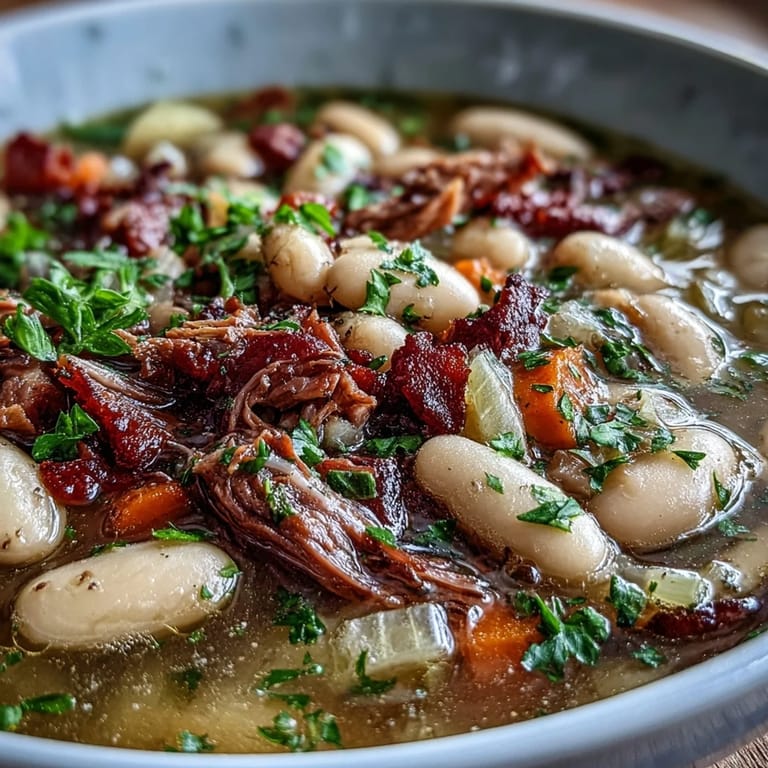
Save There's a moment during the second hour when you lift the lid and the steam rises up and hits your face with that warm, savory smell, and you know something good is happening. That's the moment I stop doing other things and just sit nearby, listening to the gentle bubble of the pot, feeling like I'm part of something ancient and true.
The Secret to Depth
The ham hock is doing almost all the work here, and it's important to understand why. As it simmers, the collagen in the skin and connective tissue breaks down into gelatin, which creates a naturally silky mouthfeel and develops layers of flavor that you simply cannot achieve with any other ingredient. I've tried using smoked ham chunks, bacon, and even smoked turkey, and none of them come close to the complexity that a proper ham hock brings. The bone itself is a flavor factory, leaching minerals and savory notes into the broth that compound over hours. This is why patience isn't optional here—it's the entire point.
When to Stop Stirring and Let It Be
One of the hardest things to learn about making this soup is knowing when to leave it alone. Your instinct will be to stir constantly, to fidget, to check on things. Resist that urge during the first two hours—stirring too much can break down the beans before they're ready and make your broth cloudy. I realized this when I kept lifting the lid out of nervousness, and a friend gently closed the pot and said, "It knows what to do." She was right, and now I set a timer and trust the process.
Customizing Your Warmth
This is a base recipe, but it's also a starting point for your own creativity. Some people in my family add diced tomatoes in the last 30 minutes for a subtle tang, while others stir in a splash of apple cider vinegar right before serving to brighten it all up. I've made versions with kale added at the end, versions with extra garlic for people who love that, and even a spicier version with cayenne and hot sauce for someone who needed heat alongside comfort.
- If you want it thicker, mash some of the cooked beans against the side of the pot with the back of your spoon.
- Leftover soup thickens as it cools and keeps in the freezer for up to three months—actually gets better after a day or two.
- Serve it with cornbread, crusty bread, or even over rice if you're feeling unconventional.
 Save
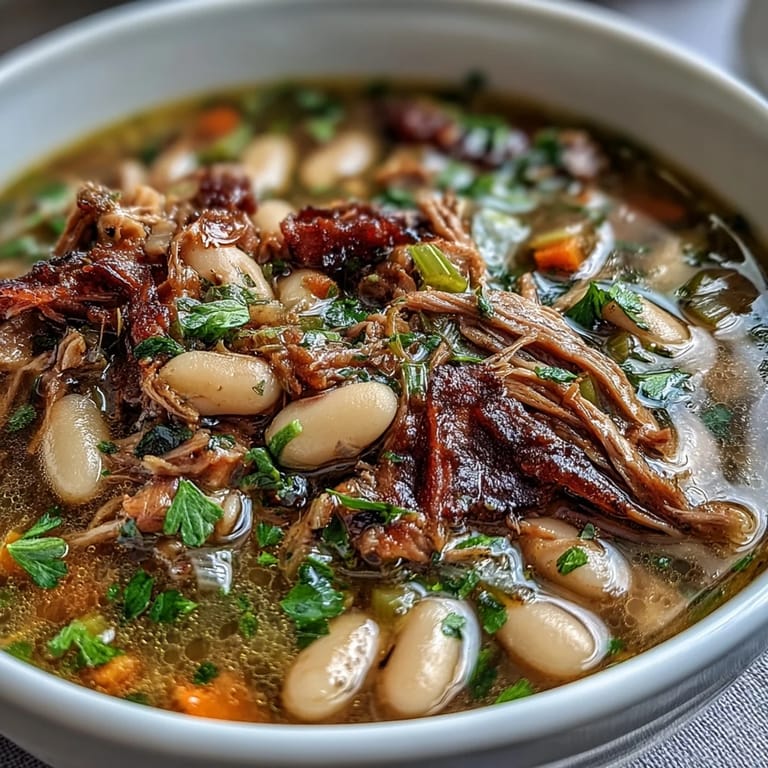
Save This soup has a way of becoming part of your rhythm during cold months, something you return to when you need comfort that tastes like home. Make it once and you'll understand why my grandmother wasn't rushing—she knew exactly what she was doing.
Recipe FAQ
- → What type of beans work best for this dish?
Dried great northern or cannellini beans soaked overnight yield creamy texture and mild flavor, ideal for this stew.
- → Can the ham hock be substituted?
Yes, smoked pork shanks or a smoky cured meat can provide a similar depth and richness to the broth.
- → How can I make the broth richer?
Simmering the ham hock slowly extracts smoky richness, and mashing some beans into the broth adds creamy body.
- → Is there a way to adjust the seasoning?
Taste the stew before adding salt; the ham hock adds saltiness. Adding smoked paprika or cayenne pepper can enhance flavor.
- → What are good side options with this dish?
Cornbread or crusty bread complement the stew's hearty texture and soak up the savory broth beautifully.