 Save
Save My first proper batch of kibbeh came together on a quiet Sunday morning when my neighbor stopped by with a container of bulgur and a story about learning to make it from her grandmother in Beirut. I'd never shaped one before, but watching her wet hands work the dough with such ease made it seem possible. Within an hour, we had golden croquettes cooling on paper towels, and she stayed for coffee just to see if I'd gotten it right. I had, mostly—and more importantly, I'd caught the bug for making them myself.
I made kibbeh for a small dinner party and watched my usually picky eater take two without asking what was in them first. By the end of the meal, someone asked for the recipe, and I realized I'd made something that felt both unfamiliar and instantly welcoming to people who'd never tried it. That's when I knew this dish had staying power in my kitchen.
Ingredients
- Fine bulgur wheat (1 cup): The foundation that holds everything together—rinse it first or it'll taste dusty, and don't skip letting it soften or you'll fight the dough the whole time.
- Lean ground beef or lamb (500g for dough, 250g for filling): Lamb gives you earthier flavor, but beef is milder and just as good; either way, fresh is worth the trip to a proper butcher.
- Onions, finely chopped (1 small each for dough and filling): These dissolve into the dough and filling, adding sweetness that balances the spices beautifully.
- Pine nuts (1/2 cup): They toast while you cook the filling and add a richness that feels almost buttery; don't skip them or you lose a whole layer of texture.
- Ground allspice and cinnamon (1 tsp and 1/2 tsp for dough, 1/2 tsp and 1/4 tsp for filling): These warm spices are what make kibbeh taste like itself; measure them properly or the whole dish tastes off.
- Salt, black pepper, olive oil: The olive oil in the filling adds richness, while salt and pepper are your safety net—taste as you go and adjust.
- Vegetable oil for frying or olive oil for brushing: Choose your method early; frying gets you that deep golden crust, baking gives you a lighter result that still satisfies.
- Cold water (2 tbsp): Added slowly to the dough until it holds together; too much makes it sticky, too little makes it crumbly.
Tired of Takeout? 🥡
Get 10 meals you can make faster than delivery arrives. Seriously.
One email. No spam. Unsubscribe anytime.
Instructions
- Prepare the bulgur foundation:
- Rinse the bulgur in cold water until the water runs mostly clear, then drain it well and let it sit undisturbed for 10 minutes—it'll soften just enough to work with but stay structured.
- Build your dough:
- Combine the softened bulgur with ground meat, onion, and all the spices in a large bowl, then knead it like you're making bread, adding cold water a little at a time until it becomes smooth and holds together without crumbling. Cover it and let it chill while you make the filling.
- Create the filling:
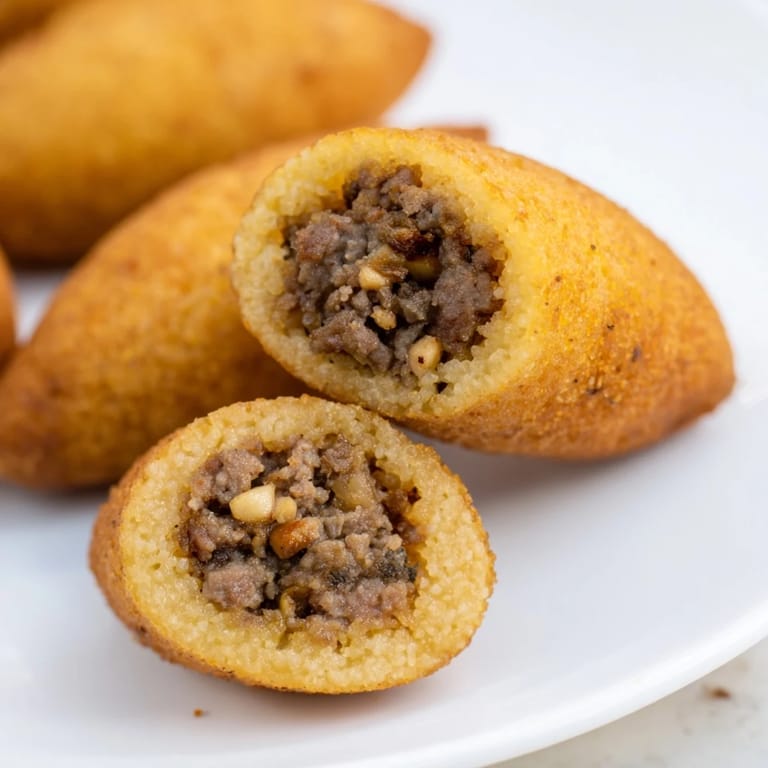
- Warm olive oil in a skillet over medium heat and soften the onions for about 3 minutes—they should be translucent and sweet smelling. Add the ground meat, breaking it into small pieces as it browns, then stir in the pine nuts and spices and let everything toast together for another 3 to 4 minutes until the pine nuts turn golden and smell fragrant.
- Shape with wet hands:
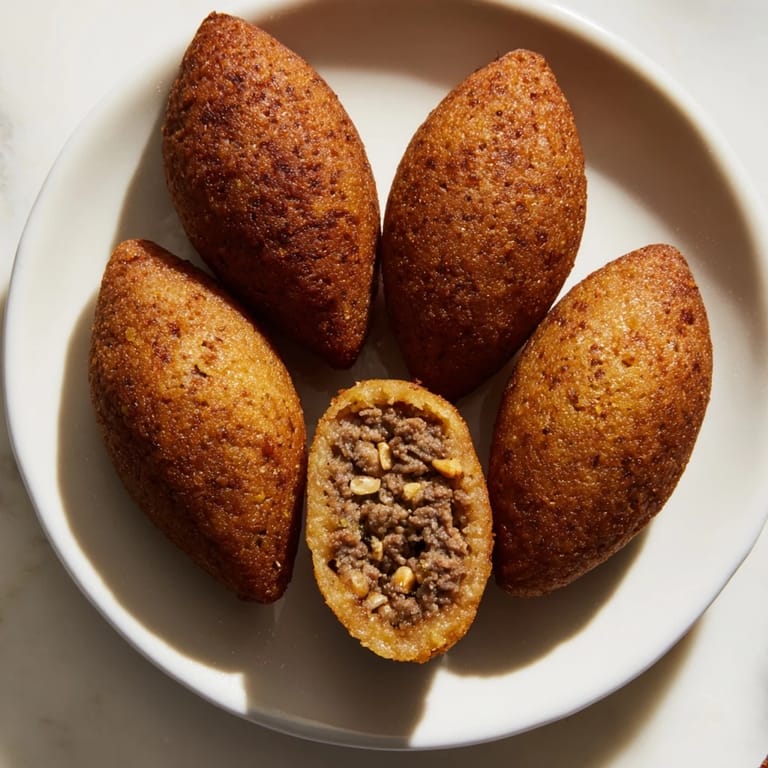
- Wet your hands with cold water to keep the dough from sticking, then take a golf ball-sized piece and flatten it in your palm into a thin oval shell. Spoon 1 to 2 teaspoons of filling into the center, then pinch the edges together and shape it into a torpedo or football—the seal matters so filling doesn't escape during cooking.
- Choose your cooking method:
- For frying, heat vegetable oil to 180°C (350°F) and work in batches so you don't crowd the pan, cooking each kibbeh for 4 to 5 minutes until deep golden brown, then drain on paper towels. For baking, arrange them on a parchment-lined sheet, brush with olive oil, and bake at 200°C (390°F) for 25 to 30 minutes, turning halfway through for even browning.
 Save
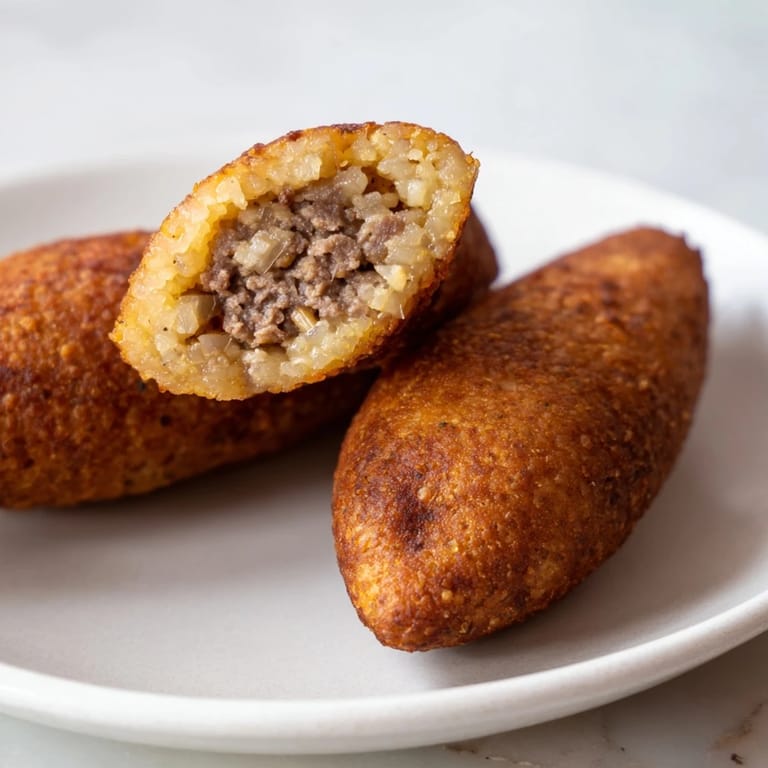
Save I remember biting into one fresh from the oil, that crispy shell giving way to warm spiced meat and those golden pine nuts, and thinking that's where the magic lives—in that one moment before it cools, when everything is exactly right. That's the version I chase every time I make them.
Why Frying Versus Baking Matters
Fried kibbeh has a shattered, paper-thin crust that shatters between your teeth and stays crispy even as it cools, while baked ones are gentler and less heavy but still deeply satisfying. I fry them when I want to feel indulgent and bake them when I'm feeding a crowd and want something that doesn't require careful oil temperature management. Both are authentic; it's really about what you're in the mood for and how much splatter you want on your stovetop.
Building Flavor Beyond the Basics
The spices in kibbeh—allspice, cinnamon, and black pepper—create a warm, almost sweet backbone that tastes completely different from Italian or Middle American food. Some cooks add a tiny pinch of nutmeg or ground coriander to their version, and while I keep mine traditional, understanding that these spices are doing most of the heavy lifting helps you respect their proportions. Toast them in a dry skillet for 30 seconds before measuring if you want to wake up their flavor even more.
Serving and Keeping Them Perfect
Kibbeh tastes best fresh from the pan when everything is still warm and the outside is crisp, but they hold up well at room temperature for a few hours and can be gently reheated in a 150°C oven for about 10 minutes if you need to. Serve them with thick, cooling yogurt or tahini sauce, alongside a bright salad with tomatoes and cucumber, and watch people immediately ask for more.
- You can freeze shaped kibbeh for up to 3 months before cooking, which means you can make a big batch on a quiet Sunday and pull them out whenever you want something impressive with minimal effort.
- If you go vegetarian, cooked lentils mixed with sautéed mushrooms and the same spices create a filling that's equally satisfying and honestly might surprise you with how good it is.
- Leftover filling (if you have any) makes a wonderful base for stuffed tomatoes or mixed into rice for a quick dinner.
 Save
Save Every time I make kibbeh, I'm grateful for that Sunday morning when my neighbor showed me that shaping them isn't mysterious, just practice and wet hands. Now it's the dish I turn to when I want to feel connected to something bigger than Tuesday night dinner.
Recipe FAQ
- → What type of meat works best for Lebanese kibbeh?
Lean ground beef or lamb provides a balanced flavor and texture ideal for kibbeh, complementing the bulgur and spices.
- → Can kibbeh be baked instead of fried?
Yes, brushing kibbeh with olive oil and baking yields a crisp exterior with less oil absorption while maintaining rich flavors.
- → How do pine nuts enhance the filling?
Pine nuts add a delicate crunch and nutty richness that contrasts with the savory meat and spices in the filling.
- → Is bulgur wheat essential in the dough?
Bulgur wheat provides structure and a slightly chewy texture, essential for forming the contrasting shell around the filling.
- → What spices create the signature kibbeh flavor?
Ground allspice, cinnamon, salt, and black pepper combine to produce the warm, aromatic profile characteristic of traditional kibbeh.